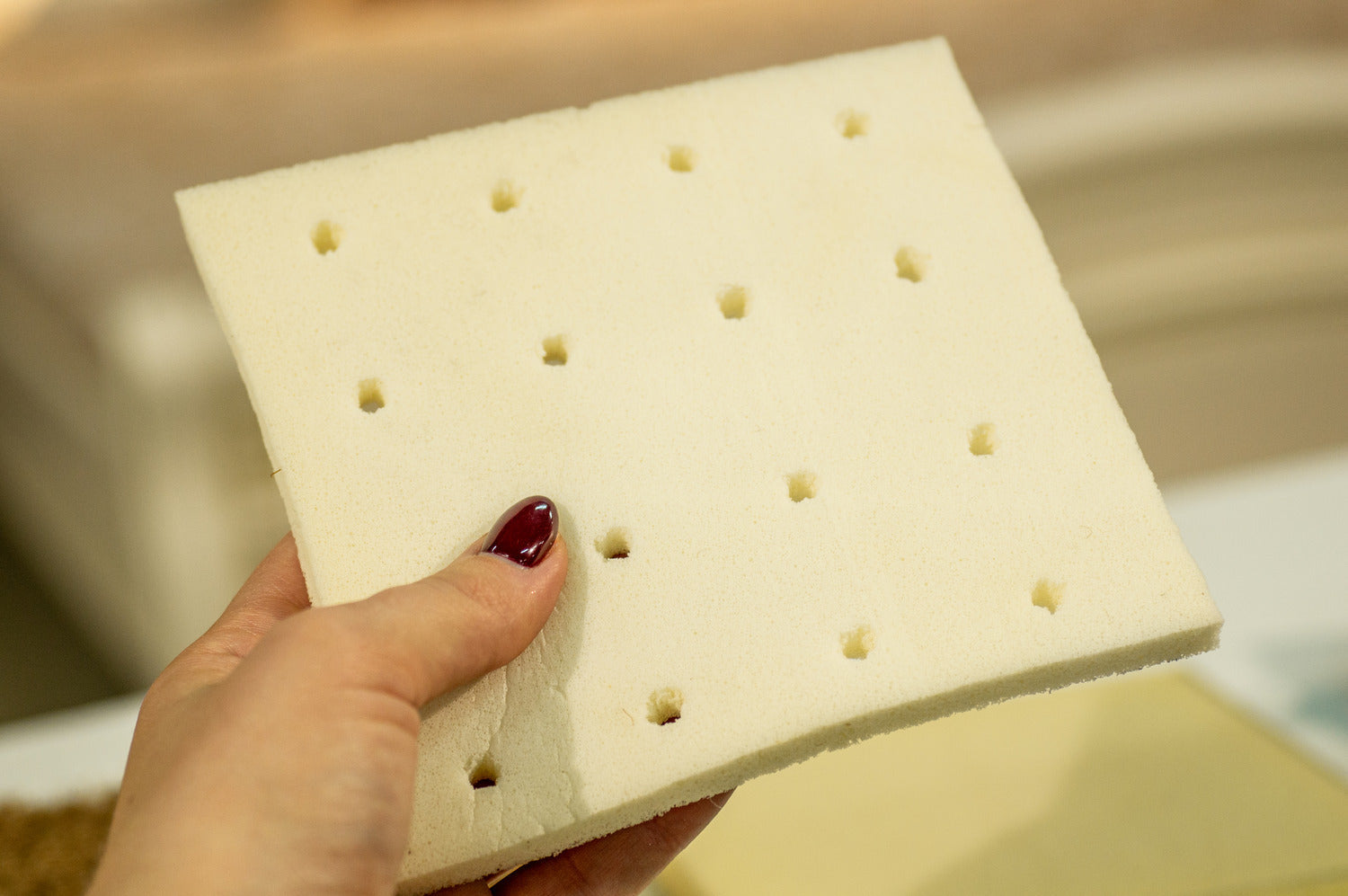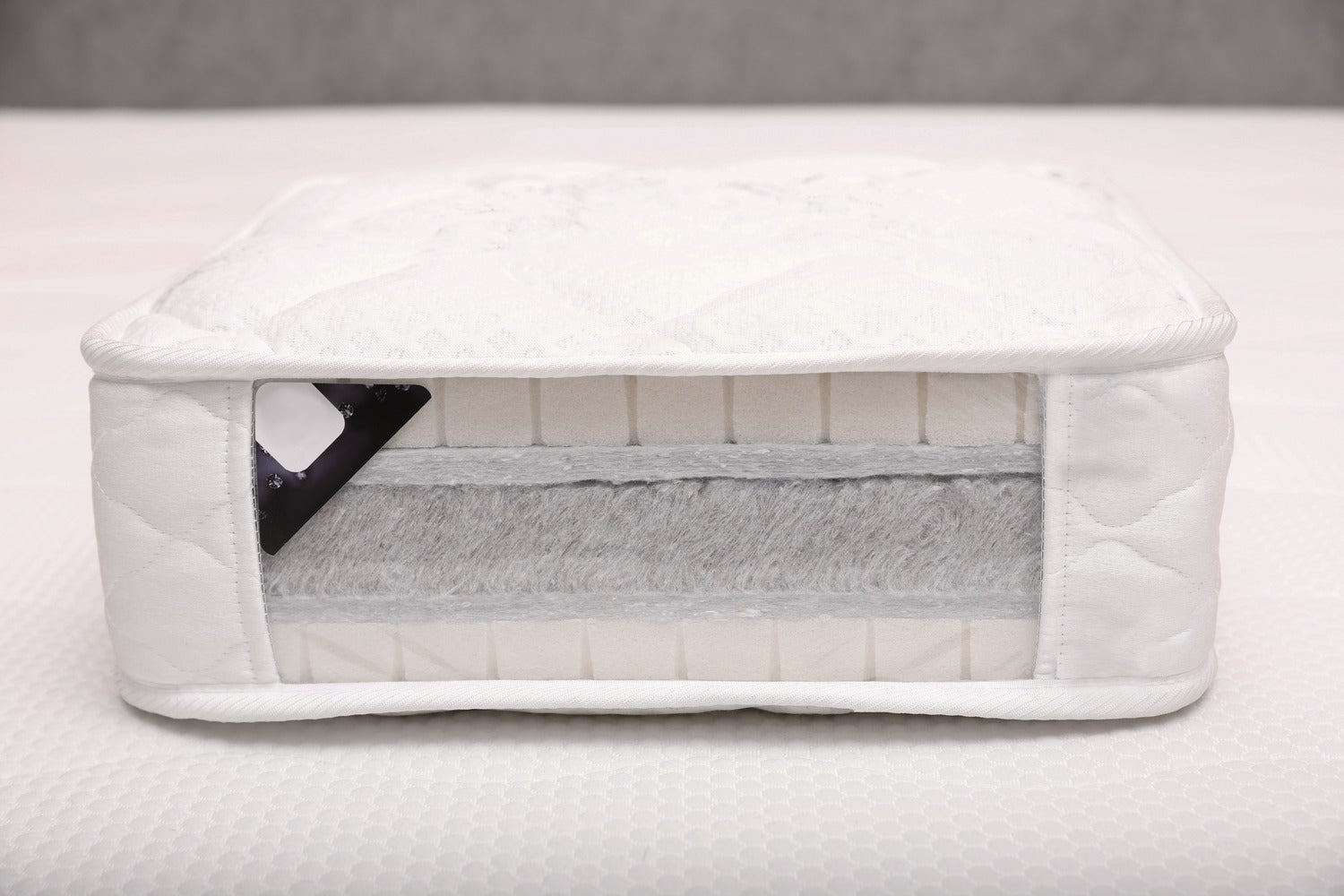

If you’ve ever wondered why some mattresses or cushions feel plush and others feel firm and supportive, ILD is a big part of the answer. Indentation Load Deflection (ILD) is the standard way manufacturers measure foam firmness, indicating how much force it takes to compress the material.
In this guide, you’ll learn what ILD means in practical terms, so you can confidently choose the right level of softness or support for your next mattress, topper, or seating project.
What is indentation load deflection?
Indentation Load Deflection (ILD) is a standardized test that measures how firm or soft a foam is. It represents the amount of force, measured in pounds, required to compress a piece of foam by a specific percentage of its thickness—typically 25%.
In simple terms, ILD tells you how much weight it takes to push down the foam. A lower ILD indicates a softer foam, while a higher ILD means the foam is firmer and offers greater resistance to pressure.
What does ILD measure?
ILD measures a foam’s resistance to indentation, or how much force it takes to compress it. This provides an objective way to compare firmness levels among different foams.
Manufacturers and designers use ILD to balance comfort (softness) and support (firmness) when creating mattresses and seating products.
What materials are tested using ILD?
ILD testing applies mainly to polyurethane foam, memory foam (viscoelastic foam), and latex foam. These materials are commonly used in mattresses, seat cushions, and upholstered furniture. While other materials—like fiber fillings or coil springs—have different measurement standards, ILD is the standard for flexible foams.
How is indentation load deflection calculated?
The ILD value is determined by compressing a foam sample (usually 4 inches thick and 15 inches square) with a flat circular plate. The plate presses down until the foam reaches 25% of its original height.
The force required to reach that point, measured in pounds, is the ILD. For example, if it takes 30 pounds of force to compress the foam by 25%, the foam has an ILD of 30.
What equipment and methods are used?
ILD tests are performed using a universal testing machine or a foam compression tester. These devices apply controlled force to a circular platen while precision sensors measure resistance.
The testing is done in a temperature- and humidity-controlled environment, since foam performance can vary under different conditions. Testing follows standards such as ASTM D3574, which ensures consistency across manufacturers.
Does thickness affect ILD values?
Yes. While ILD measures firmness, foam thickness can influence the perceived feel. Thicker foams may feel softer because they allow deeper compression before bottoming out, even if their ILD rating is high. Conversely, thinner foams with the same ILD may feel firmer because they compress faster under pressure.
That’s why it’s important to consider both ILD and thickness when designing multilayer foam systems, such as comfort and support layers in mattresses.
What is the ideal ILD for comfort layers?
Comfort layers, the upper sections of a mattress or cushion, generally use lower ILD foams that contour to the body and relieve pressure. These typically range between 10 and 25 ILD for softer sleeping surfaces.
Support or base layers, in contrast, use firmer foams—often between 30 and 50 ILD—to maintain shape and prevent excessive sinkage. The ideal combination depends on user weight, sleeping position, and personal preference.
Is ILD the same as IFD?
Yes—ILD (Indentation Load Deflection) and IFD (Indentation Force Deflection) describe the same property. Both terms measure the amount of force needed to compress a foam sample to a specified deflection. Manufacturers may use either term interchangeably, depending on regional or industry standards.
Why does ILD matter for mattresses and foams?
ILD matters because it shapes both the immediate feel of a mattress and how well it performs over the long term.
-
Comfort and support: When ILD is matched to a sleeper’s body weight and position, it helps achieve the right mix of cushioning, spinal alignment, and ease of movement.
-
Durability: Higher-ILD foams are generally more resistant to sagging and premature wear, helping the mattress maintain its structure and support.
-
Pressure relief: Softer, lower-ILD foams conform more closely to curves like the shoulders and hips, reducing pressure points and promoting better comfort.
By understanding ILD and how different firmness levels behave, shoppers and designers can choose foam combinations that more precisely target comfort, longevity, and overall performance.