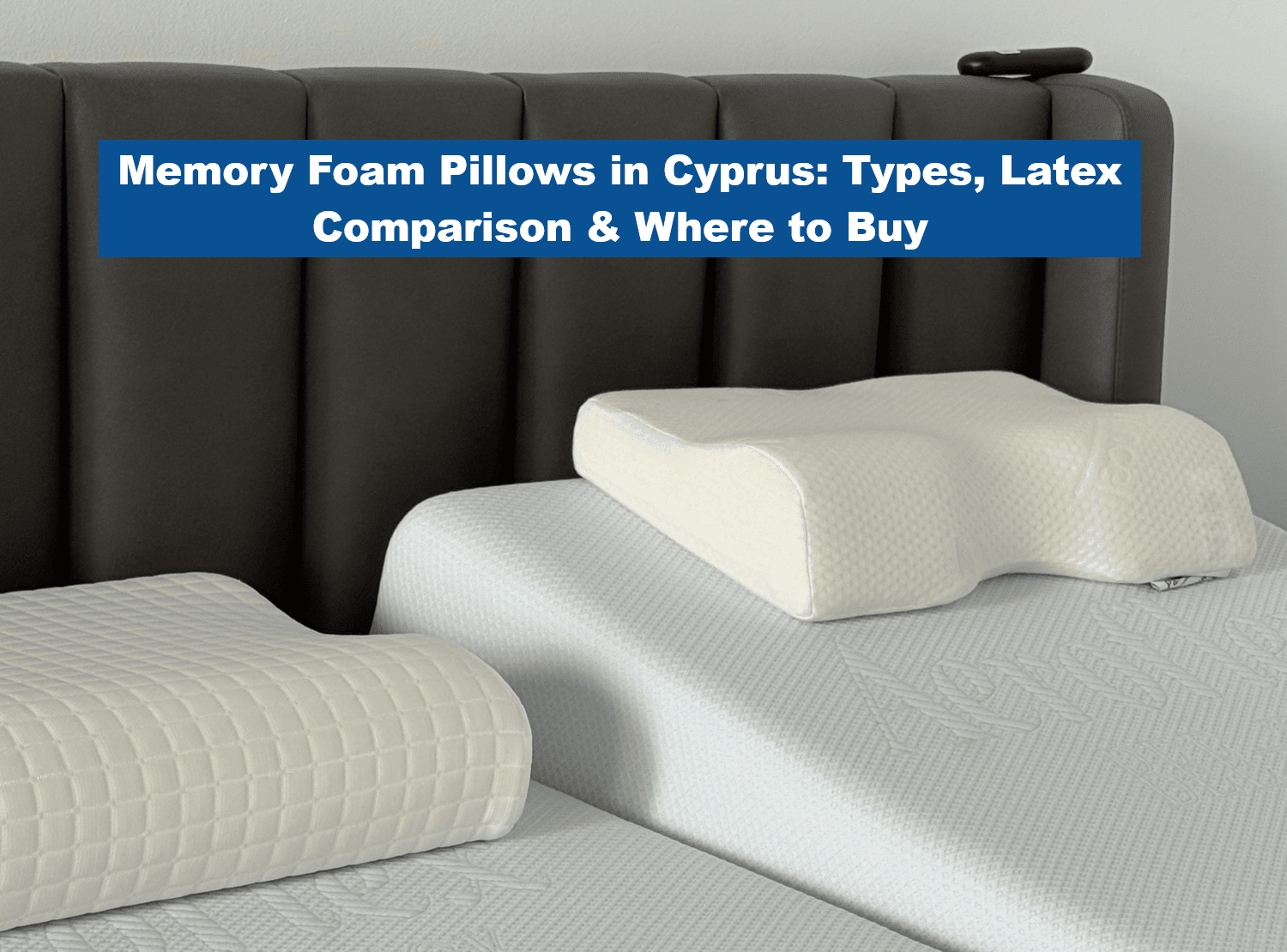
Memory foam pillows are among the most popular choices for sleepers seeking pressure relief, ergonomic neck support, and improved spinal alignment. However, not all memory foam pillows perform the same, especially in Cyprus, where warm temperatures can affect comfort and heat retention.
Choosing the right memory foam pillow depends on factors such as foam construction, cooling technology, sleeping position, and personal comfort preferences. This guide explains how memory foam pillows work, the different types available in Cyprus, how they compare with latex pillows, and where to find the right option for your sleep needs.
What Is a Memory Foam Pillow?
A memory foam pillow is a pillow made from viscoelastic polyurethane foam that softens with body heat and pressure, then slowly returns to its original shape, allowing it to contour to the head and neck for targeted support.
Viscoelastic foam is a high-density polyurethane material classified as "viscoelastic" because it exhibits both viscous and elastic properties simultaneously. Viscosity causes it to deform slowly under stress; elasticity causes it to rebound once that stress is removed.
Manufacturers use this foam in pillows either as a single solid block, which delivers uniform contouring, or as shredded pieces, which allow greater adjustability. Both constructions are sometimes blended with cooling gels or alternative foam types to modify temperature regulation.
How Does a Memory Foam Pillow Work?
When you lie down, the foam gradually moulds to the exact shape of your head, neck, and shoulders, distributing weight more evenly and reducing localised pressure. As you move or rise, it slowly springs back, which is precisely why the material earned the name "memory foam."
The key mechanism is thermal responsiveness: body heat warms the foam directly beneath your head, lowering its resistance and allowing it to conform closely. Cooler areas of the pillow remain firmer, creating a naturally differentiated support profile across the surface.
What Is the Purpose of a Memory Foam Pillow?
A memory foam pillow is designed to conform to the unique shape of your head and neck, so that weight is distributed evenly rather than concentrated on a few pressure points. By doing this, the pillow supports the natural curve of the cervical spine, the seven vertebrae between the skull and the upper thoracic region, helping you maintain a healthier sleeping posture throughout the night.
Poor cervical alignment during sleep forces the surrounding musculature to compensate, producing tension, soreness, and disrupted rest. A well-fitted memory foam pillow removes that compensatory load.
Are Memory Foam Pillows Good?
Memory foam pillows work well for many sleepers because they offer strong neck support, sustained pressure relief, and long-term comfort. For back and side sleepers in particular, the contouring behaviour bridges the gap between the mattress surface and the head, consistently preserving neutral spinal alignment throughout the night.
The material does have limitations. Hot sleepers often find that standard viscoelastic foam retains body heat, raising the sleep surface temperature. Very soft or low-profile pillows are not easily replicated in solid-block memory foam, which tends to maintain a defined loft.
Shredded constructions partially address the adjustability issue, but the slow rebound of viscoelastic foam remains a characteristic that some sleepers dislike. The choice ultimately depends on your sleep position, temperature sensitivity, and preference for contouring depth.
Are Memory Foam Pillows Manufactured in Cyprus?
Yes. At Panstromasew, we manufacture a range of memory foam pillows in Cyprus, including our own viscoelastic pillow, as well as carefully selected products from leading bedding brands. Our collection includes standard memory foam, anatomical, cooling, and hybrid designs to suit different sleeping positions and comfort preferences.
Whether you are looking for ergonomic neck support, enhanced cooling performance, or advanced pressure relief, our range allows you to compare multiple memory foam technologies in one place. Available through our physical stores and online shop, our collection makes it easy to find the right memory foam pillow without having to source products from international retailers.
Does Cyprus's Warm Climate Affect Memory Foam Pillows?
Yes, Cyprus's warm climate directly affects how memory foam pillows feel and perform, primarily by softening the foam, making it warmer, and, with prolonged heat exposure, increasing its susceptibility to long-term wear.
Memory foam responds to temperature mechanically: warmer conditions lower the foam's viscosity, making it more pliable and allowing deeper compression under lighter loads. In a cool room, the same pillow feels firmer and responds more slowly. During Cypriot summers, when indoor temperatures regularly exceed 28–30°C without climate control, the foam softens immediately on contact, sometimes more than the sleeper expects. You may sink further into the pillow than you would in a cooler environment, which can shift the support profile away from what the pillow was designed to provide.
Heat retention compounds this effect. Standard viscoelastic foam does not dissipate heat efficiently, so the foam beneath your head accumulates warmth throughout the night. This creates a progressively softer compression zone and raises the localised surface temperature, which many sleepers find uncomfortable. Over time, exposure to elevated ambient temperatures and repeated thermal cycling can accelerate the breakdown of the foam's cell structure, reducing its rebound speed and overall support capacity before the manufacturer's rated lifespan would suggest.
Cooling constructions such as the Guy Laroche Cooling pillows and the Technogel Original Deluxe Pillow, available through Panstromasew, address these effects directly by using materials that conduct heat away from the surface rather than retain it. For buyers in Cyprus, selecting a cooling or hybrid memory foam pillow is a practical adjustment to the local climate rather than an optional upgrade.
What Are the Differences Between a Latex and Memory Foam Pillow?
Latex and memory foam pillows differ primarily in responsiveness, temperature, contouring depth, and durability, with latex offering a faster, cooler, bouncier feel and memory foam delivering slower, deeper pressure relief.
Material and Feel
Memory foam is a synthetic viscoelastic polyurethane material. Latex is derived either from natural rubber tree sap (Hevea brasiliensis) or produced synthetically, and it has a springier, more immediate responsiveness. When you press into a latex pillow and release it, it returns to its shape rapidly.
Memory foam returns slowly, typically over 5–10 seconds, depending on the foam's density and the room temperature. The tactile difference is significant: latex feels buoyant and supportive; memory foam feels enveloping and conforming.
Support, Contouring, and Pressure Relief
Memory foam contours more closely to individual head and neck geometry, filling the exact shape of the compression zone before redistributing weight across a wider surface area.
This makes it particularly effective for sleepers with neck or shoulder pain, where concentrated pressure points are the primary complaint. Latex provides firm, even support across the entire surface without the deep moulding behaviour. The support is consistent but less personalised to your specific anatomy.
Temperature and Breathability
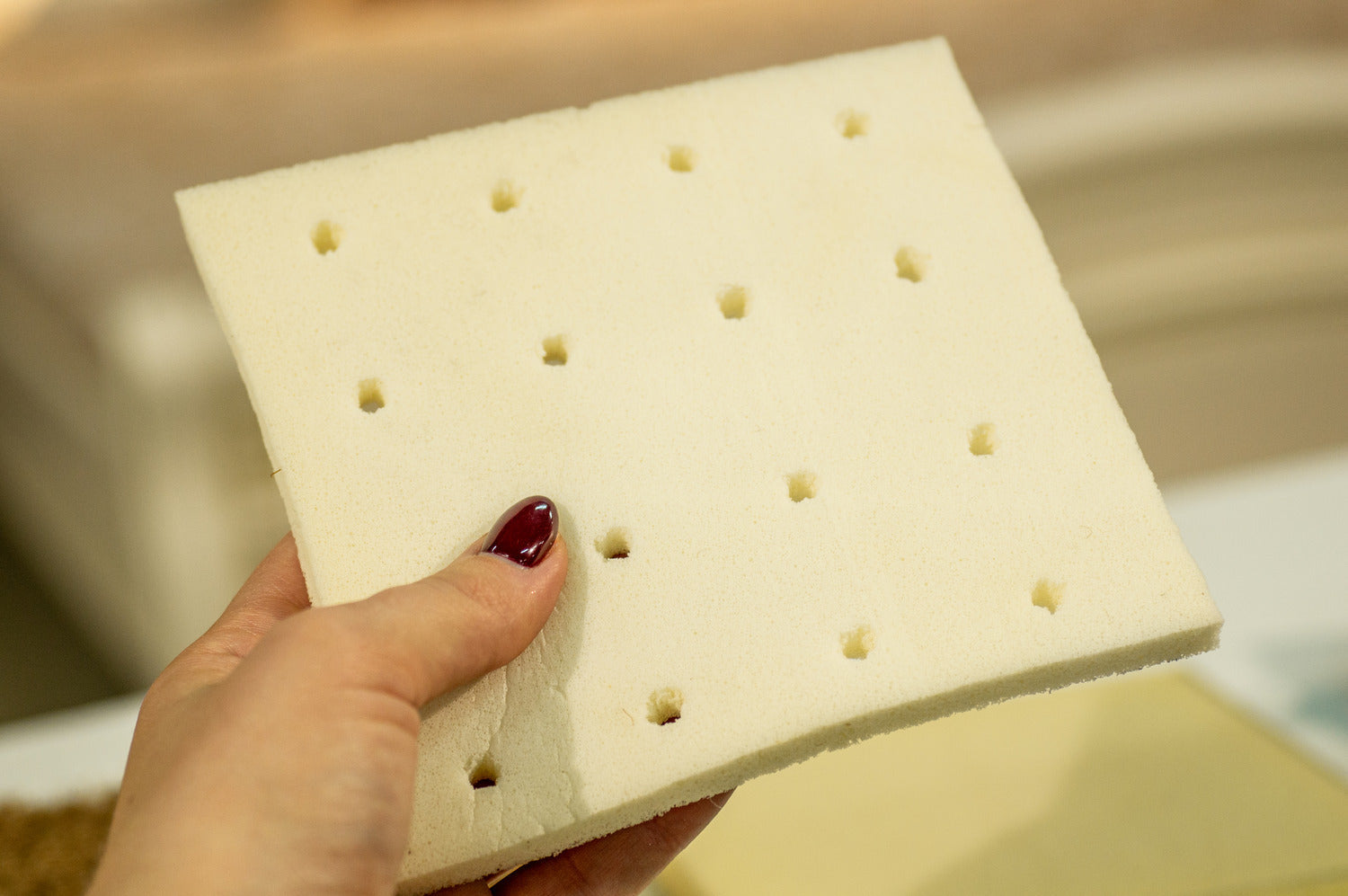
Latex, especially natural latex with an open-cell or pinhole structure, allows more airflow than standard solid-block memory foam. This makes latex pillows cooler by default.
Memory foam's dense cellular structure restricts airflow, trapping heat generated by the head. Gel-infused or cooling-layer memory foam constructions partially offset this, but natural latex typically remains the cooler option across equivalent temperature conditions.
Durability and Maintenance
High-quality natural latex pillows retain their structural integrity for 8–12 years under normal use, according to bedding industry standards. Memory foam pillows generally maintain optimal support for 3–5 years, with density and ILD (Indentation Load Deflection) rating significantly influencing longevity.
Higher-density memory foam, typically rated at 50 kg/m³ or above, resists compression and breakdown more effectively than lower-density variants. Both materials require removable, washable covers, as the foam or latex core itself should not be submerged.
Should You Choose a Latex or Memory Foam Pillow?
Choose latex when you prioritise a cooler, bouncier, longer-lasting pillow; choose memory foam when you need deep contouring and maximum pressure relief, particularly for neck or shoulder issues.
Hot sleepers in Cyprus who want the contouring benefits of viscoelastic foam without significant heat build-up should consider a hybrid or gel-infused memory foam option rather than a standard solid-block construction.
Which Retailers Sell Memory Foam Pillows in Cyprus?
At Panstromasew, we offer a wide selection of memory foam pillows to suit different sleeping positions, comfort preferences, and support needs. Our collection includes our own viscoelastic cervical pillow alongside carefully selected memory foam models from leading brands such as Guy Laroche and Technogel.
Our range covers standard memory foam, anatomically shaped, cooling, and hybrid memory foam pillows, making it easy to compare different materials and technologies in one place. Whether you visit our showrooms in Nicosia and Limassol or shop through our online store, you can find the right memory foam pillow with delivery available across Cyprus.
Discover how memory foam pillows work, which types are available in Cyprus, how the warm climate affects them, and how they compare to latex pillows.