Choosing a bed in Cyprus means matching four elements: size, frame, mattress, and bedding. Sizes run from a single at 90 × 200 cm to a European king at 180 × 200 cm, and the same names differ across European, UK, and US markets.
Frames pair with slatted or solid bases in wood, upholstery, or metal. Mattress and bedding then match the frame’s dimensions. Cyprus retailers stock European sizes as standard, and consumer law sets a two-year statutory guarantee.
What Bed Sizes Are Available in Cyprus, and Which Fits Your Room?
Beds in Cyprus come in 200 cm and 192 cm lengths and widths from 90 to 200 cm; the right size fits your room's sleeping space, frame footprint, and delivery route. The 200 cm length covers 90, 120, 140, 150, 160, 180, and 200 cm widths; the 192 cm length covers 92, 107, 137, and 152 cm widths; and made-to-order sizes extend beyond both. Sleeping space means the mattress surface, measured by width and length. The headboard, footboard, and side rails extend the external frame beyond that surface and increase the room footprint.
Room access covers walking clearances, door widths, stairwells, and lift dimensions. Those measurements decide whether the bed reaches its intended room. A size name such as Super King, Emperor, or California King cannot confirm sleeping space, room footprint, or delivery access. “Queen” and “King” labels also differ across European, UK, and US conventions. Therefore, confirm the centimetre dimensions and external footprint against the room and access measurements before ordering.
Bed Size Chart in cm, Feet and Inches: What Are the European, UK and US Sizes?
European, UK and US markets share four size names, single, double, queen and king, across six standard sets of dimensions running from 90 × 200 cm to 193 × 203 cm.
Those dimensions appear below in centimetres, inches and feet, as nominal mattress measurements rather than external frame footprints:
|
Size Name |
Width × Length (cm) |
Width × Length (in) |
Approx. ft & in |
Market |
|
Single |
90 × 200 |
35" × 79" |
3'0" × 6'7" |
European |
|
Double |
140 × 200 |
55" × 79" |
4'7" × 6'7" |
European |
|
Queen |
160 × 200 |
63" × 79" |
5'3" × 6'7" |
European |
|
King |
150 × 200 |
60" × 79" |
5'0" × 6'7" |
UK |
|
King |
180 × 200 |
71" × 79" |
5'11" × 6'7" |
European |
|
King |
193 × 203 |
76" × 80" |
6'4" × 6'8" |
US |
How Do Single, Double, Queen and King Bed Sizes Compare?
Single, double, queen and king beds trade sleeper space against room footprint. A 90 × 200 cm single bed accommodates one sleeper. A 90 × 200 cm single suits rooms 2.5 metres wide. A 140 × 200 cm double gives each adult 70 centimetres. A 160 × 200 cm Queen provides each adult 80 centimetres.
A Queen provides 10 centimetres more per sleeper than a double. A 180 × 200 cm European King provides each adult 90 centimetres. The European King accommodates couples sharing space with children or pets. Choose a Queen when two adults share the bed nightly. A Queen requires a room measuring at least 3.2 metres across.
How Do Super King, Emperor and California King Bed Sizes Differ?
Super King, Emperor, and California King beds extend the width, length, or both, rather than following a fixed size order. A European Super King measures 200 × 200 centimetres. A Super King adds 20 centimetres of width beyond a European King. An Emperor requires retailer-specific checks because its name lacks standardised dimensions. Emperor frames require custom production when standard frames don't match the dimensions.
A California King measures 183 × 213 centimetres. A California King is 17 centimetres narrower than a European Super King. Compared with a European Super King, a California King adds 13 centimetres. Therefore, California Kings suit taller sleepers more than couples who need maximum width. Retailers can assign different dimensions to Super King and Emperor labels. Confirm exact centimetre dimensions with the retailer before ordering. Oversized bedding may require custom production when retailers lack matching stock. Buyers should measure doorways, stairwells, lifts, and turning clearances before delivery. Older Cyprus apartment buildings can restrict lift and stairwell clearances.
Bed Size vs Mattress Size: What Is the Difference?
 Mattress size measures the sleeping surface, while bed size measures the external frame footprint around that surface. That footprint runs larger than the mattress on all four sides. Frame footprints include side rails, headboards, and any fitted footboards. Headboards can add 8 to 12 centimetres of room depth. Footboards can add another 15 to 30 centimetres.
Sleeping height measures from the floor to the top of the mattress. Sleeping height starts near 25 centimetres on low platform frames. Deep divan bases with drawers can exceed 60 centimetres. Walking routes require clearance beyond the frame's external dimensions. Drawer clearance must equal each drawer's fully extended depth. A 180 × 200 cm mattress can require a 195 × 215 cm frame. Buyers should confirm mattress dimensions and frame footprints before measuring rooms.
How Do You Choose a Bed Frame and Base?
A bed frame provides the structure and appearance, while the base supports the mattress from underneath. Frames and bases perform separate functions and require individual compatibility checks. Buyers should check frame stability and manufacturer load limits before choosing a mattress. Base specifications must identify compatible mattress constructions and required support.
The listed price should state every included frame and base component. Storage compartments and decorative headboards don't determine mattress compatibility. Buyers must assess base specifications separately from frame appearance.
Slatted vs Solid Bed Bases: What Is the Difference?
 A slatted base holds the mattress on spaced slats, while a solid base holds it on one continuous surface. Those slats run across the frame in wood or metal. The spaces between slats allow air to circulate beneath the mattress. The continuous surface supports the mattress evenly and leaves no gaps for that airflow. Solid platforms retain more heat and moisture beneath the mattress. Base selection depends on mattress construction and bedroom humidity. Slat spacing must remain within the mattress manufacturer's stated maximum.
A six-to-seven-centimetre gap requires confirmation against the manufacturer's stated maximum. Exceeding that maximum can cause sagging and invalidate mattress warranties. Mattress specifications determine whether queen and larger frames need centre supports. Buyers must match slat width, spacing, and supports to mattress specifications. Sprung-edge and platform-top bases follow separate mattress compatibility rules.
How Do Divan Beds ![]() and Storage Beds with Drawers Differ?
and Storage Beds with Drawers Differ?
A divan bed combines the base and frame into one upholstered unit, distinct from a separate storage feature. Divan construction uses either a fabric-covered platform or a sprung top. The complete base stands on short legs beneath the mattress. Storage remains optional rather than a defining divan feature.
Divan storage uses drawers or a lift-up ottoman compartment. Drawers require unobstructed floor-level clearance beside the bed. Lift-up storage provides one compartment beneath the mattress. The lifting mechanism requires vertical clearance above the mattress. Buyers should confirm whether the price includes the base, headboard, and mattress. Product photographs can display components sold separately from the advertised divan.
What Do Bed Headboards, Legs and Risers Do?
Headboards, legs and risers change a bed's appearance, access and clearance without altering the mattress itself. A headboard can add 8 to 12 centimetres of room depth. Bed legs raise the frame and change the mattress's sleeping height. Higher sleeping surfaces can reduce bending when getting in and out.
Risers fit beneath existing legs to raise the frame. Raised clearance can create additional storage space beneath the frame. Replacement legs must match the manufacturer's fittings and load specification. Risers also require load ratings approved for the specific bed frame. Unapproved risers can destabilise frames during normal movement or occupancy. Buyers should confirm fit and load approval with the manufacturer.
Which Bed Materials and Styles Suit Your Needs?
 Wood suits buyers who want a repairable, visible frame; upholstery suits those who want a soft, covered finish; and metal suits fixed or adjustable platforms, while visual style and adjustable function remain separate choices on top of the material. Frame materials determine structure, maintenance requirements, weight, and repair options. Upholstery determines surface feel, cleaning requirements, and visible finish.
Visual style covers shape, colour, proportions, and decorative detailing. Adjustable functions determine whether the head or foot section changes angle. A solid-wood frame can carry either plain or decorative styling. Adjustable function therefore depends on the platform, not on the frame material. Buyers should compare each attribute separately before selecting a complete bed.
Wooden vs Upholstered Beds: What Is the Difference?
A wooden bed shows visible timber, while an upholstered bed hides its frame beneath a fabric or leather covering. Upholstery changes the exterior finish, not the supporting structure. Upholstered beds still use wood, metal, or engineered-board internal frames. Wooden surfaces require wiping with a damp cloth.
Owners can sand and refinish solid wood when scratches remain shallow. Upholstered surfaces require vacuuming to remove dust from the fabric. Professional cleaning may be necessary when fabric develops embedded stains. Solid wood provides greater repair potential than veneer or engineered wood. Veneer places a thin timber layer over an engineered core. Sanding beyond the veneer layer exposes the engineered core. Engineered wood offers lower repair potential than solid wood.
What Is an Adjustable Bed, and Which Mattresses Are Compatible?
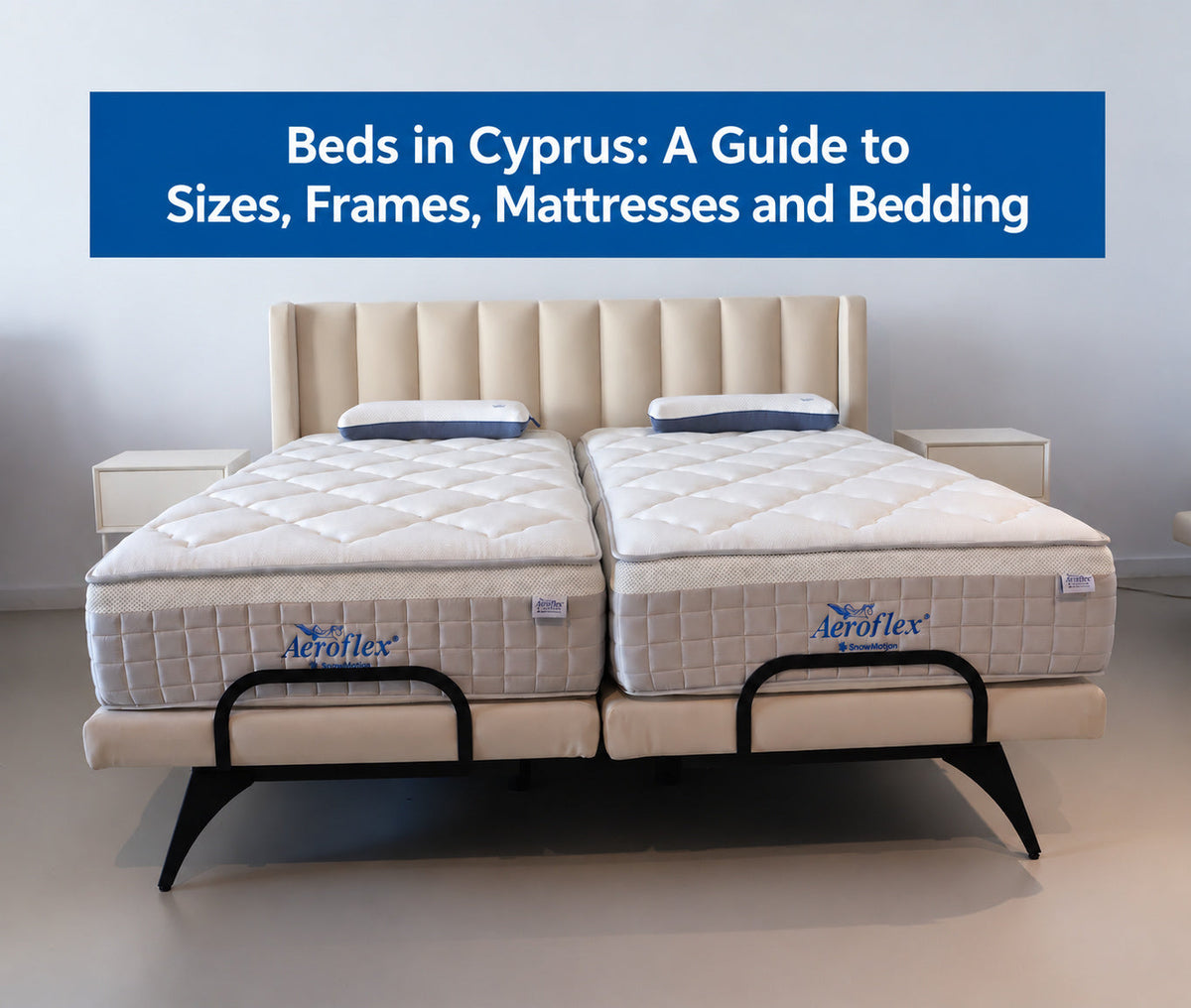
An adjustable bed changes the angle of the head or foot section using an electric motor, and it needs a mattress that bends with the frame, such as foam, latex, or a compatible pocket-spring hybrid. Electric motors raise or lower the head and foot sections. Compatible mattresses must flex without cracking their internal support layers. Control units must match the buyer's grip, reach, and ability to operate them.
Every adjustable frame must state its maximum supported weight. Nearby furniture must not obstruct moving head or foot sections. Traditional interconnected innerspring mattresses can resist bending at frame hinges. Foam, latex, and compatible pocket-spring hybrids can follow an adjustable frame's movements. Manufacturers must confirm compatibility before buyers combine mattresses and adjustable frames. An incompatible mattress can develop damaged internal layers during repeated bending. Adjustable positioning changes comfort and access but does not provide medical treatment.
Which Bed Designs Suit Different Rooms?
Small bedrooms suit low-profile frames with slim headboards, rooms with clear wall space suit tall upholstered headboards, and guest rooms suit wooden frames with under-bed storage. Restricted floor space leaves no room for a frame that projects into walking routes. Uninterrupted wall space carries the height and width of a full upholstered headboard.
Overnight-visitor rooms stay usable between stays when the bed holds bedding beneath it. Under-bed storage preserves floor space for wardrobes, desks, or walking routes. Match headboard height to ceiling clearance and adjacent furniture dimensions. Match frame finishes to existing wood, fabric, and metal surfaces. Our Bed Design Ideas guide includes room-specific layouts.
When Should You Choose a Sofa Bed?

Choose a sofa bed when a room needs to serve both seating and sleeping purposes, and choose a dedicated bed when nightly sleep comfort matters more than daytime flexibility. Three criteria govern the choice: daytime use, sleeping frequency, and conversion effort. Daytime room use determines whether permanent seating remains necessary.
Sleeping frequency determines the required mattress construction and support level. Conversion effort matters when household members must unfold the bed regularly. Guest-oriented sofa beds are designed for occasional use, not nightly use. Buyers should verify the manufacturer’s stated usage category before purchase.
How Do Sofa Beds, Armchair Beds and Day Beds Differ?
A sofa bed converts two or three seats into a double sleeping surface, an armchair bed converts one seat into a single sleeping surface, and a day bed carries a fixed single mattress that never unfolds. Conversion requires unfolding the mechanism each night and folding it back each morning. A sofa-bed mattress can measure 120 to 140 centimetres wide. Opening the mechanism requires clear floor space in front of the sofa.
An armchair bed also needs clear floor space in front once unfolded. The armchair bed's smaller footprint suits rooms without space for a two-seat sofa. The three-sided frame encloses the day-bed mattress along the back and both ends. The fixed mattress also functions as daytime seating without unfolding. Day beds therefore differ structurally from folding sofa-bed mechanisms. Buyers should confirm whether the price includes the required mattress. Format comparisons appear in Armchair Bed and Day Bed.
What Should You Check When Choosing Children’s Beds?
Choosing a children’s bed requires five checks: frame height, mattress fit, safety accessories, room layout and the age the bed must serve. Frame height affects climbing effort and fall distance from the sleeping surface. Mattress fit requires an exact match to the frame’s internal dimensions, with no gap along any edge. Safety accessories include bed guards, and each guard must suit the frame design and mattress thickness. Room layout should leave at least one unobstructed side for access. Age determines whether a cot mattress, a toddler mattress or a 90 × 200 cm single suits the child.
What Size Are Children's Single Beds, and Which Accessories Fit Them?
A children's single bed uses the same 90 × 200 cm or 90 × 190 cm sleeping surface as an adult single, set on a lower or child-scaled frame, and takes fitted sheets and bed guards matched to that mattress. Lower frame heights reduce both climbing and fall distances for children.
Room layouts should provide unobstructed access along at least one side. Fitted sheets must match the mattress width, length, and depth. Bed guards must match the frame design and mattress thickness. Parents should use only accessories approved for the specific bed model.
Bed Guards and Bed Rails: What Is the Difference?
A bed guard is a separately fitted accessory, distinct from a structural side rail built into a bunk bed frame. Parents must follow the guard manufacturer's assembly instructions exactly. The guard must support the mattress thickness specified by its manufacturer. Parents should inspect the guard-to-mattress gap after installation.
Gaps exceeding the manufacturer's limit can create entrapment hazards. Parents should inspect fixings whenever the guard moves or loosens. A correctly matched guard reduces fall risk only when installed securely. Product safety instructions must govern installation and compatibility checks. Parents must repeat the compatibility check after replacing the mattress.
How Do You Choose the Right Mattress for Your Bed?
Choose a mattress by considering four factors: the size and base combination, the construction type, the firmness and support level, and the toppers or protectors that cover the surface. The bed frame sets the dimensions, the permitted thickness and the support beneath the mattress.
Construction type determines how the mattress carries weight and how quickly the surface returns to shape. Firmness and support describe two separate properties of the same mattress. Toppers and protectors change surface comfort and cleaning without altering the mattress inside.
Which Mattress Sizes Are Compatible With Your Bed Base?
Mattress size and base compatibility require three checks: an exact size match, a compatible base type, and a permitted thickness. The mattress must match the frame's internal sleeping dimensions exactly.
Buyers should compare both components using one regional size chart. Slatted, solid, and adjustable bases require different support and flexibility. Mattress thickness must remain within the bed frame manufacturer's limit. Low divan frames may limit mattress height to 25 to 30 centimetres. Confirm the construction type and firmness after checking frame compatibility.
How Do Memory Foam, Latex and Spring Mattresses Differ?
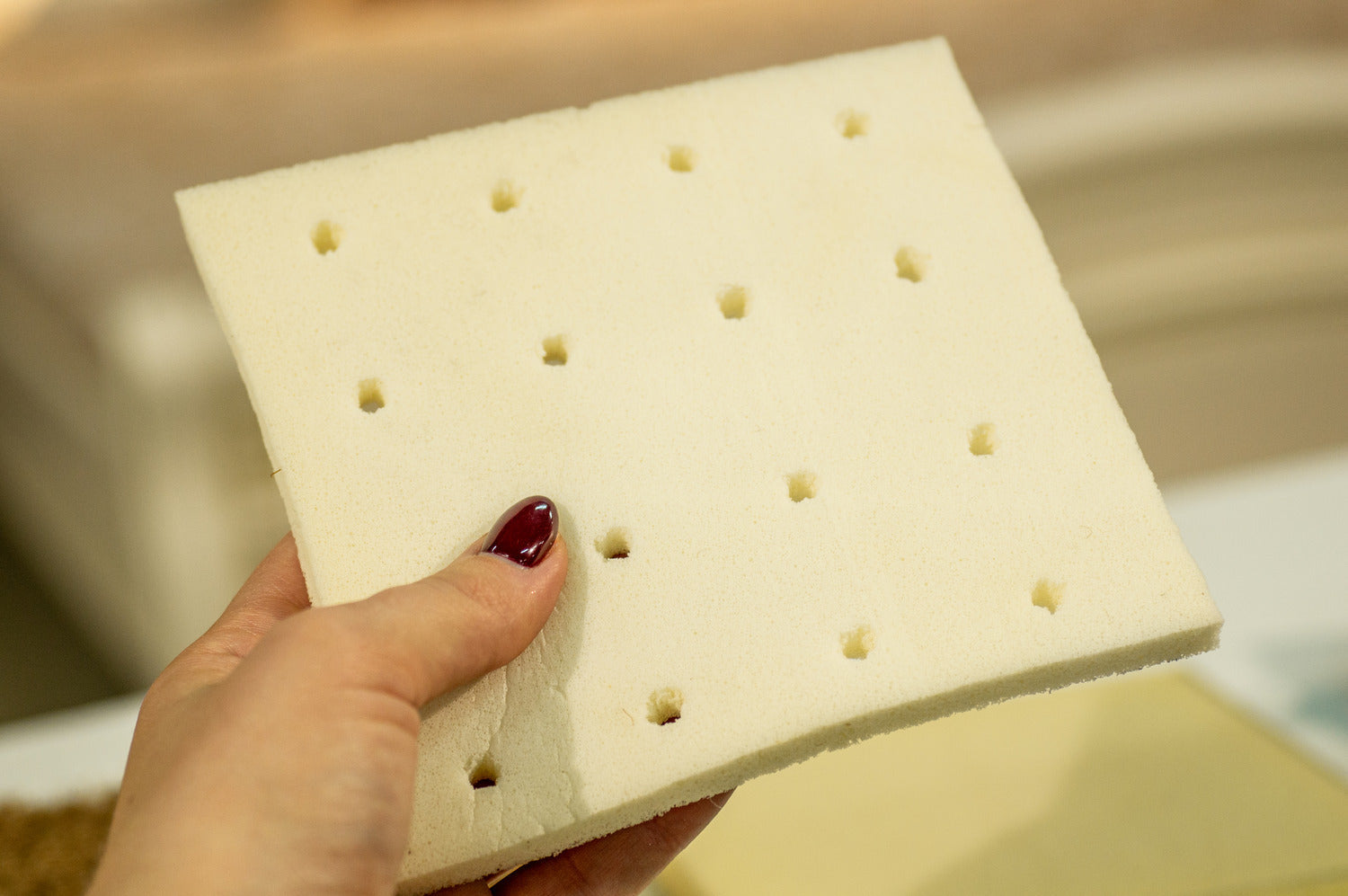
Memory foam carries body weight on heat-softened polyurethane that recovers slowly, latex on rubber that recovers fast, and spring mattresses on steel coils that push back immediately. Viscoelastic polyurethane softens under body heat and pressure before it compresses. The foam moulds around the shoulders and hips, then slowly recovers its shape.
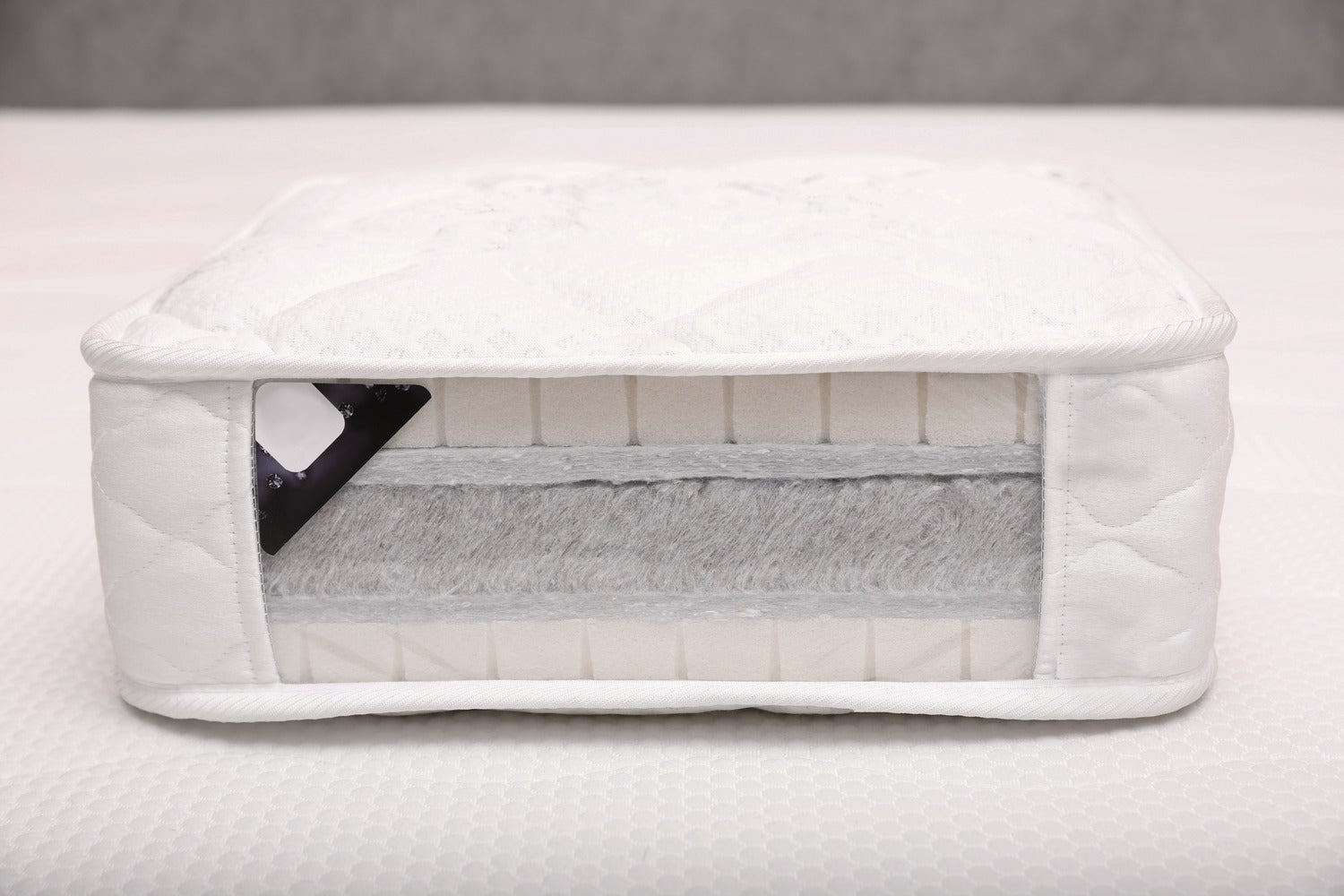
Latex comes from rubber tree sap or is made synthetically. Latex resists sinking more than memory foam under the same body weight. Pocket-spring mattresses hold each spring inside its own fabric pocket. Pocketed springs compress separately beneath the heavier parts of the body. Open-coil mattresses connect the springs with one continuous wire, spreading movement across the surface. Hybrid mattresses combine a spring unit with foam or latex comfort layers.
What Is the Difference Between Mattress Firmness and Support?
Firmness describes how the surface feels under body weight, while support describes how the mattress keeps the spine aligned. Comfort layers at the top of the mattress create the firmness a sleeper notices first. The support core beneath those layers resists sinking and keeps the spine level. A soft surface can therefore sit above a support core that holds alignment well.
No industry standard fixes firmness labels, so one brand's "medium" can feel firmer than another's. Buyers should compare firmness inside one brand's range rather than across retailers. Sleeping position and body weight change how far any rating compresses. Side sleepers meet the surface at the shoulders and hips, while back sleepers spread weight along a longer contact area.
What Is the Difference Between a Mattress Topper and a Protector?
A mattress topper adds a comfort layer above the mattress, while a protector shields the mattress surface from spills, dust and wear. Most toppers measure 5 to 10 centimetres thick and rest directly on the mattress. Toppers use memory foam, latex, wool, or fibre filling.
A topper changes the surface feel without replacing the mattress. Toppers cannot correct sagging or failed internal support. Protectors add no cushioning and stay beneath the fitted sheet. Both layers increase the depth that a fitted sheet must accommodate.
Which Bedding and Bed Linen Do You Need?
A bed needs a fitted sheet, a duvet cover or filled quilt, pillowcases and a mattress protector, each matched to the mattress width, length and depth. Package listings must identify every sheet, cover, and pillowcase included. Buyers should confirm which of those items the listed price covers before ordering.
The word "luxury" communicates market positioning rather than a fabric composition. Buyers should verify fibre percentages on each product page. Broader bedding guidance appears in Bedding and Bed Linen. Detailed quality comparisons appear in our Luxury Bedding guide.
What Does a Bedding Set Include?
A bedding set includes some combination of a fitted sheet, a flat sheet, a duvet cover and one or two pillowcases, with the retailer deciding the contents and piece count. No standard combination applies across all retailers and price categories. Two sets at the same price can therefore hold a different number of pieces.
Buyers must check the product listing before purchase, not the set name. The listing should state each item and its dimensions alongside the piece count. Sets can pair a duvet cover with pillowcases and no sheet. Sets sold as fibre-specific can still blend cotton, polyester or linen in stated percentages.
How Do You Choose Bed Sheets in Linen, Bamboo, Silk and Satin?
Match the fitted-sheet pocket to your mattress depth first, then choose linen for a fibre that softens with washing, bamboo for a viscose or rayon fabric sold under a plant name, and silk for a protein fibre that satin only imitates as a weave. Pocket depth must accommodate the mattress and any fitted topper. Pocket depths can start at 25 centimetres for standard mattresses.
Deep layered mattresses can require pockets measuring 40 centimetres or more. Cotton provides breathability and supports routine machine washing at a lower price than the four fabrics above. Linen uses flax fibre and carries a looser weave than cotton. Bamboo-labelled sheets may use bamboo-derived viscose or rayon. Fibre labels identify whether the material contains viscose, rayon, or bamboo fibre. Silk costs more than the other three and needs a gentler wash. Satin describes a weave that can use silk or polyester fibres. Buyers should reject cooling or antibacterial claims lacking named testing standards.
How Do Duvet Covers, Quilts, Comforters, Bed Covers and Bedspreads Differ?
A duvet cover holds a separate insert; quilts and comforters carry their own filling and warm the sleeper directly; and bed covers and bedspreads lie over the finished bedding for decoration rather than warmth. Cover strips remove the insert for washing, while the insert itself stays unwashed. Quilts stitch their filling into fixed compartments, while comforters hold it more loosely.
Quilts and comforters can function alone or beneath separate covers. Bedspreads reach the floor on both sides, and bed covers stop nearer the mattress edge. Bed covers also shield the bedding beneath from household dust. Buyers must match every item's dimensions to the selected mattress size. Retailer terminology can differ, so product listings must identify construction and filling.
What Is a Mattress Protector, and How Does It Differ From a Topper?
A mattress protector is a fitted layer worn beneath the sheet that shields the mattress from spills, dust, and wear; unlike a topper, it adds no cushioning. Protectors do not add the cushioning that mattress toppers provide. Buyers should match protector dimensions to the mattress width and depth.
Protection categories include waterproof barriers and allergen-resistant constructions. Approved washing instructions determine the protector's permitted cleaning method. Waterproof protectors priced from €26 suit households with young children. Hypoallergenic protectors can suit sleepers managing household dust sensitivity.
What Should You Check Before Buying a Bed in Cyprus?
Buying a bed in Cyprus follows five checks in sequence: confirm the size fits the room, confirm mattress and base compatibility, select the frame and bedding components, verify the seller’s terms, and agree delivery arrangements in writing. Room measurements determine the maximum external frame footprint. Mattress specifications determine compatible bases, dimensions, and permitted thickness. Frame and mattress selection follow separate routes, as outlined in Buying a Bed in Cyprus and How to Choose a Mattress. Seller terms must identify included components, guarantee coverage, and cancellation conditions. Delivery agreements must state total cost, access requirements, assembly, and lead times.
How Do You Compare Bed Shops, Brands and Purchase Terms in Cyprus?
Compare Cyprus bed retailers using the total delivered-and-assembled cost, not the listed frame price alone. That total resolves into five checks a buyer should put to every shortlisted retailer:
-
Included services. Ask whether the price includes delivery, assembly and old-furniture removal.
-
Separate line items. Confirm whether the base, headboard, mattress and legs are priced separately, even when photographs show them together.
-
Lead times. Check the stated lead time for stock and custom-dimension orders.
-
Delivery access. Verify access because narrow stairwells or small lifts can restrict frame sizes in older Cyprus apartment buildings.
-
Guarantee and cancellation terms. Cyprus consumer law provides a minimum two-year statutory guarantee on goods sold to consumers, separate from any longer commercial warranty, and custom-made beds and mattresses may fall outside standard cancellation rights.
Local manufacturers offering direct factory warranty support may handle repairs without involving an overseas supplier. Verify commercial claims, warranty periods and brand authorisation directly with the retailer.
How Do You Choose a Bed When You Have Back Pain?
Choose a bed with stable support, compatible components and an accessible sleeping height when back pain affects your sleep. According to Gianfilippo Caggiari and colleagues, Journal of Orthopaedics and Traumatology (Springer Nature), 2026, back pain and stiffness on waking can signal inadequate bedding support, and the right mattress firmness depends on body build, age, sex, sleeping position and temperature comfort.
The base must support the mattress's weight and meet the manufacturer's compatibility requirements. Slat spacing must follow the mattress manufacturer's maximum-gap specification. A manufacturer-approved solid base prevents unsupported mattress sections. Frame height affects the bending required when getting in or out of bed. Base firmness affects surface compression while sleepers enter or leave. Persistent or worsening back pain requires assessment by a doctor or physiotherapist.
How Do You Care for and Maintain a Bed?
Care for a bed by regularly inspecting its fittings, support components, upholstery, and moving parts. The manufacturer's maintenance schedule defines the inspection interval for each bed model. Tighten loose screws and bolts when movement or creaking develops. Inspect slats for cracks or bowing and divan bases for fabric-platform sagging. Vacuum upholstered frames and headboards when surface dust becomes visible.
Inspect adjustable-bed motors when grinding, clicking, stalling, or catching begins. Household members can perform visual inspections and tighten accessible mechanical fittings. A qualified technician should repair electrical components, motors, and structural joints. Textile labels govern bedding laundering, and our Mattress Cleaning and Hygiene guide covers mattress stains and odours. Replace components when inspections reveal cracks, sagging, failed joints, or motor faults.