If you've recently started shopping for a new mattress in Cyprus, you've likely noticed that the two most common options are latex mattresses and pocket spring mattresses. Choosing between them matters more than it might seem. In Cyprus, summer nights can remain above 30°C, while coastal humidity levels stay elevated for months. The wrong mattress material can leave you waking up sweaty, stiff, or unsupported long before the mattress has worn out.
Sleep quality depends heavily on spinal alignment, pressure relief, and temperature regulation throughout the night. In Cyprus, where the warm climate puts additional demands on mattress materials and construction, the importance of picking the right mattress is amplified. Low-quality materials can quickly lose their shape in the heat, absorb excess moisture, and become a breeding ground for allergens.
This article compares latex and pocket spring mattresses across the factors that matter most to buyers in Cyprus: Materials, Support, Cooling, Durability, Noise and Price.
Each section focuses on a specific performance area, helping you make a more informed decision based on your sleep habits and home environment. Whether you live in a Nicosia apartment or a coastal property in Limassol or Paphos, choosing the right mattress can make a significant difference in comfort and support.
What Is a Latex Mattress?
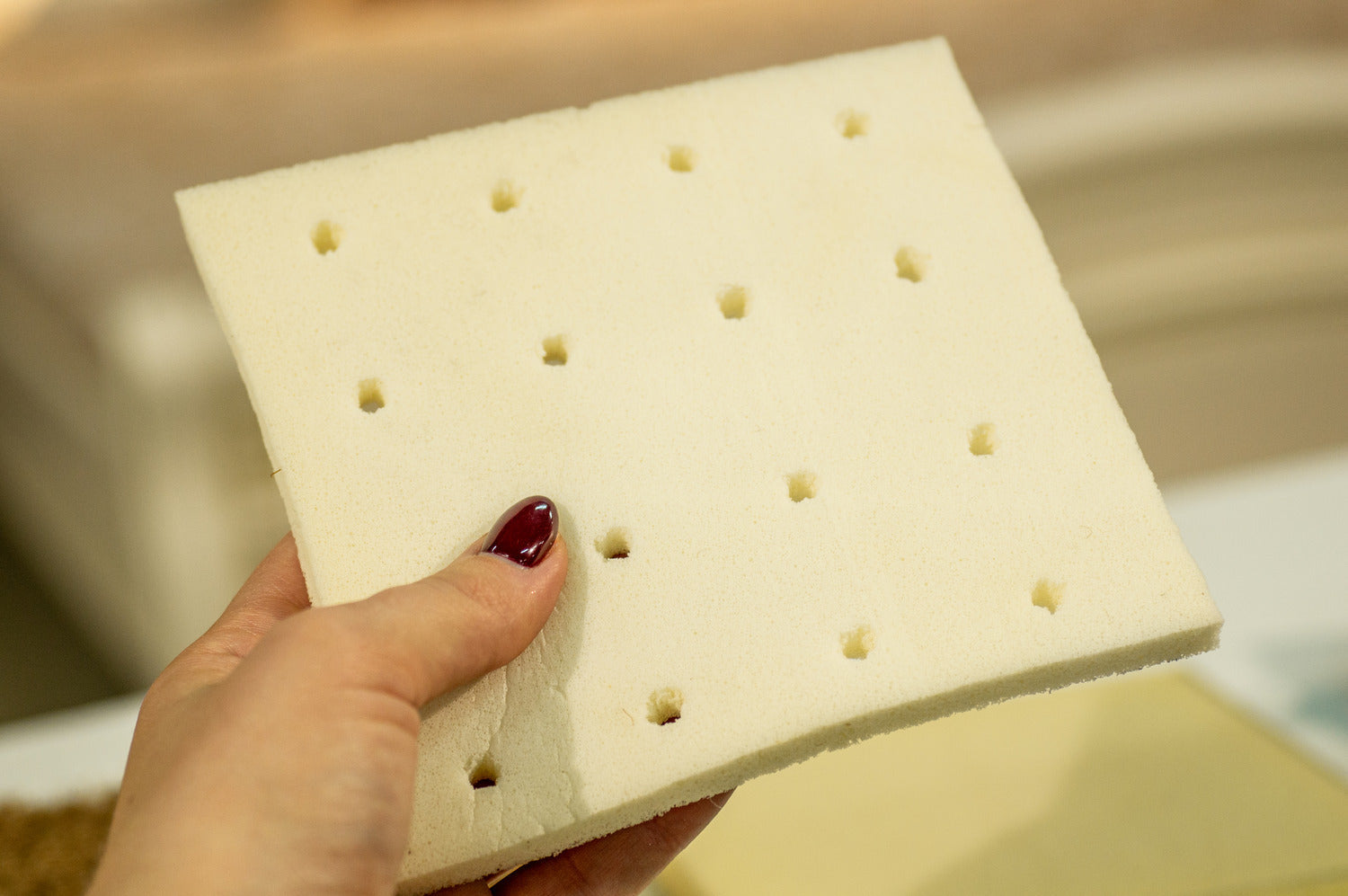
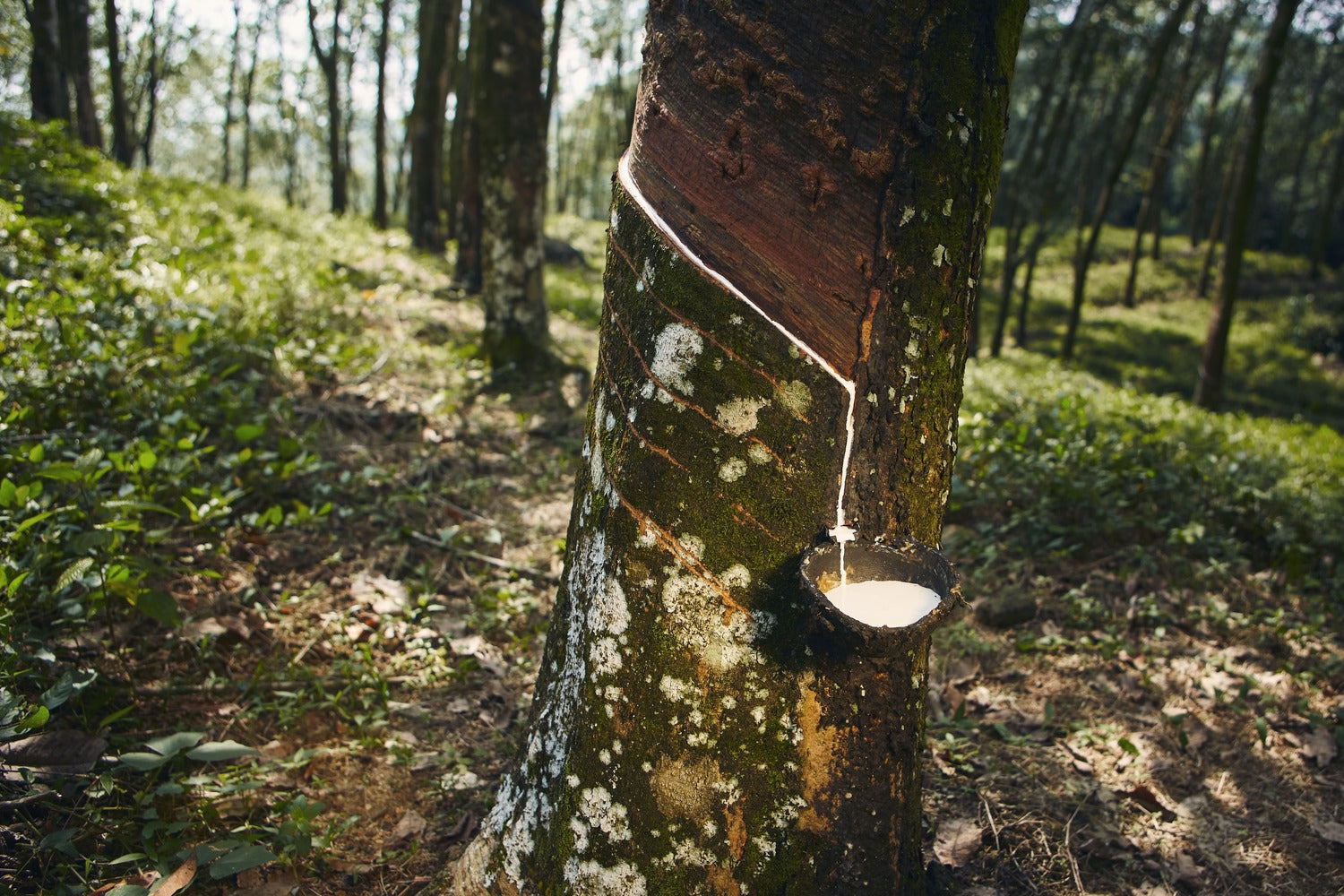
A latex mattress is built primarily from latex foam, which can be natural (sourced from rubber tree sap), synthetic (made from petrochemical compounds), or a blend of both. Natural latex is eco-friendly, highly durable, and breathable, while synthetic latex is more affordable but generally less long-lasting. Some manufacturers combine the two to strike a balance between cost and performance.
Natural latex is typically processed using one of two methods. The Dunlop method, which produces a denser, heavier foam with a firmer feel, or the Talalay method, which aerates the foam during production to create a lighter, softer, and more consistent texture. Understanding these two processes is worth knowing when you're shopping in Cyprus, as they affect both firmness and heat dissipation.
In terms of construction, a latex mattress features a latex core, sometimes arranged in layers with varying firmness levels to provide targeted support, and covered with a breathable fabric such as organic cotton. The overall feel is responsive and slightly bouncy, offering buoyant support without the deep sinking sensation commonly associated with memory foam. Natural latex is also naturally resistant to dust mites, mould, and mildew, making it particularly well suited to Cyprus’s humid island climate.
What Is a Pocket Spring Mattress?
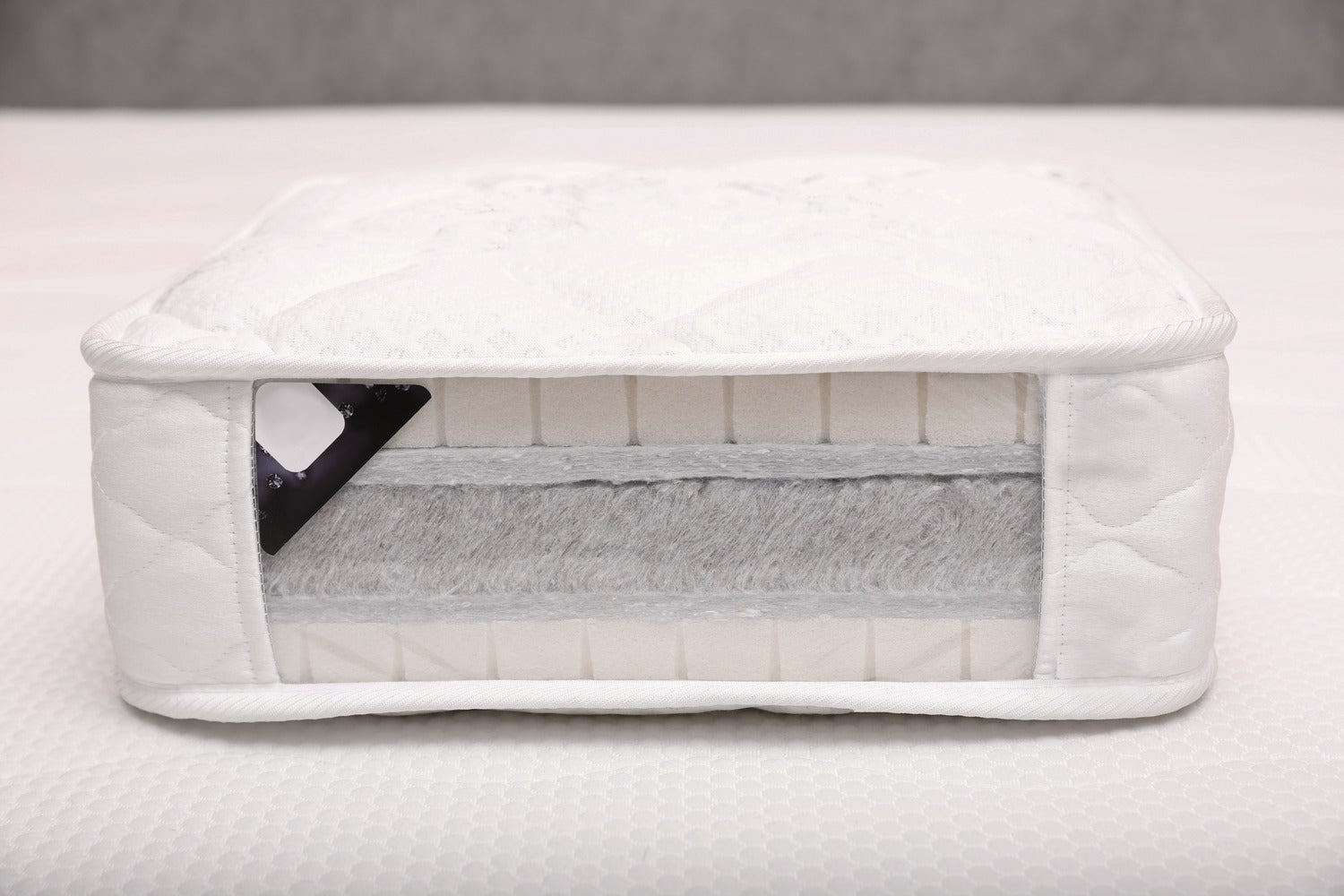
A pocket spring mattress is built around a core of individual steel springs, each one enclosed in its own fabric pocket. Because each coil is isolated within its pocket, the springs can move independently, allowing the mattress to respond to your body's specific weight distribution and shape.
The top of a pocket spring mattress typically consists of comfort layers made from foam, latex, fiberfill, or a combination of materials. These layers add softness and pressure relief above the spring core, and the overall feel of the mattress depends heavily on both the number of springs and the type of comfort layer used. More springs generally means finer, more precise response, premium pocket spring mattresses can contain over 2,000 individually wrapped coils.
The general feel of a pocket spring mattress is supportive and slightly bouncy, offering a traditional bed sensation that many buyers in Cyprus are familiar with. One notable structural benefit is airflow. Because the spring core is not solid, air can circulate freely between the coils, creating a naturally ventilated sleeping surface. Standard warranties for quality pocket spring mattresses typically run around 10 years.
What Are the Differences Between a Latex Mattress and a Pocket Spring Mattress in Cyprus?
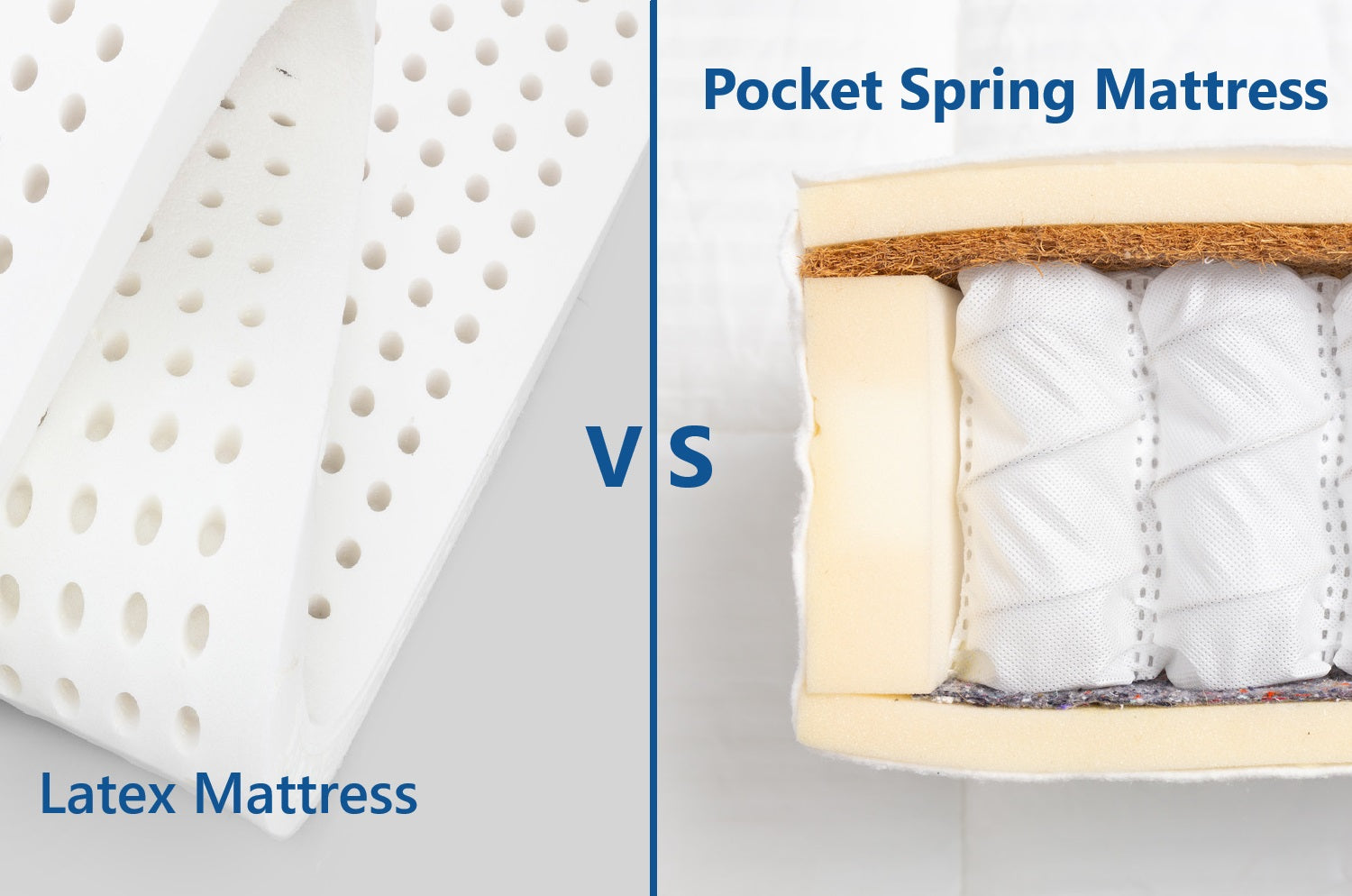
At their core, the main difference between these two mattress types comes down to construction: latex uses a continuous foam core, while pocket spring relies on a steel coil system topped with comfort layers. This fundamental difference drives most of the performance distinctions that matter to buyers in Cyprus, particularly around cooling, longevity, and price sensitivity.
In Cyprus’s climate, the key comparison criteria include how each mattress handles heat and humidity and how well it maintains support in warm conditions. Other important factors include pressure distribution, movement isolation, and overall cost within the local market. The sections below examine each of these factors in detail.
1. Support Differences Between Latex Mattress and Pocket Spring Mattress
Latex mattresses provide consistent, uniform support across the entire surface of the mattress, thanks to the continuous nature of the foam core. This means that regardless of where you lie on the mattress, you receive the same quality of support. The latex dynamically adapts to the shape of your body without creating localised pressure points. This makes latex particularly well-suited for back and stomach sleepers who benefit from even spinal alignment, as well as for heavier individuals who need steady weight distribution.
Pocket spring mattresses, by contrast, deliver zoned, targeted support through their individual coil system. Each spring responds independently to the weight applied to it. This means that areas under greater pressure, such as the hips and shoulders, compress more, while lighter areas receive less compression.
Many quality pocket spring mattresses in Cyprus are designed with multiple support zones (typically five to seven) that correspond to different parts of the body, making them highly adaptable for side sleepers who need differentiated support at the shoulders and hips. For people who suffer from back pain, both options can work well. However, latex mattresses tend to perform better in terms of consistent support, while pocket spring mattresses offer greater customisability and zoned adaptation.
2. Pressure Relief Differences Between a Latex Mattress and Pocket Spring Mattress
Latex mattresses offer notable pressure relief through their natural elasticity. The material conforms to the body's contours, cushioning key pressure points such as the shoulders, hips, and lower back, while maintaining enough firmness to prevent the body from sinking too deeply. This is often described as a "buoyant" feel, the mattress pushes back supportively rather than collapsing under weight. Talalay latex tends to offer softer contouring, while Dunlop latex is firmer and more resistant.
Pressure relief on a pocket spring mattress depends almost entirely on the comfort layers sitting above the coils. A pocket spring mattress topped with a thick layer of memory foam or latex will offer excellent pressure relief, while a model with only a thin fibre layer above the springs may feel firm and unforgiving at the hips and shoulders.
This means that pocket spring mattresses vary considerably in pressure performance depending on the brand and price point. In Cyprus's mid-range market, some models provide very good pressure relief, while budget options may leave side sleepers uncomfortable over time. If consistent, reliable pressure relief is your priority regardless of budget, a latex mattress generally offers a more predictable outcome than a pocket spring model.
3. Motion Isolation Differences Between a Latex Mattress and Pocket Spring Mattress
For couples sharing a bed, motion isolation, how much movement transfers across the mattress when one partner shifts position, is often a decisive factor. Latex mattresses perform very well in this regard: the dense, elastic foam absorbs movement at the point of origin rather than transmitting it across the sleeping surface. Research suggests that a well-constructed latex mattress can reduce perceived motion transfer by as much as 80–90% compared to innerspring designs, potentially reducing the motion transferred from a 150-lb partner's movement to just 15–30 pounds of perceived force on the other side.
Pocket spring mattresses perform better than traditional open-coil or Bonnell spring systems in terms of motion isolation, thanks to the individual encasing of each coil. Because each spring moves independently, movement on one side of the bed does not automatically pull or push the springs on the other side.
However, pocket spring mattresses do still transmit some motion — particularly on thinner or lower-coil-count models — and do not fully match the motion-dampening properties of a solid latex core. For couples in Cyprus with different sleep schedules or one light sleeper in the pair, a latex mattress remains the better choice for undisturbed nights.
4. Cooling and Breathability Differences Between a Latex Mattress and Pocket Spring Mattress
This is one of the most important comparisons for buyers in Cyprus, where summer temperatures regularly stay high through the night and humidity, particularly in coastal towns, can make heat retention in mattresses a genuine sleep issue.
Natural latex has an open-cell structure that allows air to circulate within the foam and dissipate body heat rather than trapping it. This makes natural latex significantly more breathable than memory foam and reasonably competitive with pocket springs for temperature regulation.
However, synthetic latex has a less open cell structure and tends to retain more heat than its natural counterpart. Blended latex mattresses, which are common in the mid-range Cyprus market, typically fall somewhere in between, and their cooling performance can vary considerably. Pinhole ventilation channels added during Talalay processing can improve airflow further. Pocket spring mattresses have a structural cooling advantage. The open space between the individual coils allows air to circulate freely through the mattress core throughout the night.
Since heat and moisture generated during sleep are conducted away through this natural ventilation system, pocket spring mattresses are generally considered the more consistently breathable option in hot climates. A breathable cotton or Tencel cover further enhances this effect. For hot sleepers in Cyprus, a pocket spring mattress or a natural (not synthetic) latex mattress with ventilation channels offers the best cooling performance.
5. Bounce and Responsiveness Differences Between a Latex Mattress and a Pocket Spring Mattress
Bounce and responsiveness refer to how quickly a mattress returns to its original shape after pressure is applied, a quality that matters for ease of movement, repositioning during the night, and the overall feel of the bed.
Latex mattresses are notably responsive, springing back quickly when weight is lifted. However, the bounce is controlled and moderated by the foam’s elasticity. It provides responsive support without creating an exaggerated rebound effect. This quality is particularly useful for combination sleepers (those who shift between positions during the night), as it makes repositioning easy without creating a jarring motion.
Pocket spring mattresses offer more noticeable bounce, with the steel coil system providing a lively, traditional spring feel that many buyers associate with a "proper" bed. This makes pocket spring mattresses easier to move around on, which suits active sleepers. The trade-off is that the bouncier feel can sometimes feel less controlled than latex, and for some sleepers it creates an impression of less stability.
6. Noise Levels Differences Between a Latex Mattress and Pocket Spring Mattress
Latex mattresses are completely silent. Because the construction uses a continuous solid foam with no moving parts, no noise is produced regardless of how much movement occurs on the surface, and this remains true throughout the mattress's lifespan.
Pocket spring mattresses have the potential to develop noise over time. High-quality pocket spring mattresses are engineered to minimise noise. Each spring is individually enclosed, which helps reduce coil-to-coil friction. However, steel springs can still develop faint squeaks or creaks over time.
This is more likely to happen as the mattress ages, especially if the springs become misaligned or the fabric pockets begin to wear out. This is a known long-term consideration for pocket spring mattresses, and it tends to become more noticeable after several years of use.
7. Edge Support Differences Between a Latex Mattress and Pocket Spring Mattress
Edge support refers to how stable a mattress feels when you sit or sleep near its perimeter. This is an important practical consideration for anyone who uses the full width of the bed or regularly sits on the edge while getting dressed.
Latex mattresses generally have softer edges unless the manufacturer has added reinforced perimeter foam. Because the latex core has the same density throughout, the edges can compress noticeably when sat upon, which reduces the effective sleeping surface for couples and may feel unstable for those who sleep close to the edge.
Pocket spring mattresses typically perform better in this area. Many models include reinforced perimeter springs or high-density foam edge support systems, sometimes referred to as “edge technology.” These features strengthen the border of the mattress and help prevent collapse at the sides. This makes pocket spring mattresses a practical choice for those who share a double bed and need the full sleeping surface, or for anyone who regularly sits on the edge.
8. Durability and Lifespan Differences Between a Latex Mattress and Pocket Spring Mattress
Natural latex mattresses are among the most durable mattress materials available. A high-quality natural latex mattress typically lasts 10 to 20 years without significant sagging or loss of support, and some manufacturers offer 15-year guarantees on their latex products. The material is highly resilient, resists body impressions, and maintains its structural integrity for considerably longer than most foam or spring alternatives.
Pocket spring mattresses generally have a lifespan of 7 to 10 years, depending on the quality of the coil system and comfort layers. Over time, springs can lose tension and the foam or fibre layers above them can compress and sag, particularly in cheaper models. In the Cyprus climate, the long-term exposure to heat can accelerate the degradation of foam comfort layers in pocket spring mattresses, potentially shortening their effective lifespan.
Many models include reinforced perimeter springs or high-density foam edge support systems. These features are sometimes referred to as “edge technology” and are designed to strengthen the border of the mattress while helping prevent collapse at the sides.
9. Price Differences Between a Latex Mattress and Pocket Spring Mattress
Price is one of the most significant practical differences between these two mattress types for buyers in Cyprus. Pocket spring mattresses are widely available across a broad range of price points. Entry-level options for a standard double mattress can often be found between €200 and €450, making them accessible for budget-conscious buyers. Mid-range pocket spring mattresses with higher coil counts and better comfort layers typically range from €450–€900.
Latex mattresses command a premium, particularly for 100% natural latex models. In the Cyprus market, natural latex mattresses are available from around €500 at entry level, with quality models from premium retailers and brands reaching well above €1,500–€4,000 for a double size. The higher price reflects the cost of raw materials, the more complex manufacturing process, and the significantly longer lifespan of the product.
When evaluating value for money rather than sticker price, it is worth factoring in durability: a €400 pocket spring mattress replaced every 8 years has a higher cost-per-year than a €900 latex mattress that lasts 15+ years. For buyers planning to remain in their property long-term, which is common in Cyprus’s owner-occupier market, latex mattresses often offer stronger long-term value. Their durability and consistent performance can make them a more cost-effective investment over time.
Which Mattress Is Better for the Weather in Cyprus?
Cyprus experiences some of the highest average summer temperatures in Europe, with nights in July and August regularly exceeding 27–30°C and humidity levels in coastal areas staying persistently elevated. These conditions make breathability and moisture management critical qualities for any mattress, and they tip the comparison between latex and pocket spring in some important ways.
For hot sleepers and those living in coastal homes or non-air-conditioned bedrooms, pocket spring mattresses offer a structural advantage. Their open coil core allows continuous airflow through the mattress, helping move heat and moisture away from the body throughout the night. Combined with a breathable cotton or Tencel cover, a quality pocket spring mattress performs well even on the warmest Cyprus nights. For those who prioritise long-term durability, allergy resistance, and consistent support, a natural latex mattress is often the superior all-round choice. This is especially true for people living in climate-controlled homes or those who can manage temperature effectively with a breathable mattress cover.
Natural latex resists mold and dust mites (both elevated concerns in humid island climates), maintains its shape over many years in warm conditions, and offers outstanding pressure relief and motion isolation. The key caveat is to choose natural latex rather than synthetic or heavily blended latex, as synthetic latex retains more heat and degrades faster.
A balanced option for buyers who want the best of both worlds is a hybrid mattress, a pocket spring core topped with a natural latex comfort layer. This design combines the airflow benefits of a spring core with the pressure relief, hypoallergenic properties, and durability of latex, and is increasingly available in the Cyprus market through retailers such as Panstromasew.