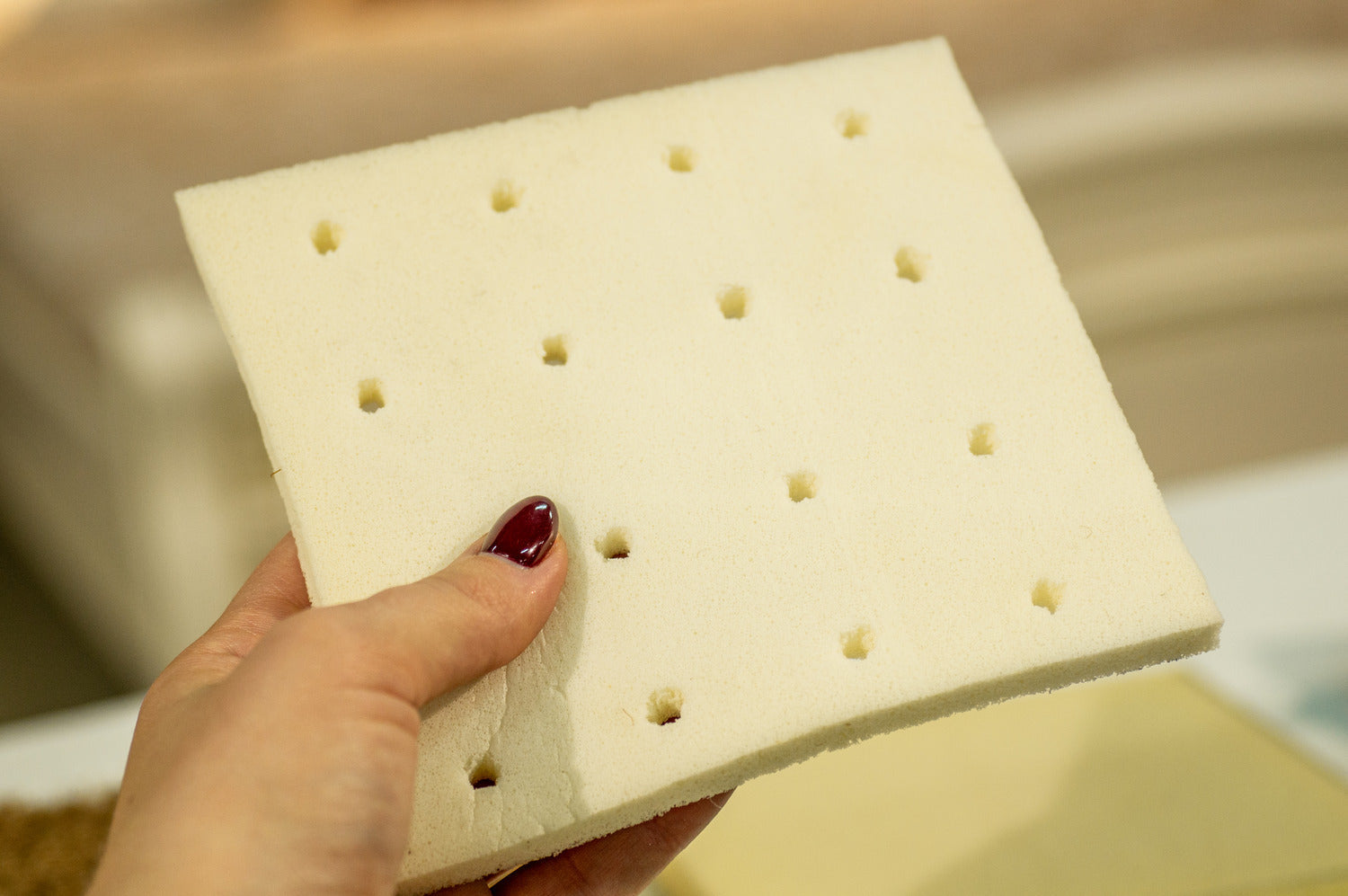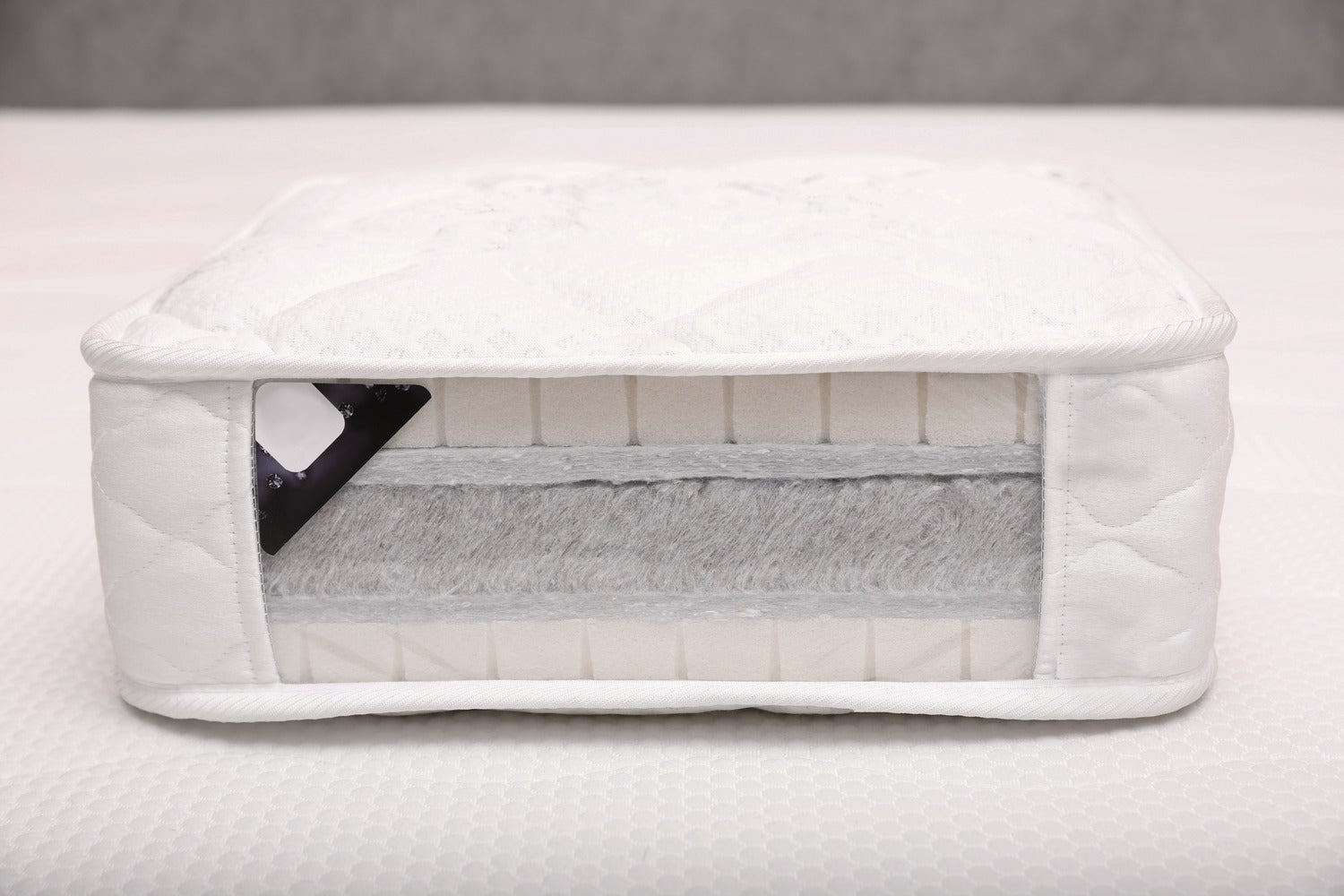

Memory foam has become one of the most popular mattress materials in the world, chosen by millions of sleepers seeking pressure relief and personalized comfort.
Yet despite its widespread use, many people don't understand what memory foam actually is, how it's manufactured, or whether it suits their individual sleep needs.
This guide breaks down the science behind memory foam, explores its chemical composition, examines comfort considerations, and helps you determine if a memory foam mattress is right for you.
How is memory foam made?
Memory foam is a type of polyurethane foam engineered to react to body heat and pressure. It was originally developed by NASA in the 1960s to improve cushioning and crash protection in aircraft seats.
The production process involves mixing polyurethane with specific additives that give it its “viscoelastic” quality — meaning it can deform under pressure and slowly return to its original shape.
During manufacturing, these ingredients are blended and expanded into large foam blocks. Once cured, the foam is cut into layers for mattresses, pillows, and other comfort products.
What chemicals form viscoelastic foam?
Viscoelastic foam (memory foam) is a type of polyurethane foam, so its chemistry is based on the standard polyurethane reaction plus specific modifiers.
At a high level, it is formed by reacting:
-
Polyols (usually polyether polyols made from ethylene oxide and/or propylene oxide, e.g., polyethylene glycol and related polyetherols)
-
Diisocyanates/polyisocyanates (commonly TDI – toluene diisocyanate – or MDI – methylene diphenyl diisocyanate, or polymeric MDI)
These react in a polyaddition reaction to form the polyurethane network, while blowing agents (typically water, sometimes with other agents) generate gas that creates the foam structure. Catalysts, surfactants, and other additives are then used to tune the foam’s viscoelastic behavior (slow recovery, temperature sensitivity, density, flammability, etc.).
Is memory foam always made from synthetic materials?
Memory foam is not purely “natural”; it is fundamentally a synthetic material, but there are partially plant‑based variants.
-
Standard memory foam is viscoelastic polyurethane made from petroleum‑derived chemicals (polyols and isocyanates), so it is considered fully synthetic.
-
Some brands market “plant‑based” or “bio‑based” memory foam, where a portion of the polyol component is replaced with plant‑derived oils, but the foam is still a modified polyurethane and not a fully natural material.
So memory foam is always at least mostly synthetic, even when marketed with natural or plant‑based additives.
How does memory foam work?
Memory foam works by combining viscosity (slow flow) and elasticity (returning to its original shape) in a special kind of polyurethane foam called viscoelastic foam. It deforms slowly under your body weight and then gradually bounces back once you move away, which is what gives it that “slow-motion” sinking and recovery feel.
When you lie down, your body heat warms the foam and makes it less stiff, so it softens more under your heaviest areas (like hips and shoulders) and less under lighter areas. This temperature- and pressure-sensitive behavior allows the foam to mold closely to your shape, spreading your weight over a larger surface area and reducing pressure points.
Inside the foam’s open-cell structure, tiny air pockets compress and slowly re-expand, which, together with the polymer’s viscoelastic behavior, explains why it responds slowly and provides strong pressure relief and motion absorption.
Why does it react to heat and pressure?
Memory (and gel) foam reacts to heat and pressure because it is a viscoelastic polyurethane material whose firmness changes with temperature and load.
-
At a microscopic level, the foam’s polymer network sits near its glass transition temperature, so even small increases in temperature from your body make the structure softer and more flexible. That is why the foam feels firmer in a cool room and gradually softens and molds as it warms up under you.
-
When you lie down, your body weight compresses the open-cell structure and your heavier areas (hips, shoulders) create more localized pressure, so the foam deforms more in those zones while remaining more supportive elsewhere. The combination of temperature sensitivity and slow “relaxation” under load gives memory foam its signature slow response, contouring, and pressure-relief behavior.
Together, these effects mean memory foam actively responds to your body, gradually softening where you’re warmest and heaviest while staying firmer elsewhere, which is what creates its “hugging” feel and even weight distribution.
What makes it return to its original shape?
Memory foam returns to its original shape because its internal polymer network is elastic and “remembers” its starting structure, even though it deforms slowly.
Inside the foam, flexible polyurethane chains form a three-dimensional network that is stretched when you lie down, creating a restoring force that tries to pull the structure back once weight is removed.
The material’s viscoelastic nature (part viscous, part elastic) plus its open-cell structure means this recovery is delayed by factors like air slowly re-entering the cells and slight stickiness between cell walls, so it springs back gradually instead of snapping back like a rubber ball.
Does density affect comfort levels?
Yes, density definitely affects comfort levels for memory foam, but not in a simple “higher is better” way.
Density plays a key role in feel and support:
-
Low-density foams (below about 64 kg/m³) are softer, cooler, and easier to move on but may wear out faster.
-
Medium-density foams (around 64–80 kg/m³) offer a balance of contouring and durability.
-
High-density foams (above about 80 kg/m³) deliver deep pressure relief and longevity but can retain more heat.
Choosing the right density depends on your body type, sleep position, and preference for firmness.
What are the different types of memory foam?
The most common types of memory foam are distinguished by how they’re formulated and what they’re infused with:
-
Traditional memory foam: Classic viscoelastic polyurethane that responds slowly, offers strong pressure relief, and tends to retain more heat than newer variants.
-
Gel-infused memory foam: Standard memory foam mixed with gel beads or gel swirls to help draw heat away from the body and feel a bit cooler on contact.
-
Open-cell memory foam: Engineered with a more open internal cell structure to improve airflow and reduce heat buildup compared with dense, closed‑cell foams.
-
Plant‑ or bio‑based memory foam: Still polyurethane, but with part of the polyol content replaced by plant oils, marketed as a somewhat more eco‑friendly and lower‑odor option.
-
Copper, graphite, or charcoal-infused foams: Memory foams that incorporate conductive or adsorptive particles to improve cooling, moisture/odour control, or antimicrobial properties.
Most modern “memory foam mattresses” use a combination of these types in different layers rather than just one single foam formulation.
Is memory foam safe and sustainable?
Most modern memory foam products sold in Europe are independently tested for safety under schemes such as OEKO‑TEX® STANDARD 100, and EU‑focused programs like EuroPUR and various national eco‑labels, which limit substances such as formaldehyde, certain heavy metals, and some flame retardants.
Sustainability, however, is more mixed: conventional foam production still relies on petrochemicals, can emit VOCs, and is not biodegradable, although newer “eco‑foam” formulations, stricter European emissions limits, and an increasing focus on recyclable components are pushing the industry toward safer, lower‑impact options.
What are the pros and cons of memory foam?
Memory foam has clear strengths and weaknesses that make it a great fit for some sleepers and a poor fit for others.
Pros of memory foam
-
Excellent pressure relief: It contours closely to your body, spreading out weight and reducing pressure on joints, hips, shoulders, and the lower back, which can help with pain and stiffness.
-
Good spinal alignment: Because it “fills in” the gaps along your body’s curves, it can help keep the spine in a more neutral position, especially for side sleepers.
-
Strong motion isolation: Movement is absorbed rather than transferred, so partners are less likely to feel each other turning or getting in and out of bed.
-
Quiet performance: There are no springs, so the mattress is virtually silent when you move.
-
Broad availability and options: Many thicknesses, firmness levels, and constructions exist (all-foam and hybrids), often available as convenient “bed-in-a-box” deliveries.
Cons of memory foam
-
Heat retention: Traditional memory foam can trap body heat and feel too warm, especially for hot sleepers or in warmer climates.
-
“Stuck in the bed” feel: The slow response and deep contouring can make it harder to change positions and may feel too enveloping if you prefer to sleep “on” rather than “in” the mattress.
-
Off-gassing odour: New memory foam often has a noticeable chemical smell for a few days; while it usually dissipates, some people find it bothersome.
-
Weight and handling: Memory foam mattresses are often heavy and flexible, which can make moving or rotating them awkward.
-
Edge support limitations: The perimeter can feel softer and less secure to sit or lie on compared with many spring or hybrid designs.
-
Mixed sustainability profile: Most foams are petrochemical-based and slow to break down, so they’re not the most eco-friendly choice, even though some brands offer more sustainable or plant-based variants.
Overall, memory foam is best suited to sleepers who prioritise deep pressure relief, motion isolation, and a more “hugging” feel, while those who sleep hot, change positions frequently, need strong edge support, or care about sustainability may be better served by latex, hybrid, or other mattress types.
Should you choose a memory foam mattress?
A memory foam mattress is a good choice for some sleepers and a poor fit for others; it depends on your body, climate, and preferences.
When memory foam is a good fit
-
You want strong pressure relief and contouring around shoulders, hips, and lower back, especially as a side sleeper or lighter back sleeper.
-
You share the bed and need excellent motion isolation so you feel less of your partner’s movements.
-
You like a “hugging,” slow‑response feel and do not mind sinking somewhat into the mattress rather than lying “on top” of it.
When you may want to avoid it
-
You sleep hot or live in a warm climate; traditional memory foam tends to retain more heat than latex or coil‑based designs, even though some modern foams add gels or phase‑change covers to reduce this.
-
You prefer a very buoyant, springy feel or need strong edge support for sitting or getting in and out of bed; many all‑foam beds are weaker here than hybrids or innersprings.
-
You are very heavy, have significant mobility issues, or dislike the “stuck in the mud” sensation; the deep contouring and slow response can make moving and repositioning harder.
-
You are highly sensitive to chemical smells or VOCs; new memory foam can off‑gas for a period after unboxing, though this usually fades with ventilation.
Choose memory foam if your top priorities are deep pressure relief, motion isolation, and a cradling feel, and you are comfortable managing heat and off‑gassing with good ventilation and cooling features. If you run hot, want a more breathable and responsive mattress, or care a lot about natural materials, a latex or coil‑based mattress is usually the better route.