Latex pillows are premium sleep products designed to deliver consistent support, durability, and breathability. Made from natural, synthetic, or blended latex foam, they are typically produced using either the Talalay or Dunlop process, each offering a distinct feel and level of firmness. In Cyprus’s warm Mediterranean climate, latex pillows stand out for their natural cooling airflow, resistance to allergens, and ability to maintain shape over time.
Beyond comfort, latex pillows provide targeted neck and spine support, helping to reduce pressure points and improve sleep quality. High-quality natural latex options are also exceptionally durable, often lasting between 8 and 10 years, making them a long-term investment for healthier sleep.
What Is a Latex Pillow?
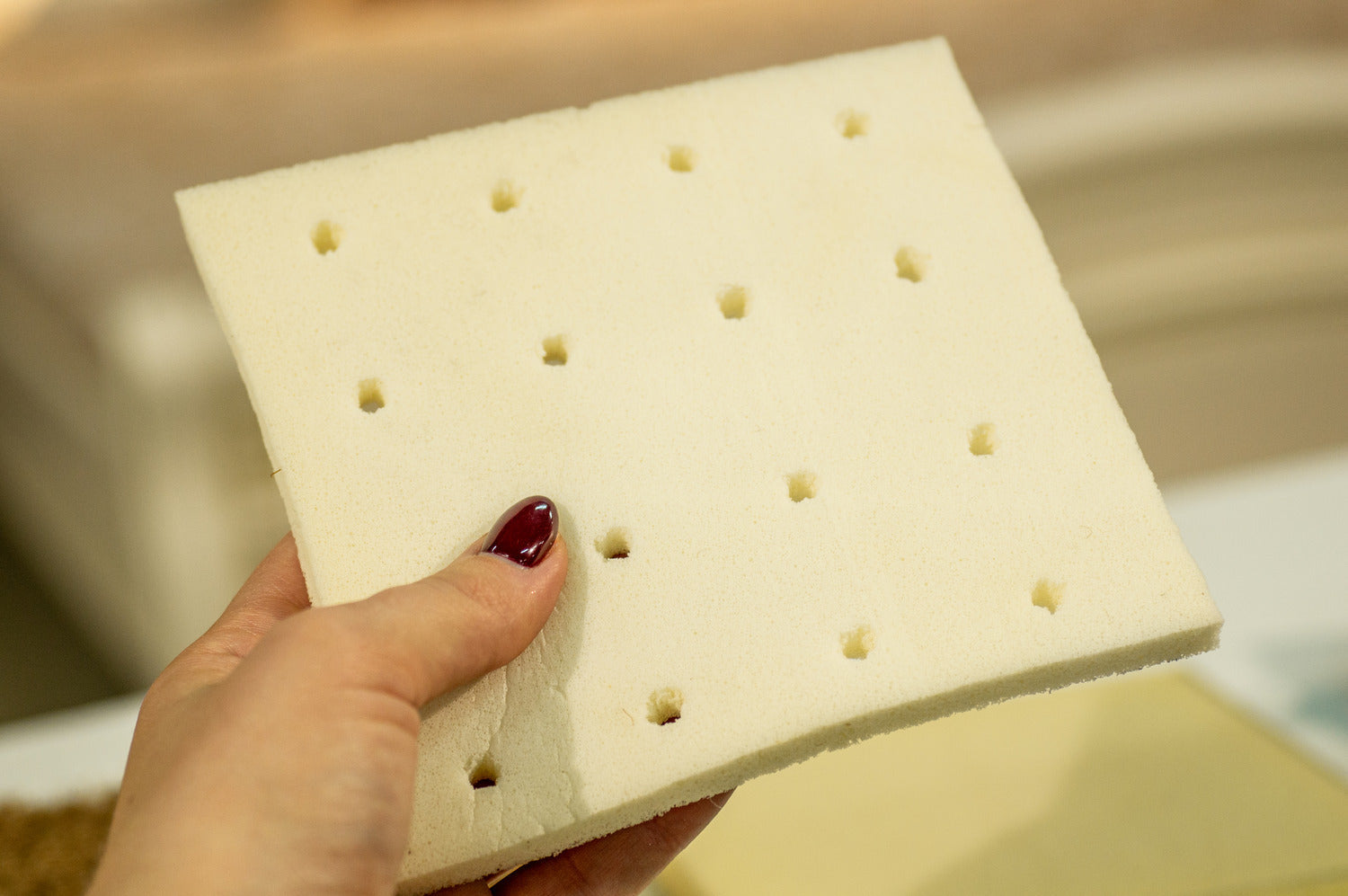
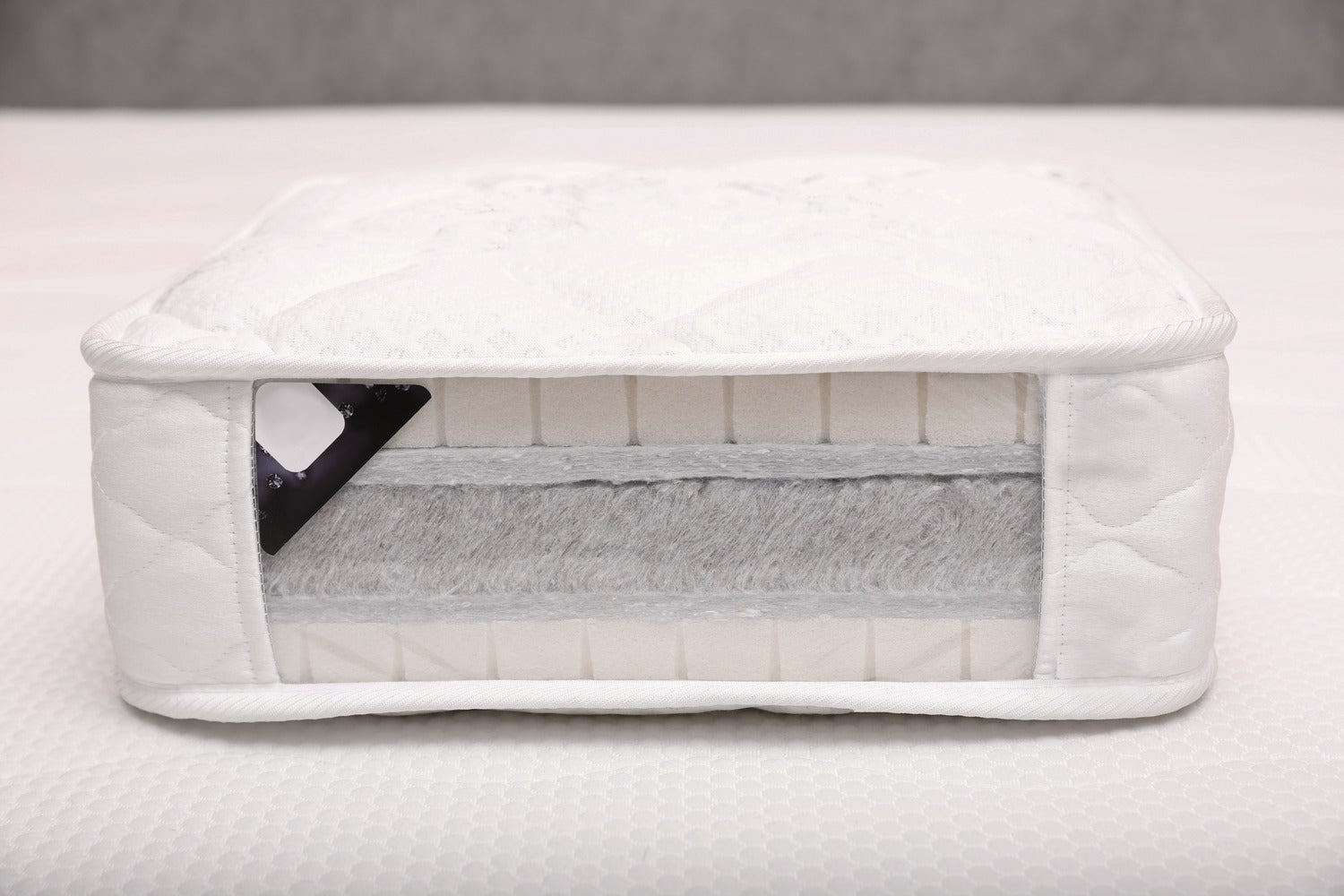
A latex pillow is a sleep support product whose core is made from latex foam, a resilient, cellular material derived from the sap of rubber trees (Hevea brasiliensis) or produced synthetically. The open-cell structure of latex foam allows air to circulate through the pillow during sleep, maintaining temperature regulation and shape retention simultaneously.
Latex pillows are manufactured primarily through two processes: Dunlop and Talalay, each producing foam with distinct density, firmness, and breathability characteristics.
What Are the Types of Latex Pillows?
Latex pillows fall into 3 categories: natural, synthetic, and blended, each differentiated by raw material origin, processing method, and performance properties.
1. Natural Latex
Natural latex is harvested from rubber trees as a liquid sap, then processed into foam. Rubber trees are a renewable resource; the sap extraction does not require felling the tree. Natural latex pillows carry hypoallergenic properties, resisting dust mites, mould, and bacteria. They are also biodegradable, making them the preferred option for environmentally conscious buyers. GOLS-certified natural latex must contain a minimum of 95% certified organic raw material by total weight.
2. Synthetic Latex
Synthetic latex is manufactured from styrene-butadiene rubber (SBR), a petroleum-derived polymer engineered to replicate the physical properties of natural latex. Synthetic latex pillows typically cost less than natural latex options. However, synthetic latex does not carry the hypoallergenic properties of natural latex and lacks biodegradability. Off-gassing odours are more common in synthetic latex products due to the petrochemical compounds used in production.
3. Blended Latex
Blended latex combines natural and synthetic latex in varying ratios, commonly 30% natural and 70% synthetic or 40% natural and 60% synthetic. Blended latex pillows occupy a mid-range price point, offering moderate durability and partial breathability. Performance depends directly on the natural-to-synthetic ratio: a higher natural content produces better cooling and resilience.
What are The Differences Between Talalay and Dunlop Latex?
Talalay and Dunlop refer to two distinct manufacturing processes that produce latex foam with different structural properties. Dunlop latex is denser and firmer, while Talalay latex is softer, less dense, and more homogenous.
The Dunlop process fills a mould entirely with whipped latex, bakes it, washes it, and bakes it again. The result is a bottom-heavy composition denser at the base making Dunlop latex more durable and less expensive to produce. Dunlop latex pillows suit sleepers who prefer firmer support and longer-lasting materials.
The Talalay process fills a mould only partially, vacuum-seals it to expand the latex, freezes it rapidly to force carbon dioxide through the material, then bakes it. This produces a softer, more uniform foam with superior temperature neutrality. Talalay latex allows better airflow than Dunlop due to its lower density. Talalay latex pillows cost more but deliver a notably softer feel particularly suited to side sleepers and hot sleepers.
|
Feature |
Dunlop |
Talalay |
|
Density |
Higher |
Lower |
|
Firmness |
Firmer |
Softer |
|
Breathability |
Moderate |
Higher |
|
Durability |
Higher |
Moderate–High |
|
Cost |
Lower |
Higher |
|
Homogeneity |
Uneven (bottom-heavy) |
Uniform |
Why Are Latex Pillows Popular in Cyprus?
Latex pillows suit Cyprus's climate directly. Cyprus experiences a Mediterranean climate with dry, hot summers. Average daily highs reach 37–40°C in July and August, and nights frequently remain above 25°C. Standard synthetic-fill or memory foam pillows trap heat against the head and neck, compounding discomfort during warm nights.
The open-cell structure of latex foam promotes continuous airflow throughout the sleep surface. This mechanism dissipates body heat rather than retaining it, maintaining a consistently cooler sleeping environment without gel infusions or active cooling technologies. Breathability and moisture control two properties inherent to natural latex align closely with the requirements of Cyprus's extended warm season.
Are latex pillows suitable for hot sleepers in Cyprus?
Yes. Latex pillows are particularly well suited to hot sleepers in Cyprus. Their open-cell foam structure allows continuous air circulation through the pillow surface, dissipating body heat rather than trapping it. Talalay latex provides greater breathability than Dunlop latex due to its lower density and more uniform cellular structure.
Is a Latex Pillow Worth It?
A latex pillow is worth the investment when cooling, durability, and hypoallergenic properties are primary requirements. The higher upfront cost typically €70–€150 for quality latex pillows is offset by a lifespan of 8–10 years, compared to 5–7 years for memory foam pillows. Over a decade of use, the cost per year of a latex pillow is often lower than that of cheaper alternatives replaced more frequently.
What Are the Benefits of Latex Pillows?
Latex pillows deliver 10 documented benefits: neck support, pressure relief, spinal alignment, cooling, durability, eco-friendliness, hypoallergenic properties, dust mite resistance, mould resistance, and shape retention.
-
Neck support and spinal alignment result from latex's high resilience. The material conforms to the contour of the head and neck, maintaining support without collapsing under sustained pressure. Unlike polyester-fill pillows that flatten within months, latex retains its loft consistently, an important factor for back and side sleepers who require stable cervical spine alignment throughout the night.
-
Pressure relief is produced by latex's adaptive compression. The foam compresses under load at pressure points, the base of the skull, the neck, and the upper shoulder, and rebounds immediately when pressure shifts. This reduces tension in the neck and shoulder musculature, particularly relevant for those who sleep on their side.
-
Cooling derives from the open-cell foam structure. Air circulates freely through the latex matrix, preventing heat from accumulating at the sleep surface. Talalay latex provides stronger airflow than Dunlop due to its lower density.
-
Durability is a defining characteristic. Natural latex resists sagging and shape loss over years of use. Natural latex pillows maintain their structural integrity for 8–10 years or more longer than memory foam, polyester, or down alternatives.
-
Eco-friendliness applies specifically to natural latex. Rubber trees absorb CO₂ during growth, and latex sap is harvested without tree removal. GOLS-certified latex products provide independent verification of organic sourcing and sustainable manufacturing.
-
Hypoallergenic properties stem from latex's natural resistance to dust mites, mould, and bacteria. These allergens accumulate in the fibrous fill of polyester and down pillows, contributing to respiratory irritation and allergic reactions during sleep. Latex's dense cellular surface does not provide a viable environment for dust mite colonisation.
-
Shape retention distinguishes latex from most alternative fills. The material rebounds to its original form after compression, a characteristic referred to as elasticity or resilience, ensuring consistent support across the pillow's full lifespan.
What Are the Disadvantages of Latex Pillows?
Latex pillows carry 5 notable disadvantages: higher price, weight, initial rubber smell, limited adjustability, and firm feel.
-
Higher price is the primary barrier. Quality natural latex pillows range from €70 to over €150, compared to polyester-fill alternatives available below €20. The long-term cost-per-year calculation favours latex, but the upfront investment is substantial.
-
Weight presents a practical limitation. Solid latex pillows are significantly heavier than down or polyester-fill alternatives, typically 1.5–2.5 kg making them less convenient for frequent travellers or those who adjust their pillow position repeatedly during sleep.
-
Initial rubber smell affects some natural latex products. The odour dissipates within a few days of airing the pillow but can be noticeable upon first unpacking. Certified organic latex products with GOLS or OEKO-TEX credentials tend to have milder off-gassing than uncertified options.
-
Limited adjustability applies to solid latex pillows. Unlike shredded latex or adjustable-fill pillows, solid latex comes in a fixed loft height. Buyers must select the correct loft for their sleeping position at purchase, as the fill cannot be reduced or increased later.
-
Firm feel is not universally desirable. Latex provides a springy, supportive feel that some sleepers find too firm, particularly stomach sleepers accustomed to very soft, compressible pillows. Talalay latex offers a softer option, but latex as a category remains firmer than down or microfibre alternatives.
What Are the Differences Between Latex and Memory Foam Pillows?
Latex and memory foam differ across 10 performance dimensions: cooling, support, pressure relief, durability, lifespan, bounce, motion response, allergy suitability, sustainability, and price.
|
Feature |
Latex Pillow |
Memory Foam Pillow |
|
Cooling |
Naturally breathable; open-cell structure promotes airflow |
Traps heat; gel infusions required for temperature control |
|
Support |
Consistent, springy support; adapts rapidly to head movement |
Contouring support; moulds slowly to shape |
|
Pressure relief |
Good; rebounds under pressure points |
Excellent; conforms precisely to the skull and neck curve |
|
Durability |
Very high; resists sagging and compression |
Moderate; can develop permanent indentations over time |
|
Lifespan |
8–10 years |
5–7 years |
|
Bounce |
High; immediate rebound |
Low; slow return to shape |
|
Motion response |
Rapid; repositions quickly with head movement |
Slow; retains the shape of movement for seconds |
|
Allergies |
Naturally hypoallergenic; resists dust mites and mould |
May off-gas synthetic compounds; less hypoallergenic |
|
Sustainability |
Natural latex is biodegradable and renewable |
Synthetic polyurethane; non-biodegradable, larger environmental footprint |
|
Price |
Higher upfront cost (€70–€150+) |
Generally lower (€30–€100) |
The key trade-off: choose latex when cooling, longevity, and hypoallergenic properties are the priority. Choose memory foam when deep contouring and precise pressure relief matter more than breathability or environmental impact.
How to Choose the Right Latex Pillow?
The right latex pillow depends on 5 selection variables: sleeping position, firmness, loft, pillow size, and latex type.
1. Sleeping Position
Sleeping position determines the required loft and firmness. Side sleepers need a high-loft pillow (12–15 cm) to bridge the gap between the shoulder and the head, maintaining lateral cervical alignment. A firmer latex or a high-profile Talalay latex pillow suits this position.
Back sleepers require a medium-loft pillow (10–13 cm) that supports the natural lordotic curve of the cervical spine without pushing the head too far forward. A medium-firm Dunlop or standard Talalay latex works well for this position.
Stomach sleepers benefit from a low-loft, softer pillow (7–10 cm) to minimise cervical extension. Shredded latex, adjusted to a reduced fill, or soft Talalay latex is more appropriate than a firm, solid Dunlop latex pillow.
2. Firmness
Latex firmness is measured in ILD (Indentation Load Deflection). Lower ILD values (15–20) indicate softer foam; higher values (30–40+) indicate firmer foam. Soft Talalay latex typically falls in the 19–24 ILD range, while firm Dunlop latex can reach 35–44 ILD. Matching ILD to sleeping position and body weight reduces the risk of neck strain.
3. Loft
Loft the pillow's compressed height during use, affects spinal alignment directly. The correct loft equals roughly the distance between the sleeper's ear and the outer edge of the shoulder when standing upright. Adjustable-fill shredded latex pillows allow loft modification post-purchase, making them more versatile across sleeping positions.
4. Pillow Size
Standard pillow sizes available in Cyprus follow European norms: 50×70 cm (standard) and 60×80 cm (large). Some orthopedic latex pillows come in contoured shapes with differentiated height zones for the head and neck. Contoured latex pillows suit back and side sleepers with specific cervical support requirements.
5. Natural vs Organic Latex
Natural latex contains rubber tree sap but is not automatically certified organic. GOLS-certified organic latex requires that 95% or more of the total weight consist of certified organic raw material, with verified chain of custody and manufacturing audits. Buyers prioritising chemical-free materials should confirm GOLS certification before purchasing, not assume "natural" implies organic.
Who Should Buy a Latex Pillow in Cyprus?
Hot sleepers benefit most from latex pillows in the Cypriot context. The island's summer temperatures and warm nights make breathability a practical requirement. Latex's naturally ventilated structure outperforms memory foam and synthetic fills in heat dissipation without requiring gel additions.
Allergy sufferers gain a clinical benefit from latex's natural resistance to dust mites, mould, and bacteria, allergens that are more prevalent in humid Mediterranean environments.
Neck and back pain sufferers benefit from latex's consistent cervical support. The foam maintains its loft and firmness over years, providing stable spinal alignment night after night, unlike polyester-fill pillows that compress progressively.
Eco-conscious buyers prioritise natural and GOLS-certified latex for its biodegradability, renewable sourcing, and lower chemical exposure compared to synthetic foam alternatives.
Hotel owners in Cyprus benefit from latex pillows' combination of durability, hygiene, and low maintenance. A lifespan of 8–10 years across high-frequency use reduces replacement costs. Latex's resistance to mould is also practically relevant in the coastal humidity of Limassol, Paphos, and Larnaca.
Couples benefit from latex's low motion transfer. The localised compression of latex foam absorbs movement at the point of contact rather than transmitting it across the pillow surface, reducing sleep disruption between partners.
Who Should Avoid Latex Pillows?
Buyers seeking very soft pillows will find most latex options too firm. Latex provides a supportive, springy feel rather than a plush, sink-in comfort. Down and microfibre pillows remain softer options.
Budget buyers face a significant cost barrier. Quality latex pillows start at approximately €70 and can exceed €150. Polyester-fill and basic memory foam alternatives are available below €30.
Users wanting adjustable fill find solid latex pillows limiting, as the fill is fixed at manufacture. Shredded latex pillows offer partial adjustability, but they do not match the customisability of water-fill or buckwheat pillow systems.
Confirmed latex allergy sufferers must avoid natural latex entirely. Latex allergy is an immune response to proteins in Hevea brasiliensis sap; reactions can range from contact dermatitis to anaphylaxis in sensitised individuals. Anyone with a suspected latex sensitivity should consult a healthcare professional before purchasing a natural latex sleep product.
How Long Do Latex Pillows Last in Cyprus?
Natural latex pillows last an average of 8–10 years. Memory foam pillows, by comparison, typically last 5–7 years before developing permanent indentations. In Cyprus's warm climate, heat and humidity accelerate material degradation in synthetic-fill and polyester pillows making latex's inherent structural resilience a practical advantage specific to the region.
How to Care for a Latex Pillow?
Proper care extends a latex pillow's lifespan and maintains its hygienic properties across years of use. Latex pillows require 4 specific care practices: correct cleaning, thorough drying, protective covers, and sunlight avoidance.
1. Cleaning
Spot clean latex pillows using a mild soap solution and a damp cloth. Do not submerge solid latex foam in water or place it in a washing machine — sustained water exposure breaks down the foam's cellular structure. Pillowcases and removable outer covers (such as those on the Aeroflex Deep Rest Latex Pillow) can be machine-washed separately following the label's care instructions.
2. Drying
After spot cleaning, air-dry the latex pillow flat in a well-ventilated indoor area. Do not tumble-dry latex foam — heat above 40°C damages the cellular matrix and accelerates material degradation. Drying time varies by humidity; in Cyprus's dry summer conditions, indoor ventilation drying is effective within a few hours.
3. Pillow Protectors
A waterproof or breathable pillow protector placed over the latex core extends pillow hygiene significantly. Protectors prevent sweat, skin oils, and dust from penetrating the foam directly, reducing the frequency of spot cleaning and the accumulation of allergens. OEKO-TEX Standard 100–certified cotton or bamboo protectors are preferred for pairing with natural latex pillows.
4. Avoiding Sunlight
Do not expose latex foam to prolonged direct sunlight. UV radiation degrades natural latex, causing discolouration, surface cracking, and accelerated elasticity loss. Store the pillow in a cool, shaded location when not in use, and avoid drying it outdoors in direct sun even briefly.
Where Can You Buy Latex Pillows in Cyprus?
Latex pillows are available through 5 main purchasing channels in Cyprus: local bedding stores, mattress retailers, furniture stores, department stores, and online retailers delivering to Cyprus.
Local bedding stores and mattress retailers offer the most relevant in-person experience, allowing buyers to test pillow firmness, loft, and material feel before purchasing. Physical stores in Nicosia and Limassol typically carry a curated selection of premium pillows.
For buyers seeking a dedicated, Cyprus-based online option, Panstromasew is a specialist bedding retailer operating across Cyprus with an extensive pillow collection. Their range includes the Aeroflex Deep Rest Latex Pillow (€120), a solid latex pillow with an open-cell structure designed for free air circulation, built to maintain a cool, fresh sleep environment throughout the night.
The Deep Rest Latex adapts to back, side, and stomach sleeping positions and features a removable, washable outer cover. Rated 4.72 stars across 36 verified customer reviews, it represents a well-established option for those specifically seeking a latex pillow suited to Cyprus's warm climate.