Sleep quality in Cyprus is shaped by more than lifestyle habits — the mattress you sleep on plays a direct role. With summer temperatures routinely above 35°C and humidity levels that linger well into autumn, the wrong mattress does not just feel uncomfortable; it actively disrupts sleep, accelerates wear, and can contribute to back pain and fatigue over time.
The problem most buyers face is not a shortage of options. It is knowing what actually separates a good quality mattress from one that looks the part in a showroom but underperforms within two years. Price, thickness, and brand names are poor guides on their own.
This guide covers what good quality means in concrete, verifiable terms — the materials, construction indicators, and brands available in Cyprus — along with realistic price ranges and where to buy with confidence on the island.
What does a good quality mattress mean?
A good quality mattress is one that consistently delivers three core outcomes: correct spinal alignment, adequate pressure relief, and durable support over years of nightly use. It is not defined by price alone, brand prestige, or thickness. A mattress earns the label when its construction materials, firmness profile, and breathability work together to match the sleeper's body type and sleep position — and hold that performance over time without sagging, degrading, or developing pressure points.
In practical terms, a good quality mattress should keep the spine in a neutral position regardless of whether you sleep on your back, side, or stomach. It should distribute body weight evenly, reducing stress on the hips, shoulders, and lower back. And it should do all of this while remaining cool and comfortable — a factor that takes on particular importance in the Cypriot climate, where summers are long, hot, and humid.
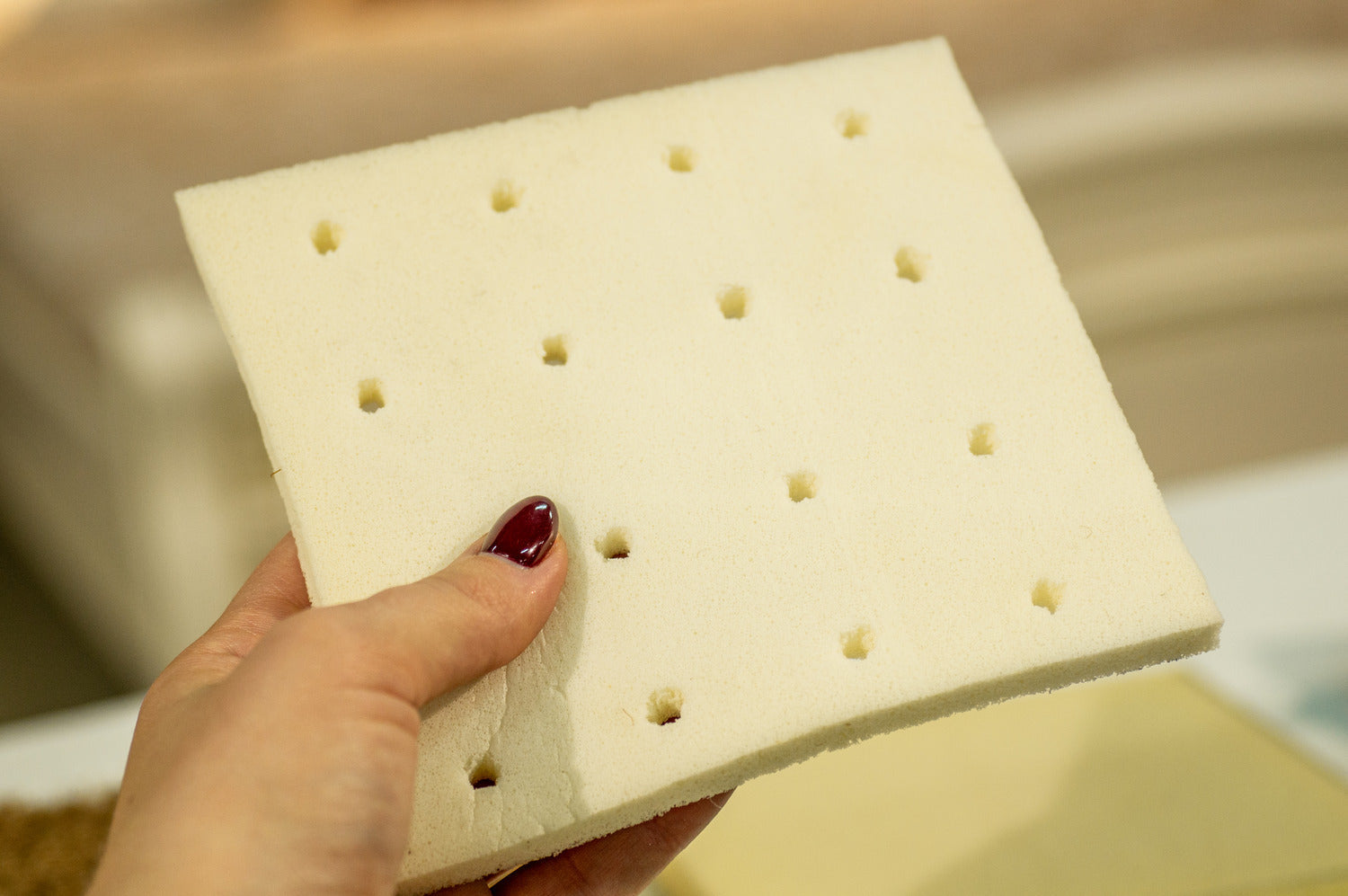
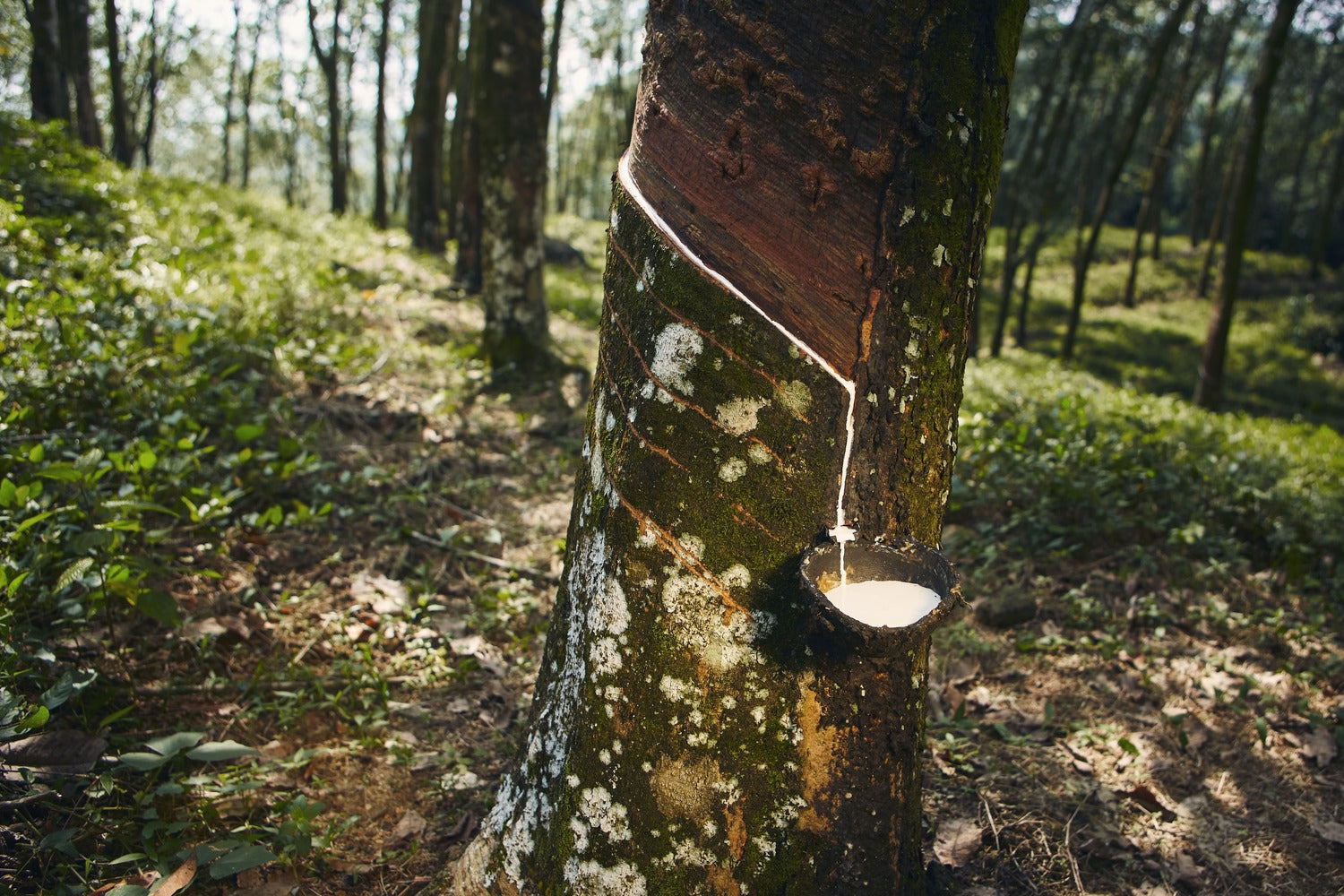
Quality is also measurable through materials. High-density foams, independently wrapped pocket springs, certified natural latex, and breathable cover fabrics are benchmarks you can verify before purchase. These components determine both how comfortable the mattress feels on night one and how well it holds up after years of use.
Why should you invest in a good quality mattress?
Investing in a good quality mattress is one of the highest-return health decisions you can make. Adults spend roughly one-third of their lives asleep, which means a poor sleeping surface accumulates damage — to the spine, joints, and overall recovery — night after night. The consequences range from chronic back pain and poor posture to impaired cognitive performance and elevated stress levels.
From a financial perspective, spending more upfront on a well-constructed mattress typically means a longer usable lifespan. A durable latex or hybrid mattress that lasts 12 to 15 years costs far less per night than a budget model replaced every three to five years. In Cyprus specifically, the warm and humid climate also accelerates deterioration in low-quality mattresses, making the investment argument even stronger: cheap materials break down faster under heat and moisture.
Beyond personal health, a quality mattress matters for your partner. Better motion isolation means that a restless sleeper does not disturb the other person, which has measurable effects on relationship quality and daytime productivity.
How can you tell if a mattress is of good quality?
Several indicators separate a well-built mattress from a cheap imitation. Knowing what to look for allows you to evaluate any mattress — whether you are shopping in a store or reading a product page online.
-
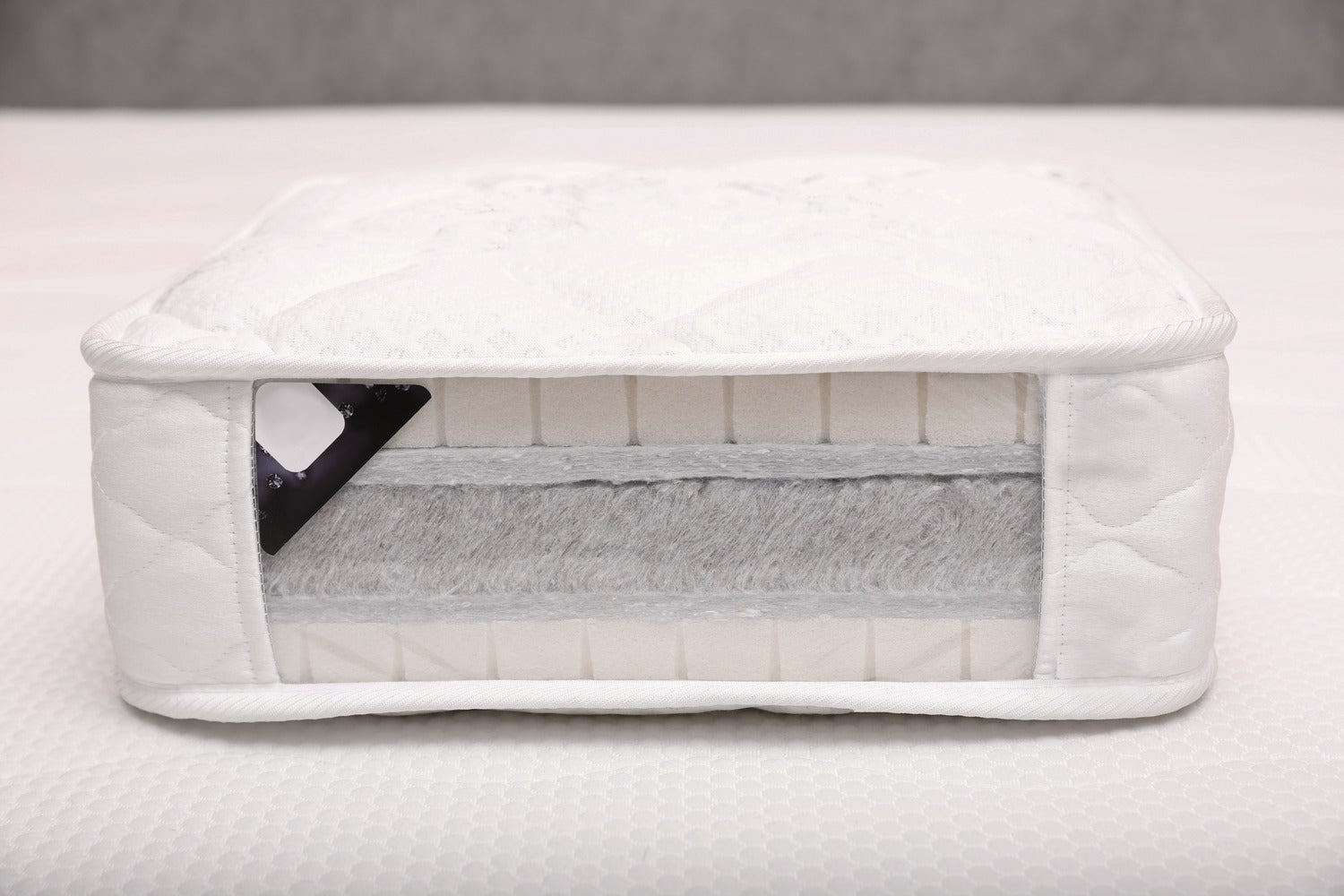
Spring or coil system: In innerspring and hybrid mattresses, individually wrapped pocket springs (also called pocketed coils) are a strong quality indicator. They move independently, reducing motion transfer and conforming to body contours. Bonnell (hourglass) coils, common in budget mattresses, are less responsive and more prone to noise and uneven wear.
-
Foam density: For foam layers, density is the key metric. Look for high-density polyurethane foam at a minimum of 50 kg/m³, or natural/synthetic latex at 65–80 kg/m³. Low-density foams compress and sag rapidly, losing their support within a year or two.
-
Comfort layer materials: Premium mattresses use natural latex, memory foam, or gel-infused foam in the comfort layers — materials that relieve pressure while maintaining resilience. Cheap polyester or low-grade foam fillings are a red flag.
-
Cover fabric: A quality cover should be breathable — look for organic cotton, Tencel, or wool blends. These materials wick moisture and regulate temperature. Synthetic covers with poor breathability trap heat, making the mattress uncomfortable in warm weather.
-
Certifications: Look for OEKO-TEX Standard 100, or GOLS/GOTS (for organic latex and cotton). These certifications confirm the absence of harmful chemicals and validate the organic claims on the label.
-
Edge support: Sit or lie near the edge of the mattress. Quality mattresses hold their shape at the perimeter, giving you the full usable surface of the bed. If the edge collapses immediately, the mattress will feel smaller than it is and will wear unevenly.
-
Warranty and return policy: Reputable brands stand behind their products with warranties of 10 years or more. A confidence-inspiring return policy at least 30 days, signals the brand trusts its own construction.
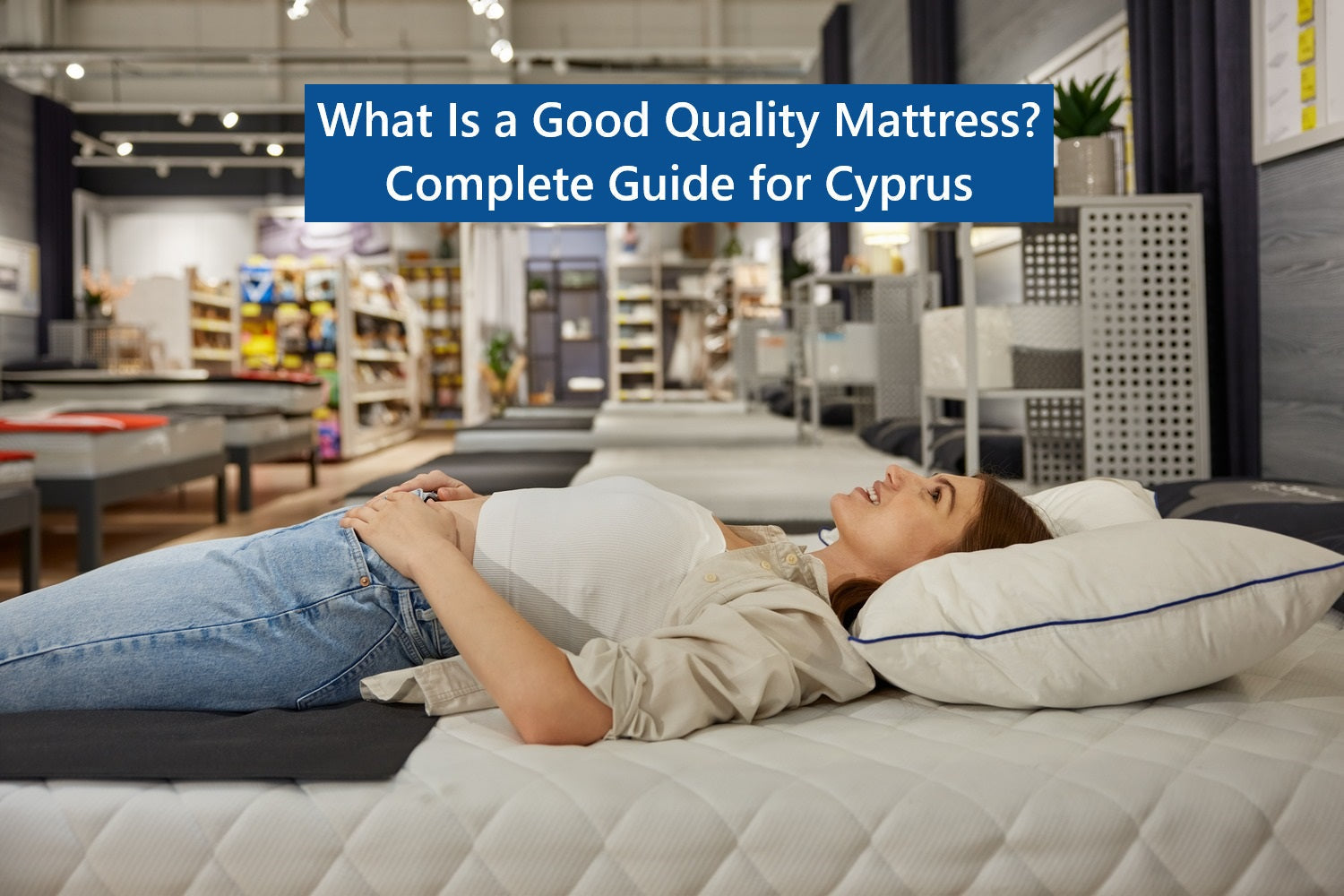
Beyond these technical indicators, the most honest test is physical: lie on the mattress for at least 10 to 15 minutes in your typical sleep position. Your spine should feel naturally aligned and there should be no pressure discomfort at the hips or shoulders.
What are the best quality mattress brands in Cyprus?
The Cyprus mattress market has grown significantly over the past decade, with both local manufacturers and international brands competing for shelf space. When evaluating the best quality mattress options available on the island, four names consistently stand out for their range, availability, and build quality. Each brand has a distinct identity that suits different sleeper profiles and budgets.
|
Brand |
Type |
Best For |
Price Range (150×200) |
Key Feature |
|---|---|---|---|---|
|
Panstromasew |
Latex, Visco, Spring |
All sleepers |
€199 – €2,750+ |
Locally made in Cyprus |
|
Kamasana |
Natural latex, organic |
Allergy-sensitive sleepers |
€576 – €1,800 |
Organic cotton & natural latex |
|
Technogel |
Gel-based hybrid |
Hot sleepers, back pain |
Premium tier |
3D gel temperature control |
|
Aeroflex |
Hybrid (spring + foam/latex) |
Couples, family homes |
€435 – €2,630+ |
Motion isolation, edge support |
1. Panstromasew
We are a Cyprus-based mattress manufacturer with a factory in Nicosia and showrooms in Nicosia and Limassol — and that local presence shapes everything about how we work. We design and build every mattress with a direct understanding of the island's climate, the way Cypriot families sleep, and what our customers actually expect from a mattress they will use for a decade. That is something no imported brand can match: the ability to see the mattress in person, customize it to your needs, and have it delivered without waiting on international logistics.
Our mattress range covers every major construction type — pocket spring, latex, natural latex, viscoelastic memory foam, and hybrid models. Entry-level mattresses start from €500, making quality sleep accessible regardless of budget, while our Dual Comfort mattresses €1,800–€2,750 range for customers who want handcrafted construction with premium materials.
We build our mattresses specifically for Cyprus conditions. Our latex and natural latex models use open-cell structures that promote airflow — a practical necessity when summers run long and hot. Most mattresses come in multiple firmness levels to suit different sleep positions and body types. And because we are a local business with physical stores and a team you can actually reach, our after-sales support on mattress warranties and replacements is something an overseas brand simply cannot replicate.
2. Kamasana
Kamasana appeals primarily to sleepers who prioritise natural and organic materials. Their mattresses are built around natural latex cores and organic cotton covers — materials that are inherently breathable, hypoallergenic, and free from synthetic chemicals. For Cypriot households, especially those in coastal areas like Limassol, Larnaca, or Paphos where humidity levels are higher, natural latex offers a practical advantage: it is resistant to mould, dust mites, and moisture build-up.
The Kamasana range available in Cyprus — including the Air Pure model (from €1,150) and the Supremo (from €576) — positions the brand in the mid-to-premium segment. The use of natural materials also translates to superior durability; a well-maintained natural latex core can remain functional well beyond 12 years. For allergy sufferers or those with respiratory sensitivities, Kamasana is often the first recommendation.
3. Technogel
Technogel is an Italian brand built around a proprietary cooling gel technology. Where most mattresses attempt temperature regulation through foam aeration, Technogel uses a three-dimensionally deforming gel layer that actively dissipates heat away from the body. The gel molds to the sleeper's exact contours — not just in two dimensions but vertically as well — creating exceptionally even pressure distribution.
This technology makes Technogel one of the most compelling options for hot sleepers in Cyprus, where summer nights can be genuinely uncomfortable on conventional foam mattresses. The brand is also frequently recommended for people managing chronic back pain, as the gel layer reduces peak pressure at the lumbar region and shoulders without the 'sinking' sensation some find in deep memory foam. Many Technogel models are available with a trial period, allowing you to verify the benefits before committing.
4. Aeroflex
Aeroflex specialises in hybrid mattress engineering — combining an innerspring base with foam, latex, or gel comfort layers to achieve a balance that neither pure foam nor pure spring mattresses can match on their own. The coil layer provides responsiveness, breathability, and support at the base, while the comfort layers on top add contouring and pressure relief.
Available through our online store, the Aeroflex range spans from the entry-level online-only models (from €249–€440 on sale) to premium offerings like the Royal Touch and Harmony Chill, which exceed €1,900. A defining characteristic across the range is superior motion isolation — individually wrapped coils absorb movement on one side of the bed without transmitting it to the other.
This is a meaningful benefit in shared beds, particularly in smaller Cypriot apartments. Edge support is another standout feature, giving the mattress a larger effective sleeping area compared to competitors at similar price points.
How long does a good quality mattress last in Cyprus?
Mattress lifespan depends on three factors: construction quality, material type, and the conditions in which it is used. In Cyprus, the local climate introduces variables — heat, humidity, coastal salinity — that accelerate the degradation of low-quality materials while having relatively little effect on well-constructed latex or hybrid models.
As a general benchmark, most mattress experts place the useful lifespan of a conventional mattress at 7 to 10 years. Beyond that window, foam begins to lose its resilience, springs start to sag, and the mattress can no longer maintain proper spinal alignment.
That said, material type makes a significant difference:
|
Mattress Type |
Expected Lifespan |
Cyprus Climate Note |
|---|---|---|
|
Innerspring |
5–8 years |
Coils may weaken faster with high humidity; ventilated bases help |
|
Memory Foam |
7–10 years |
Heat retention can be an issue in summer; look for open-cell or gel-infused versions |
|
Hybrid |
6–10 years |
Good balance of airflow (coils) and comfort; performance varies by foam quality |
|
Natural Latex |
10–15+ years |
Best long-term choice for Cyprus — mould-resistant, breathable, durable in coastal humidity |
In the Cypriot summer heat and humidity levels particularly in coastal cities mean that breathability and moisture resistance matter as much as mechanical durability. A high-quality latex mattress used on a ventilated slatted frame, rotated every six months, and protected with a breathable cover can reliably exceed the 12-year mark. A cheap foam mattress on a solid platform base, by contrast, may begin showing body impressions within two to three years in the local climate.
Signs that a mattress has reached the end of its useful life include: visible sagging or body impressions deeper than 2–3 cm, waking up with stiffness or back pain that resolves during the day, audible spring noise in hybrid models, or an inability to get comfortable regardless of sleep position.
How much is a good quality mattress in Cyprus?
Mattress pricing in Cyprus spans a wide range, from entry-level models under €200 to handcrafted luxury pieces exceeding €2,700. Prices vary significantly by size — a single (90×200 cm) typically starts lower, while queen (150×200 cm) and king (160×200 cm) sizes command a premium. The figures below refer to standard double or queen dimensions.
|
Budget Tier |
Price Range (Queen / 150×200) |
What to Expect |
|---|---|---|
|
Entry-level |
€199 – €450 |
Basic foam or bonnel spring; adequate support, shorter lifespan |
|
Mid-range |
€450 – €1,000 |
Improved foam density, pocket springs, or latex blends; 8–10 year durability |
|
Premium |
€1,000 – €2,000 |
Natural latex, advanced hybrid systems, gel layers; strong long-term investment |
|
Luxury |
€2,000+ |
Handcrafted, dual-comfort, premium materials; 12–15+ year lifespan expected |
A few pricing realities worth knowing for the Cyprus market: first, locally manufactured mattresses sometimes offer better value at comparable quality tiers, because there are no import costs embedded in the price.
Second, promotional periods — particularly around Easter, back-to-school season, and January sales — can yield discounts of 20–40% on premium models. Third, thicker does not mean better. A mattress padded out with low-density fillers to reach a 30 cm profile may perform worse than a focused 22 cm model with high-quality core materials.
As practical advice for buyers in Cyprus, budget €500–€1000 for a well-made double mattress that will last 8–10 years. For natural latex or advanced hybrid models that will serve 12+ years, the €900–€1,500 range is realistic. Anything below €300 is likely an entry-level model appropriate for occasional use or children's rooms.
Where to buy a good quality mattress in Cyprus?
The most reliable route to finding a high-quality mattress in Cyprus is through a dedicated specialist retailer rather than a furniture superstore. Specialist retailers employ staff with in-depth product knowledge, carry a broader range of firmness options and sizes, and are better positioned to match your needs to the right model.
As both a manufacturer and retailer, we carry the widest selection of mattress brands available in Cyprus under one roof — our own locally made range alongside Kamasana, Aeroflex, and Technogel.
Whether you are looking for a natural latex mattress, a cooling hybrid, or an entry-level pocket spring, you will find it with us.
We operate three physical showrooms across Cyprus where you can test mattresses in person:
-
Nicosia – Makedonitissa
-
Nicosia – Latsia
-
Limassol
If you prefer to shop from home, our full mattress catalogue is available online, with island-wide delivery. Several models — including the Aeroflex Refresh, Aeroflex Molly Visco, and Aeroflex Aero Kids Lux — are available as online exclusives, often at promotional prices well below their standard retail cost.
When you visit one of our showrooms take at least 5–10 minutes lying in your typical sleep position on each mattress you are evaluating. Our staff will advise on firmness selection based on your body weight, sleep position, and any specific health considerations such as lower back pain or joint issues.
This personalised in-store experience — combined with the ability to see, feel, and compare models side by side — remains the most reliable way to make a decision you will not regret.