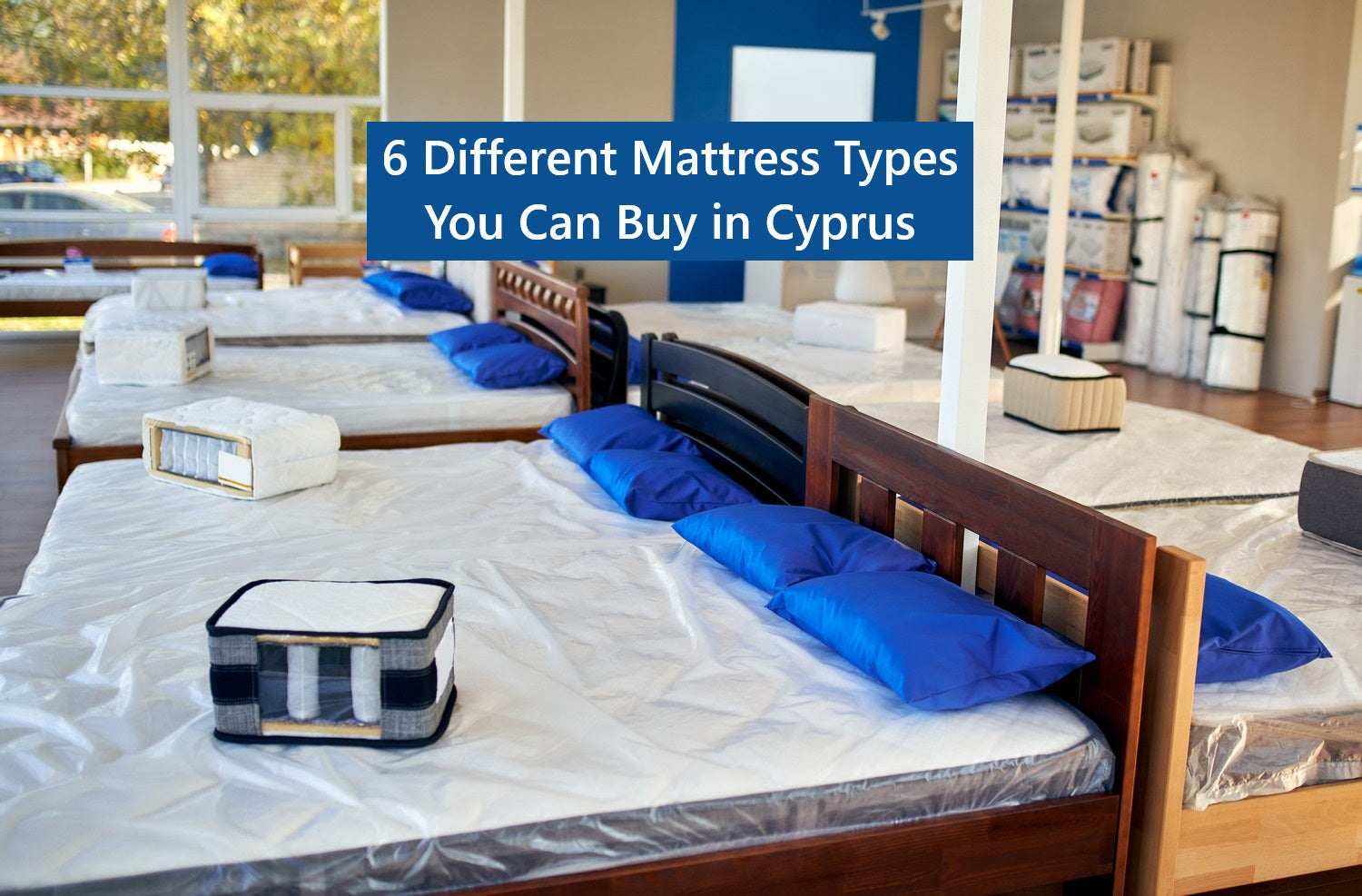
Walk into any mattress store in Cyprus and you will find no shortage of options — memory foam, pocket springs, hybrid constructions, latex, orthopedic models, and premium gel systems. The variety is useful, but it can make a straightforward purchase feel surprisingly complicated.
Most people spend more time choosing a sofa than a mattress, despite sleeping on it for the next decade. The wrong choice means years of poor sleep, back discomfort, and eventually replacing the mattress earlier than necessary. The right one, matched properly to how you sleep and where you live, pays for itself in better rest.
This guide covers the six mattress types available in Cyprus — what each one is made of, how it performs, and who it suits best — so you can make an informed decision rather than guessing in-store.
What are the six different types of mattresses in Cyprus?
Choosing a mattress in Cyprus is not a decision to rush. Between the warm Mediterranean climate, the variety of imported and locally crafted options, and the wide range of sleep preferences across Cypriot households, the choice can feel overwhelming.
Whether you are furnishing a new home in Nicosia, replacing an ageing mattress in Limassol, or simply trying to sleep better, knowing what each mattress type actually offers makes the decision far easier.
There are six main mattress types available in Cyprus: memory foam, spring, hybrid, latex, orthopedic, and Technogel. Each is built from different materials and serves different sleep needs. Here is what you need to know about each one.
1. Memory Foam Mattresses
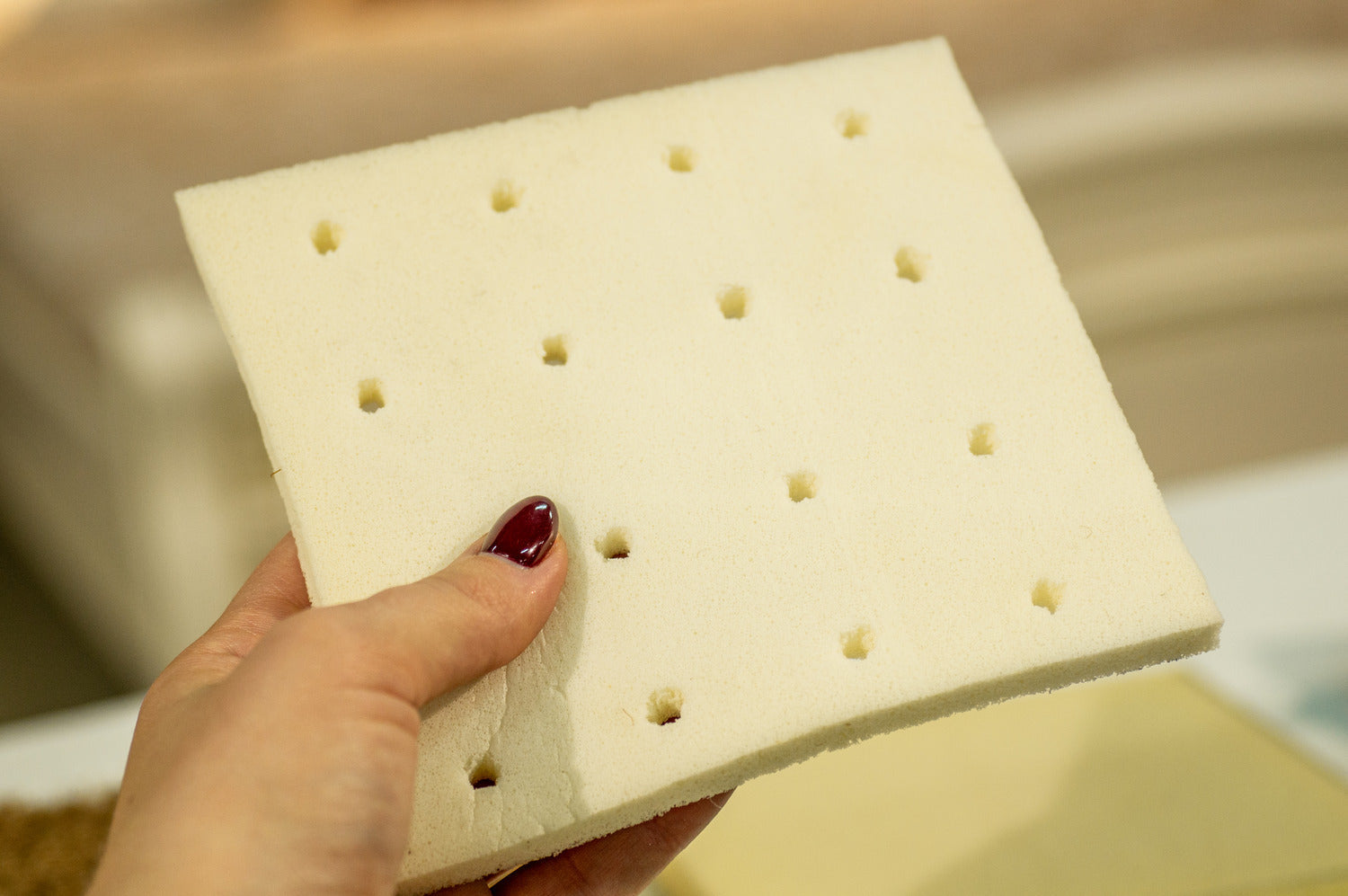
Memory foam mattresses are made from viscoelastic foam that responds to both body heat and pressure. When you lie down, the foam softens and conforms precisely to the contours of your body — your shoulders, hips, and lower back — then slowly returns to its original shape once you move.
This pressure-adaptive quality makes memory foam particularly well-suited to side sleepers and anyone dealing with chronic joint or back pain, as it reduces stress on pressure points rather than pushing back against them.
In Cyprus, the climate factor matters. Traditional memory foam can trap heat, which is a genuine concern during the long, hot summers. Many modern memory foam mattresses address this through open-cell foam constructions or gel-infused layers that promote airflow. If you are considering a memory foam mattress for year-round use in Cyprus, look specifically for models with cooling technology or breathable covers.
Memory foam also absorbs motion exceptionally well. If you share a bed and your partner moves frequently during the night, memory foam minimises the transfer of that movement to your side of the mattress.
Best for: Side sleepers, couples, people with joint pain, those who want precise body contouring.
2. Spring Mattresses
Spring mattresses also referred to as innerspring mattresses — use a system of metal coils as the primary support structure. The coils compress and rebound under your body weight, providing a firmer, more responsive sleeping surface than foam.
There are two main types of spring systems you will encounter in Cyprus:
-
Open coil (Bonnell springs): The coils are connected in a network. These are typically more affordable, but movement on one side of the mattress transfers more noticeably to the other.
-
Pocket springs: Each coil is individually wrapped in fabric, so they move independently. This greatly reduces motion transfer and provides more targeted support across different body zones.
Pocket spring mattresses are the more refined choice and are widely available across Cyprus. The independent coil movement means they adapt better to two sleepers with different weights and preferences, and the open structure of the spring system allows for good air circulation — an important advantage in the Cypriot heat.
Spring mattresses tend to be firmer and more durable over time. They are a practical, cost-effective choice and remain one of the most popular options among Cypriot consumers.
Best for: Hot sleepers, back and stomach sleepers, those who prefer a more traditional firmer feel, couples with different firmness preferences (pocket spring variant).
3. Hybrid Mattresses
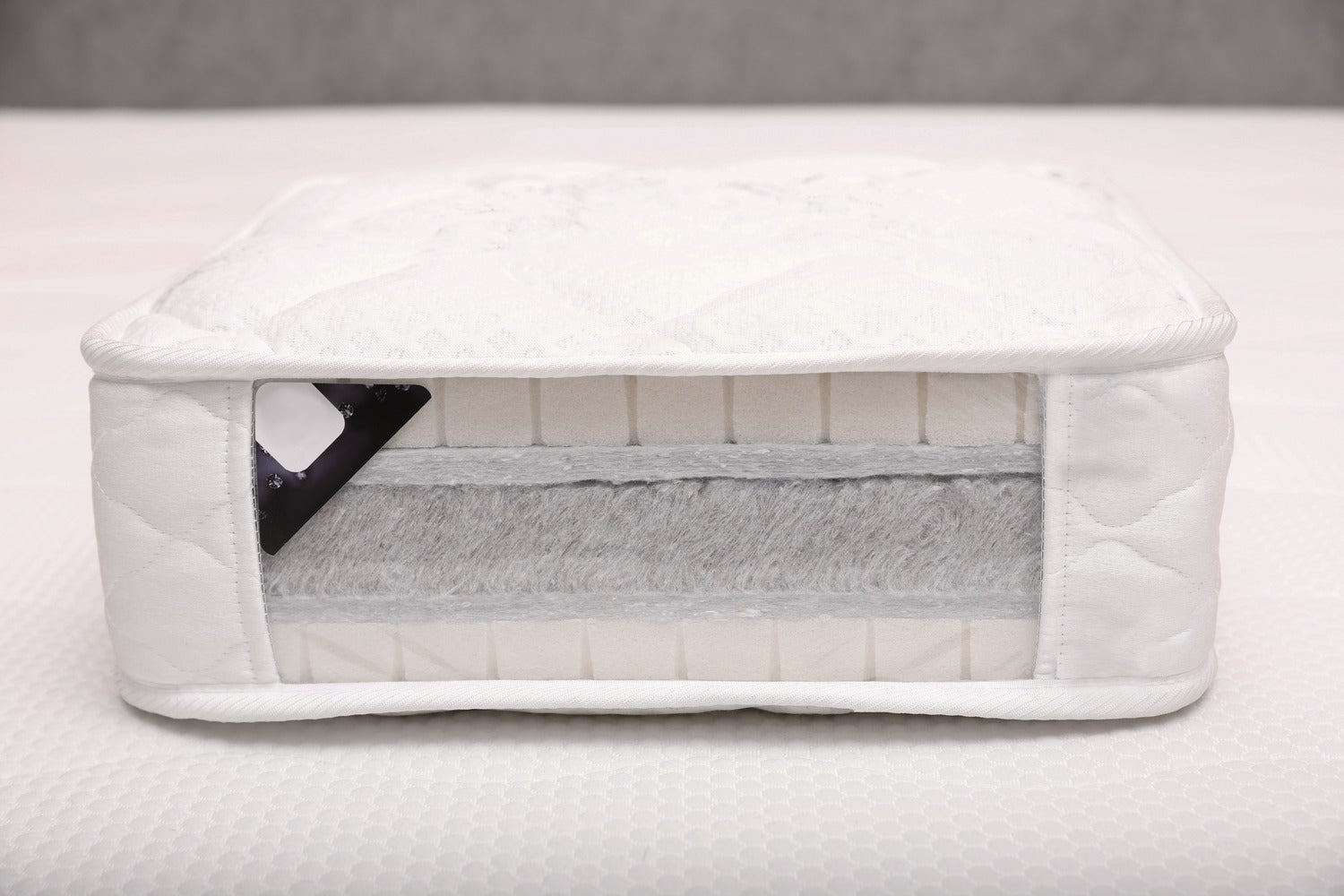
A hybrid mattress combines a pocket spring support core with one or more comfort layers of foam, latex, or gel material on top. The goal is to deliver the responsiveness and breathability of springs alongside the pressure relief and contouring of foam or latex.
Hybrids are increasingly popular in Cyprus because they address the two most common complaints about single-material mattresses: that foam sleeps too hot, and that springs do not provide enough pressure relief. By combining both systems, a well-made hybrid can offer the best properties of each.
The key to a quality hybrid lies in the thickness and quality of the comfort layers. A thin foam layer over springs adds minimal benefit. A substantial layer of memory foam or natural latex — typically 5 cm or more — meaningfully changes how the mattress feels and performs.
Hybrid mattresses are also versatile across sleep positions. They provide enough support for back and stomach sleepers while offering adequate pressure relief for side sleepers.
If you are looking for a single mattress to suit different needs, or if you want comfort without sacrificing support or breathability, a hybrid is worth serious consideration.
Best for: Combination sleepers, couples with different preferences, those who want a balance of support and comfort, hot sleepers who also want contouring.
4. Latex Mattresses
Latex mattresses are made from the sap of rubber trees (natural latex) or from a synthetic latex equivalent. Natural latex is known for its responsiveness, durability, and inherently hypoallergenic properties — it resists dust mites, mould, and bacteria without the need for chemical treatments.
Unlike memory foam, latex does not contour by softening under heat. Instead, it pushes back against your body with a buoyant, springy feel. This means you feel supported on top of the mattress rather than sinking into it — a distinction many sleepers find more comfortable, particularly those who find memory foam too enveloping.
There are two main types of natural latex construction:
-
Dunlop latex: Denser and firmer, particularly toward the base. Typically more affordable and very durable.
-
Talalay latex: More consistent cell structure throughout, producing a softer, more uniform feel. Better for comfort layers.
For the Cypriot climate, latex has a meaningful advantage: its open-cell structure allows excellent airflow, keeping the sleeping surface cooler than most foam options. Natural latex is also highly durable — a quality mattress can last 15 to 20 years with proper care.
The main consideration is cost. Natural latex mattresses sit at the higher end of the price range, but they offer long-term value for those who prioritise breathability, natural materials, and longevity.
Best for: Allergy sufferers, hot sleepers, those who prefer a responsive rather than contouring feel, eco-conscious consumers, back sleepers.
5. Orthopedic Mattresses
The term orthopedic in mattress marketing refers to design features intended to support spinal alignment and reduce pressure on joints and the musculoskeletal system. It is important to note that orthopedic is not a medically certified specification — it is a category label applied by manufacturers to indicate a focus on postural support rather than plush comfort.
In practice, orthopedic mattresses are characterised by firmer sleeping surfaces, reinforced edge support, and construction materials — often high-density foam, pocket springs, or latex — chosen specifically for their ability to distribute body weight evenly and maintain spinal neutrality throughout the night.
In Cyprus, orthopedic mattresses are widely recommended for:
-
People who experience lower back pain or neck stiffness upon waking
-
Heavier sleepers who need a firmer base to prevent excessive sinking
-
Older adults who benefit from a stable, supportive sleeping surface
-
Those recovering from orthopaedic injuries or surgeries
The firmness of orthopedic mattresses can vary. Medium-firm options work well for most adults, while extra-firm variants suit heavier body weights or those with specific postural requirements. If you are unsure whether an orthopedic mattress is right for you, testing one in-store is strongly advisable before purchasing.
Best for: Those with back or joint pain, heavier sleepers, older adults, stomach and back sleepers who need strong lumbar support.
6. Technogel Mattress
Technogel mattresses are a distinct category rather than a variation of existing mattress types. It uses a proprietary three-dimensional gel material — developed in Italy — that deforms in all directions simultaneously, allowing it to adapt to your body's shape far more precisely than foam or latex.
The core advantage of Technogel is its combination of conforming pressure relief and temperature regulation. Unlike memory foam, which retains heat as it softens, Technogel is thermally stable. It maintains a consistent cool temperature regardless of body heat, which makes it particularly well-suited to Cyprus — a country where sleeping hot is a genuine seasonal problem for a significant portion of the year.
Technogel mattresses are also notable for their pressure distribution. The gel towers or gel layers — depending on the model — create a surface that relieves pressure points while maintaining firm structural support underneath. This means you get the body-contouring benefit of memory foam without the heat retention or the sensation of sinking.
In Cyprus, Panstromasew carries Technogel mattresses and is one of the specialist retailers where you can assess the material in person. Given the premium positioning of Technogel products, seeing and feeling the mattress before purchase is the most reliable way to assess whether it suits your sleep preferences.
Best for: Hot sleepers, those seeking premium pressure relief, people with back or joint sensitivity, couples who share temperature management concerns.
What is the best type of mattress in Cyprus?
There is no single best type of mattress, but for the Cypriot context specifically, certain types have clear practical advantages. The climate is the factor that distinguishes mattress selection in Cyprus from buying decisions made in Northern Europe or the UK.
Cyprus experiences long, warm summers with high humidity in coastal cities. A mattress that traps heat — traditional closed-cell memory foam being the main example — will be noticeably uncomfortable between May and October without air conditioning. For this reason, the best type of mattress in Cyprus tends to be one with inherent breathability: pocket spring, latex, hybrid, or Technogel.
Beyond climate, the best type of mattress comes down to individual sleep profile:
-
If you need pressure relief and sleep cool or use air conditioning year-round, memory foam remains an excellent choice.
-
If you prefer a traditional, firm, and breathable surface, a pocket spring mattress offers reliable support and durability at a practical price point.
-
If you want the balance of support and comfort without committing to either foam or springs alone, a hybrid is the most versatile option.
-
If you prioritise natural materials, longevity, and breathability, natural latex is worth the investment.
-
If you have documented back or joint issues, an orthopedic variant — whether foam, spring, or latex — built around postural support is the logical starting point.
-
If temperature regulation is your primary concern and budget is not a limiting factor, Technogel offers the most sophisticated thermal management available in the Cyprus market.
At Panstromasew, you can assess several of these mattress types in person, which is always the best approach when making a significant investment in your sleep quality.
How to choose the mattress type for your needs?
Choosing the right mattress comes down to being honest about four factors: how you sleep, who you sleep with, what physical issues you have, and what your home environment is like.
1. Identify your primary sleep position.
Your sleep position determines where your body needs support and where it needs pressure relief. Back sleepers generally need a medium-firm surface to support lumbar curvature. Side sleepers need more contouring at the shoulder and hip. Stomach sleepers typically need a firmer mattress to prevent the hips from sinking and placing strain on the lower back.
2. Consider your body weight.
Body weight directly influences how much a mattress compresses under you. A lighter person (under 65 kg) may find a firm orthopedic mattress too hard. A heavier person (over 100 kg) may find that medium-soft foam creates excessive sinkage that misaligns the spine. Choose a firmness level appropriate to your weight, not just your comfort preference.
3. Factor in the Cyprus climate.
If you do not sleep with air conditioning running through the night, heat retention in your mattress will affect your sleep quality between spring and autumn. Prioritise breathable materials — pocket springs, natural latex, hybrid constructions, or Technogel — if this applies to your situation.
4. Assess any health or postural needs.
Back pain, joint inflammation, poor posture, and post-surgical recovery all influence the type of support you need. If any of these apply, it is worth speaking with your GP or a physiotherapist before choosing a mattress type. An orthopedic or latex mattress is often the recommended starting point for those with persistent musculoskeletal issues.
5. Account for your partner's preferences.
If you share your bed, a mattress that works perfectly for one of you may not work for the other. Pocket spring and hybrid mattresses, due to their independent coil movement and zoned construction, adapt better to two different sleepers than a single-density foam mattress. Some retailers also offer split-tension options where each half of the mattress has a different firmness level.
6. Test before you buy.
Reading specifications is useful but insufficient. The only reliable way to assess whether a mattress suits your body is to lie on it for at least 5–10 minutes in your natural sleep position. At Panstromasew we offer the opportunity to experience their mattress range in person, which is the most straightforward way to narrow down your choice before committing to a purchase.
A mattress is a long-term investment. Most quality mattresses are designed to last between 8 and 15 years, depending on material and construction. Getting the type right from the outset saves both money and years of poor sleep.