Most people underestimate how much a mattress protector matters — until they need one. In Cyprus, the case for investing in one is especially strong. The island's warm climate creates ideal conditions for dust mites, sweat accumulates faster than in cooler regions, and a quality mattress represents a significant financial commitment. A protector is a small addition to your bed that pays for itself many times over.
This guide walks Cypriot shoppers through everything worth knowing: what a protector actually does, which sizes are available, what types exist, and how to choose the right one for local conditions.
What Is a Mattress Protector?
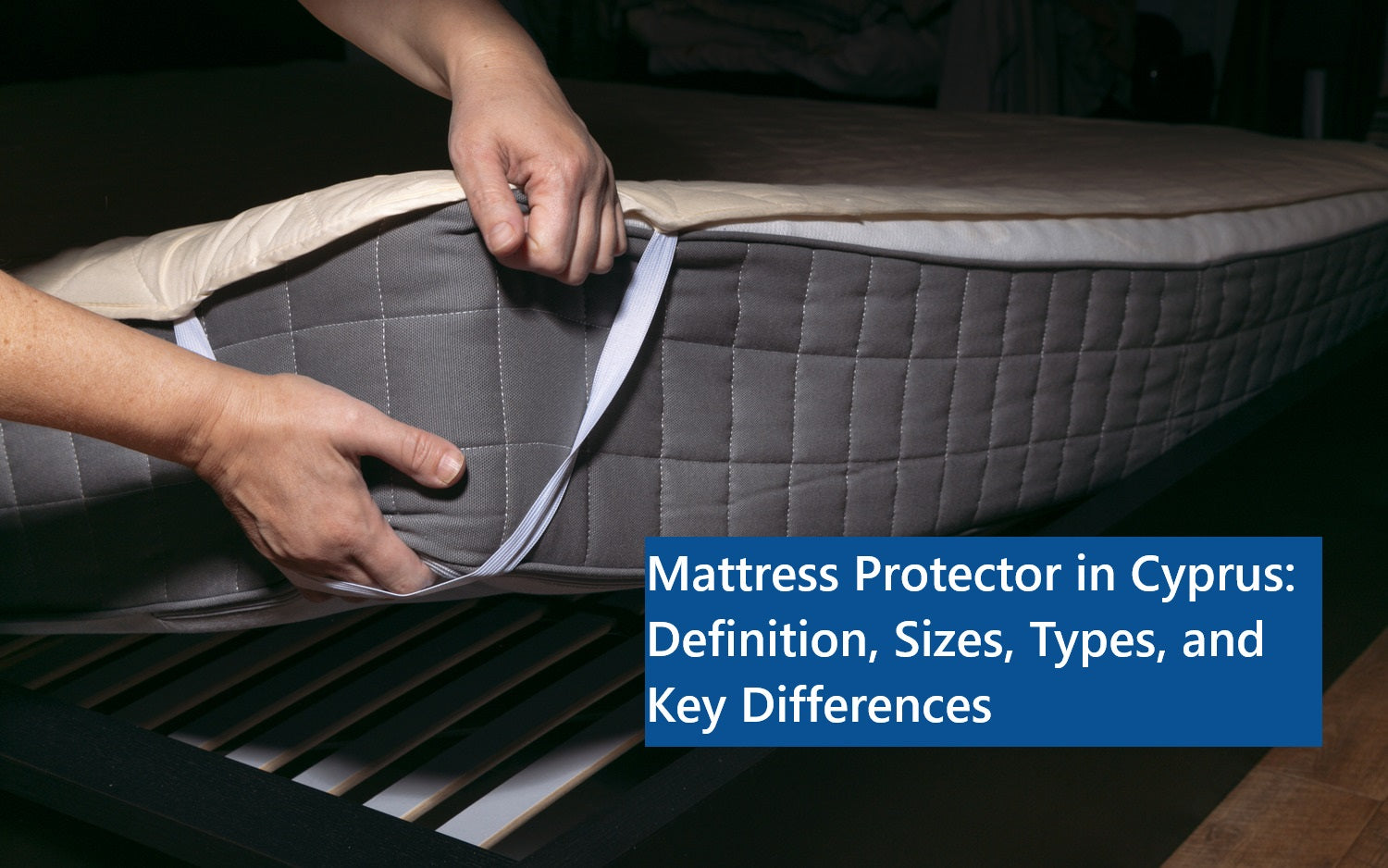
A mattress protector is a removable layer that fits directly over your mattress, sitting beneath your fitted sheet. Its job is straightforward: to shield the mattress from the things that gradually degrade it — sweat, skin cells, dust mites, spills, and other contaminants that build up invisibly over time.
It's worth distinguishing a protector from a mattress topper, since the two are often confused. A topper is designed to change how your mattress feels — adding softness, support, or cushioning. A protector does none of that.
Its purpose is purely protective to preserve the hygiene and structure of your mattress so it lasts longer and stays cleaner. Think of it less as a comfort upgrade and more as an insurance policy for something you sleep on every night.
What Does a Mattress Protector Do?
A mattress protector works by creating a physical barrier between your body and the mattress beneath. The problem it solves is one most people don't think about until it's too late. Every night, the average sleeper sheds skin cells, releases sweat, and introduces allergens into the bed. Without a protector, all of this gradually works its way into the foam and fibres — deep enough that no amount of surface cleaning can reach it.
The consequences compound over time. Dust mites colonise the debris, moisture encourages bacteria, and what was once a clean mattress becomes a hidden hygiene problem. In Cyprus, where warm temperatures accelerate this process, the issue is more pressing than in cooler climates.
A good mattress protector will do the following:
-
Blocks liquid penetration — spills, sweat, and nighttime accidents are stopped before they reach the mattress core
-
Limits dust mite buildup — by removing the warm, debris-rich environment they depend on to thrive
-
Reduces allergen accumulation — including pet dander and pollen, which matters for anyone with seasonal allergies or asthma
-
Protects your warranty — most manufacturers void coverage the moment visible staining appears, regardless of how it got there
-
Makes cleaning simple — instead of attempting to clean the mattress itself, you remove the protector and put it in the wash
Is It a Good Idea to Use a Mattress Protector in Cyprus?
Yes, and the local climate makes the case even stronger than it might be elsewhere. Cyprus experiences high temperatures for a large part of the year. Summers are long, temperatures regularly exceed 35°C, and even spring and autumn nights can be warm enough to cause significant sweating during sleep. That moisture has to go somewhere, and without a protector, it goes directly into your mattress — gradually breaking down the foam, encouraging bacterial growth, and creating exactly the conditions dust mites need to multiply.
Dust mites are worth taking seriously. These microscopic insects feed on shed skin cells and produce waste particles that are among the most common triggers for allergic rhinitis, asthma, and disrupted sleep. In Cyprus's warm, year-round climate, they don't have an off-season — which means the exposure is constant rather than seasonal.
There's also a straightforward financial argument. A quality mattress from Panstromasew is a significant investment, and a protector typically costs a fraction of what you paid for it. Used consistently, it extends the usable life of the mattress by several years and preserves the manufacturer's warranty — most brands void coverage the moment visible staining appears, regardless of the cause.
For families with young children, people with allergies or respiratory conditions, or anyone who has invested in a quality mattress, a protector isn't really optional. It's the simplest and most cost-effective way to protect both your health and your purchase.
Can You Wash a Mattress Protector?
Yes, and for many people, this is one of the most practical reasons to use one. Rather than attempting to spot-clean a mattress (which is awkward, time-consuming, and rarely fully effective), you simply remove the protector and put it in the wash.
A gentle or warm cycle is sufficient for routine cleaning — there's no need for anything more aggressive. Once washed, you can either tumble dry on a low setting or leave it to air dry, which is easy enough in Cyprus's climate for most of the year.
A few things are worth avoiding. Harsh bleach will degrade the protective fibres over time, and high-heat drying can damage the waterproof membrane found in many models. This reduces its effectiveness gradually rather than all at once, meaning you may not notice the problem until it is too late. As a general rule, check the care label before washing, particularly with waterproof protectors, as temperature limits vary between materials.
Washed regularly and cared for correctly, a good protector will maintain its protective qualities for years making it one of the lowest-maintenance additions you can make to your bedroom.
How Often Should You Wash a Mattress Protector?
As a general rule, every four to six weeks is the right rhythm for most households — roughly in line with how often you'd launder other bedding items like duvet covers and pillowcases. It's a manageable routine that keeps the protector fresh without becoming a chore.
That said, a few circumstances call for more frequent washing. If you have young children, pets sharing the bed, or anyone in the household with allergies or asthma, every two to three weeks is a more appropriate target. The same applies during Cyprus's summer months, when overnight temperatures push sweat levels higher than in cooler seasons — monthly washing should be treated as a minimum rather than a goal during this period.
A useful habit is to wash the protector whenever you change your bedding. It takes no extra effort, keeps the schedule consistent, and means you're never left guessing when it was last done.
What Mattress Protector Sizes Are Available in Cyprus?
Mattress protectors are sized to match standard mattress dimensions, and getting the right fit matters more than most people expect. A protector that's too small won't cover the surface properly; one that's too large will bunch and shift during the night, undermining both comfort and protection. At Panstromasew, protectors are stocked in all standard sizes sold across Cyprus.
1. Single Mattress Protector — 90 x 190 cm
The single mattress protector is the most widely available size and the natural choice for children's beds, guest rooms, and solo sleepers. It's also the size most commonly paired with a waterproof protector, particularly for younger children, making it one of the most practical purchases a parent can make.
2. Small Double Mattress Protector — 120 x 190 cm
The small double mattress protector occupies a useful middle ground — more sleeping space than a single, without the footprint of a full double. It's a common fit for Cypriot apartments and older homes where bedroom dimensions are more compact, and works well for a single person who prefers extra room or a couple in a smaller space.
3. Double Mattress Protector — 135 x 190 cm
The double mattress protector is the most popular size across Cyprus and the standard choice for most couples. At Panstromasew we have stocks of double protectors in both cotton and waterproof variants, covering the full range of needs from everyday hygiene protection to heavier-duty coverage.
4. King Size Mattress Protector — 150 x 200 cm
King size beds are the preferred choice for master bedrooms in larger homes and villas across Cyprus, and the protector needs to match precisely. A well-fitted king size mattress protector covers the entire sleep surface without excess material at the edges, something that becomes noticeably problematic at this size if the fit is off.
5. Super King Mattress Protector — 180 x 200 cm
The super king mattress protector is the largest standard bed size available, and fit becomes even more critical at these dimensions. A protector that shifts or bunches on a super king mattress is difficult to straighten without fully remaking the bed. Panstromasew stocks super king protectors for those who own or are purchasing at this size, ensuring full coverage without compromise.
What Type of Mattress Protector Is Best for Cyprus?
There are several types of mattress protector on the market, but given Cyprus's climate, two stand out as the most relevant: cotton and waterproof. Both are available at Panstromasew, and the right choice comes down to what you're primarily trying to protect against heat and allergens, liquid damage, or both.
1. Cotton Mattress Protector
For warm-climate sleepers, breathability is the priority — and cotton delivers it better than any synthetic alternative. Panstromasew's 100% Cotton Quilted Mattress Protector is made from a soft, natural fabric that wicks moisture away from the body and allows air to circulate freely through the material, preventing the heat buildup that plagues synthetic options. During Cyprus's long, hot summers, this distinction is felt immediately.
Cotton mattress protector is also naturally hypoallergenic and gentle on sensitive skin, making it a strong choice for anyone with eczema, allergies, or a tendency to overheat during sleep. The quilted construction adds a subtle layer of softness to the surface without meaningfully changing the feel of the mattress beneath — protection that you notice for the right reasons, not the wrong ones.
2. Waterproof Mattress Protector
Where liquid protection is the priority, a waterproof mattress protector is the appropriate choice. Panstromasew's Waterproof Mattress Cover is designed to completely block spills, sweat, and accidents before they reach the mattress core — the kind of damage that is invisible until it has already voided your warranty or degraded the foam beneath.
Modern waterproof protectors are a significant improvement on older designs. Rather than the stiff PVC or rubber coatings that gave earlier models their reputation for noise and heat retention, contemporary versions use a breathable TPU membrane that blocks liquid while still allowing air and moisture vapour to pass through. The result is a protector that does its job without the clammy, uncomfortable feel that put many people off waterproof options in the first place.
This type is particularly well-suited to households with young children going through toilet training, elderly family members, or anyone who experiences heavy night sweating, which in Cyprus's summer climate, is more common than most people admit.
What Are the Advantages and Disadvantages of Using a Mattress Protector?
Like any bedding product, a mattress protector comes with genuine strengths and a few limitations worth knowing about. Understanding the advantages and disadvantages helps you make a more informed decision — and set the right expectations before you buy.
Advantages of Mattress Protector
-
Extends mattress lifespan — by blocking moisture, stains, and allergens from working their way into the foam and fibres, a protector prevents the kind of gradual internal degradation that shortens a mattress's usable life considerably.
-
Improves sleep hygiene — because the protector is washable, the dust mites, skin cells, and bacteria that accumulate over time can actually be removed, rather than simply building up indefinitely inside the mattress.
-
Reduces allergen exposure — particularly relevant in Cyprus, where warm year-round temperatures mean dust mite activity never really lets up. A protector limits the conditions they need to thrive.
-
Preserves your warranty — most manufacturers void mattress warranties the moment visible staining or liquid damage appears, regardless of the cause. A protector removes that risk entirely.
-
Low maintenance, low cost — machine washable and a fraction of the price of the mattress itself, a protector is one of the easiest and most cost-effective investments you can make in your bedroom.
Disadvantages of Mattress Protector
-
Can affect the feel of the mattress — a poor fit or an overly thick protector may cause slight bunching at the surface, which some sleepers notice. This is largely avoidable by choosing the correct size and a protector appropriate to your mattress depth.
-
Heat retention in lower-quality models — budget waterproof protectors made from vinyl or heavy rubber can trap body heat, which is a genuine concern in Cyprus's climate. This isn't an issue with breathable cotton or TPU membrane options, but it's worth knowing what to look for before purchasing.
-
An added upfront cost — modest relative to the mattress itself, but worth factoring in. The more useful way to think about it is as a one-time cost that protects a much larger investment over several years.
Which is better, a mattress protector or a topper?
A mattress protector and a mattress topper are often confused, but they serve fundamentally different purposes. The better option depends entirely on what problem you're trying to solve, and in many cases, the answer is both.
|
Mattress Protector |
Mattress Topper |
|
|
Primary purpose |
Hygiene and preservation |
Comfort and feel |
|
Changes how the mattress feels? |
No |
Yes |
|
Waterproof protection |
Yes (waterproof models) |
No |
|
Reduces allergens and dust mites |
Yes |
No |
|
Extends mattress lifespan |
Yes |
Indirectly |
|
Adds cushioning or support |
No |
Yes |
|
Machine washable |
Yes |
Usually not |
|
Best for |
Protecting a comfortable mattress |
Improving an uncomfortable mattress |
For sleepers whose mattress is comfortable but needs protecting, a protector is the right choice. For those who find their mattress too firm, too soft, or lacking support, a topper addresses what a protector cannot.
For those who want the best of both, the smartest approach is to use them together — a topper to customize the feel, and a protector placed over it to keep everything clean and hygienic over the long term. Both are available at Panstromasew as part of our range of mattress accessories.