Memory foam mattresses offer deep pressure relief while reducing heat retention. Open-cell foam, gel infusion, and ventilation channels help manage heat in Cyprus. At the same time, firmness matches your sleeping position: soft for side sleepers, medium-firm for lower back pain, and firm for back and stomach sleepers. Density above 50 kg/m³ supports a 7- to 10-year lifespan, and Panstromasew's Moly Visco, Supremo, Top Memo 23, and Wellflex offer ventilation, dual firmness, medium-firm balance, and gel cooling.
What is a memory foam mattress?
A memory foam mattress is a mattress built around viscoelastic polyurethane foam, a material that softens under body heat and pressure. NASA developed viscoelastic foam in the 1960s to cushion astronauts during impact. Warmer body heat lowers the foam's viscosity and softens the material. Pressure then compresses the foam locally rather than across the whole surface. Localised compression produces contouring around your shoulders, hips and lower back. The foam recovers its original shape over 5 to 10 seconds. That slow recovery is viscoelasticity, unlike polyfoam's near-instant rebound.
Contouring works by spreading body weight across a wider contact area than a firmer surface allows. That wider contact lowers peak pressure at the joints carrying most of a sleeper's weight. The foam holds that shape for as long as pressure remains, rather than pushing back against it. Point elasticity means the foam responds only where pressure is applied. That localised response means one partner's movement rarely disturbs the other.
What are memory foam mattresses made from?
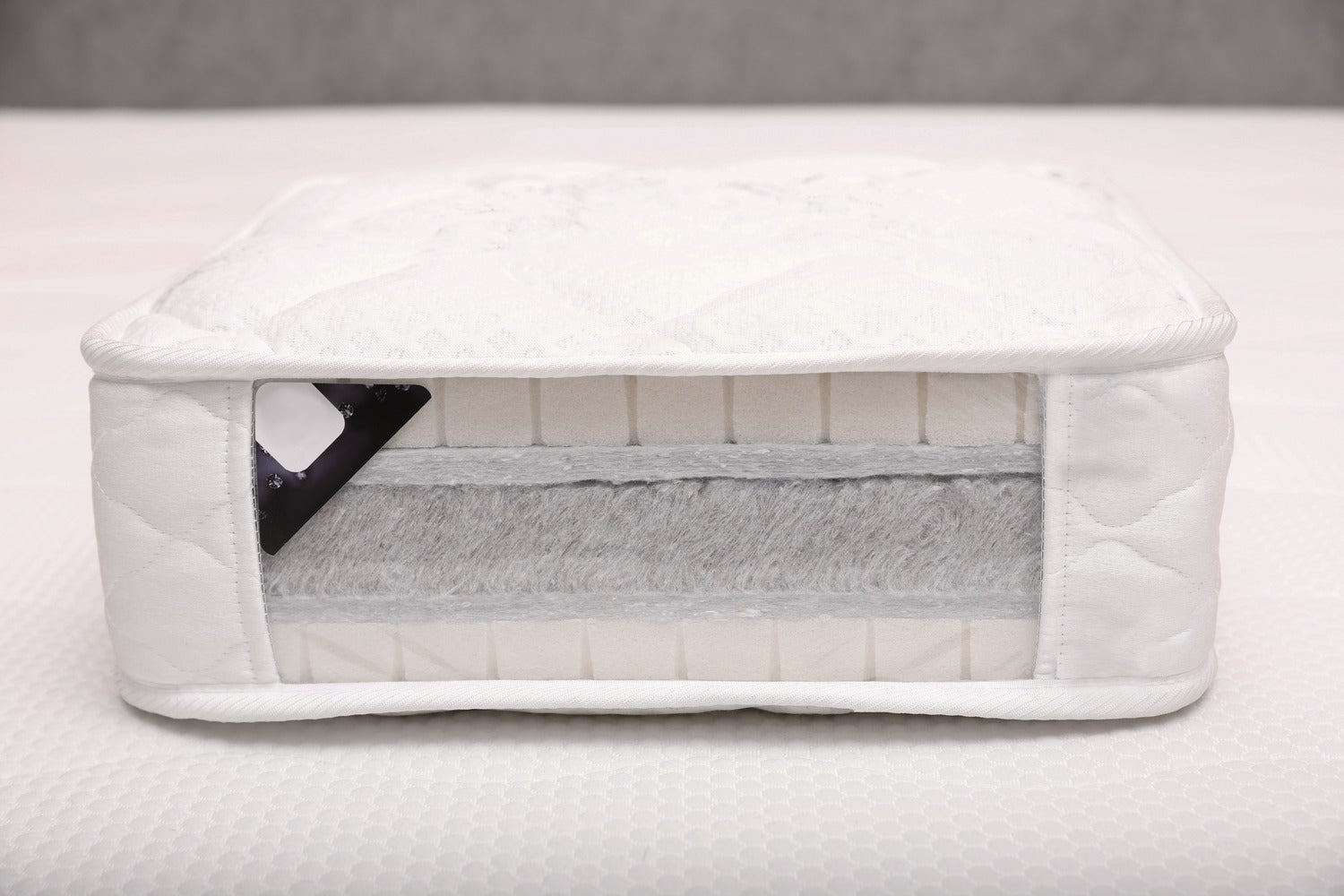
Memory foam mattresses are made from polyurethane foam, in viscoelastic and high-resilience forms. Viscoelastic polyurethane, the memory foam itself, forms the top comfort layer and delivers the contouring and pressure relief. A medium-density transition layer beneath prevents an abrupt change in feel. The support core uses firmer, high-resilience polyfoam to maintain overall structure.
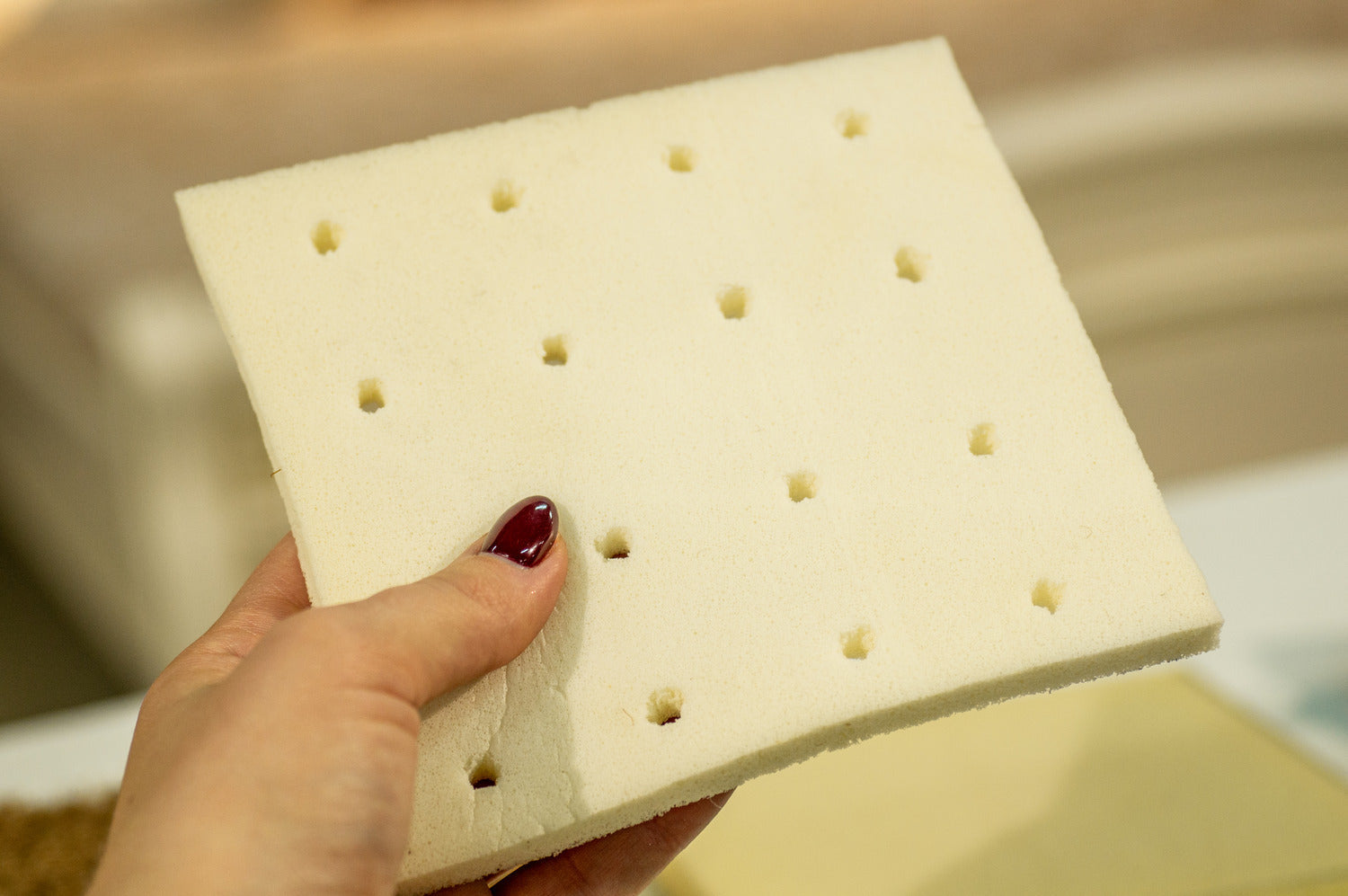
That comfort layer traps air, so manufacturers alter its formulation in two ways. Open-cell memory foam uses a porous structure that lets air move through it. Gel-infused foam disperses gel beads that absorb and redistribute body heat. Both formulations reduce the heat retention of standard dense memory foam. Carbon fibre instead resists bacterial build-up in Panstromasew's Moly Visco and Wellflex.
Foam density, measured in kg/m³, indicates how much material fills each layer. Density differs from firmness, because a dense foam can still feel soft. Higher-density foam resists permanent compression, so density governs mattress lifespan.
What are the benefits and drawbacks of memory foam mattresses?
Memory foam mattresses deliver pressure relief, spinal support, and motion isolation, but at the cost of slow responsiveness, a restrictive hugging feel, variable edge support, and heat retention. The three benefits follow from how the foam distributes body weight:
-
Pressure relief: contouring foam reduces pressure concentration at the shoulders and hips.
-
Spinal support: the foam fills the gaps beneath the lower back and neck.
-
Motion isolation: the foam absorbs movement where the sleeper's body meets the surface.
The four drawbacks stem from that same viscoelastic behaviour:
-
Hugging feel: combination sleepers who switch positions find the contouring restrictive.
-
Slow responsiveness: slow foam recovery makes changing position harder than on springs.
-
Variable edge support: foam perimeters compress further under lateral pressure than pocket-sprung perimeters.
-
Heat retention: dense foam traps body heat near the sleeping surface.
Spinal alignment depends on firmness, body weight, and sleeping position. Choose memory foam when pressure relief and motion isolation matter most.
Does a memory foam mattress sleep hot in Cyprus?
Yes, standard dense memory foam can retain more heat than other mattress types, though construction affects the extent significantly. Close contouring reduces the air gaps around the sleeper's body. Body heat then accumulates at the sleeping surface instead of dissipating. Cyprus makes that build-up more noticeable than cooler regions do, with summer bedroom temperatures sitting above comfortable sleeping ranges. Coastal humidity compounds it, driving moisture into the mattress core and encouraging mould growth.
Four construction choices reduce heat retention inside the mattress itself. Open-cell foam creates connected air pockets that increase internal airflow. Gel-infused foam absorbs body heat and lowers the contact-point temperature. Ventilation channels let air circulate vertically through the foam core. Stretch-knit covers let heat and moisture pass through the fabric. Air conditioning still controls ambient bedroom heat better than any mattress construction, so gel or open-cell foam matters most for hot sleepers without it.
What firmness is best for your sleeping position and body weight?
Side sleepers suit soft to medium, combination sleepers suit medium, and back or stomach sleepers suit medium-firm to firm, with body weight shifting that choice one step in either direction. Sleepers above roughly 90kg move up a level to limit excessive sinkage. Sleepers below roughly 60kg move down a level to get noticeable contouring. Side sleepers need cushioning around the shoulders and hips. Back and stomach sleepers need stronger resistance beneath the hips to maintain spinal alignment. Medium firmness can accommodate combination sleepers and couples with similar preferences. Medium-firm mattresses may also help sleepers whose lower back pain worsens when the hips sink too deeply.
Firmness labels describe surface feel, not the sinkage every sleeper experiences. Sleepers with higher body weights compress comfort layers further than sleepers with lower body weights. Therefore, two people using the same sleeping position may need different firmness ratings. Couples with different requirements can choose a dual-firmness mattress, which provides a different firmness level on each side. Firmness and foam density are separate specifications: firmness describes how the mattress feels, while density influences durability and resistance to compression.
How thick should a memory foam mattress be?
Most adult memory foam mattresses are 20 to 30 cm thick, with 25 cm suiting most sleepers. Body weight, sleeping position and support-core depth shift that figure within the range. Heavier sleepers need a deeper support core to prevent bottoming out.
Side sleepers need a thicker comfort layer for hip and shoulder cushioning. Lighter sleepers and children reach adequate support at lower total thickness. Products under 8 to 10 cm work as toppers, not mattresses, because they lack the independent support core an adult mattress requires.
How long does a memory foam mattress last in Cyprus?
A memory foam mattress typically lasts 7 to 10 years, though the actual figure depends on foam density, body weight, and care. Foam rated above 50 kg/m³ resists permanent compression longer than lower-density foam. Heavier sleepers compress the foam harder each night, accelerating that wear.
Sustained summer heat softens foam and speeds long-term compression in Cyprus. Coastal humidity pushes moisture into the foam core, degrading its structure.
Sagging deeper than 3 to 4 cm signals worn-out foam. Permanent body impressions and morning back pain confirm the same wear. Rotating the mattress 180 degrees every three to four months distributes wear evenly. A well-ventilated base reduces moisture and heat that shorten foam lifespan. Rotation and ventilation delay compression, but lifespan still varies by household.
How do you clean and protect a memory foam mattress?
Vacuum a memory foam mattress monthly, blot spills rather than soaking them, and cover it with a waterproof protector, because the foam absorbs liquid readily and can develop mould internally before the surface dries.
-
Use an upholstery attachment on a low setting to lift dust and skin cells without pressing them deeper into the foam.
-
Blot stains inward from the edge with a cloth dampened with mild detergent, so the mark contracts rather than spreads.
-
Air-dry the mattress completely before making the bed, because hairdryers and heaters degrade the foam.
-
Follow the manufacturer's care instructions, because foam formulations tolerate different cleaning agents.
Cleaning removes only what has already reached the mattress surface. A waterproof protector instead blocks sweat and spills during warm Cyprus nights. A mattress topper absorbs daily wear but blocks no moisture. Rotating memory foam every three to four months spreads that wear without flipping.
What is the best memory foam mattress for Cyprus?
Panstromasew's Moly Visco is the best memory foam mattress for Cyprus, pairing carbon fibre infusion and vertical ventilation channels against the heat and coastal humidity that make foam mattresses harder to live with here. The Supremo, Top Memo 23 and Wellflex suit narrower cases: dual firmness for couples, a medium-firm build across European sizes, and gel-bead cooling for the hottest sleepers. Beyond cooling and airflow, your choice comes down to firmness preference, sleeping position, body weight, motion isolation, thickness, bed-frame size, and budget.
1. Wellflex Mattress
The Wellflex Mattress leads the list by handling heat and humidity at once. An Aeroflex Visco layer carries cooling gel beads, while a carbon-fibre-enriched layer holds back bacteria and moisture. The cover is breathable and removable for washing, and the surface sits at medium-firm (4/5). Panstromasew offers it in two sizes only: 160x200 and 180x200.
Best for: hot sleepers, humid coastal homes, and back or side sleepers wanting firm, even support.
2. Harmony Chill Mattress
The Harmony Chill Mattress combines cooling with odour and moisture control. Cooling and airflow come from gel-infused visco foam, backed by a dedicated Visco Charcoal layer that soaks up moisture and cuts odour. These layers sit on a pocket spring base, which makes the model a foam-and-spring hybrid rather than pure memory foam. The cover is fully washable and helps keep temperatures steady, and it comes in three sizes.
Best for: hot sleepers who also want serious moisture control, and couples who benefit from a spring base that limits motion transfer.
3. Restful Mattress
The Restful Mattress focuses on firm, zoned support. It stacks two spring layers, one pocket and one mini-pocket, under seven comfort zones and a VISCO GEL comfort layer, with OdorbanMax fabric handling odour control and airflow. The feel is medium-firm (4/5), and the construction is a hybrid rather than pure foam. It comes in two sizes.
Best for: heavier sleepers and back sleepers needing firm, point-by-point support, plus couples who value zoned support.
4. Oniqo Mattress
The Oniqo Mattress balances all-round support with stable edges. A Memory Foam Gel layer runs a five-zone system with reinforced edges that stop the perimeter from collapsing under weight, and a breathable, moisture-regulating fabric spreads heat and humidity to curb night sweating. The feel is medium (3/5), and three sizes are available.
Best for: edge sleepers, all-position sleepers, and couples wanting a balanced feel.
Memory foam vs pocket spring: which is better in Cyprus?
Memory foam suits sleepers prioritising pressure relief and motion isolation; pocket spring suits hot sleepers or those without reliable air conditioning. Memory foam contours closely, benefiting couples and side sleepers with joint discomfort. Pocket spring coils allow airflow that keeps the surface naturally cooler.
|
Factor |
Memory Foam |
Pocket Spring |
|
Pressure relief |
Close contouring at shoulders and hips |
Firmer push-back, less contouring |
|
Motion isolation |
Excellent, absorbs movement at source |
Good, but weaker than foam |
|
Responsiveness |
Slow recovery, restrictive for frequent movers |
Quick rebound, suits active sleepers |
|
Temperature |
Retains heat without cooling technology |
Naturally cooler through coil airflow |
|
Edge support |
Compresses more under lateral pressure |
Stronger, coils extend to the perimeter |
Neither construction wins universally, because each trades cooling against contouring. Our memory foam vs pocket spring guide compares durability, cost and performance.