
Choosing the right mattress isn’t just about softness or firmness—it’s about temperature, comfort, and long-term performance. One of the most popular innovations in mattress technology today is gel-infused foam, a material designed to enhance the comfort of memory foam while reducing its tendency to trap heat.
Whether you’re a hot sleeper, someone seeking better pressure relief, or simply exploring new mattress types, understanding how gel foam works can help you decide if it’s the right fit for your sleep style.
What is gel-infused foam?
Gel-infused foam is a type of viscoelastic (memory) or polyurethane foam that has cooling gel added to it, usually in the form of beads, swirls, or a thin gel layer within the foam.
The gel is blended into the comfort layers to keep the classic contouring feel of foam while helping absorb and disperse body heat so the surface sleeps cooler than standard memory foam.
How does gel-infused foam work?
Gel-infused foam works by combining standard viscoelastic foam with heat‑managing gel so you get contouring support with better temperature control. The base foam still responds to your body heat and pressure, softening where you’re heaviest to relieve pressure and support your spine.
The added gel—usually in beads, swirls, or a mixed-in dispersion—acts as a heat sink: it absorbs body warmth more quickly than plain foam, then spreads that heat through a wider area so it doesn’t build up as much directly under you.
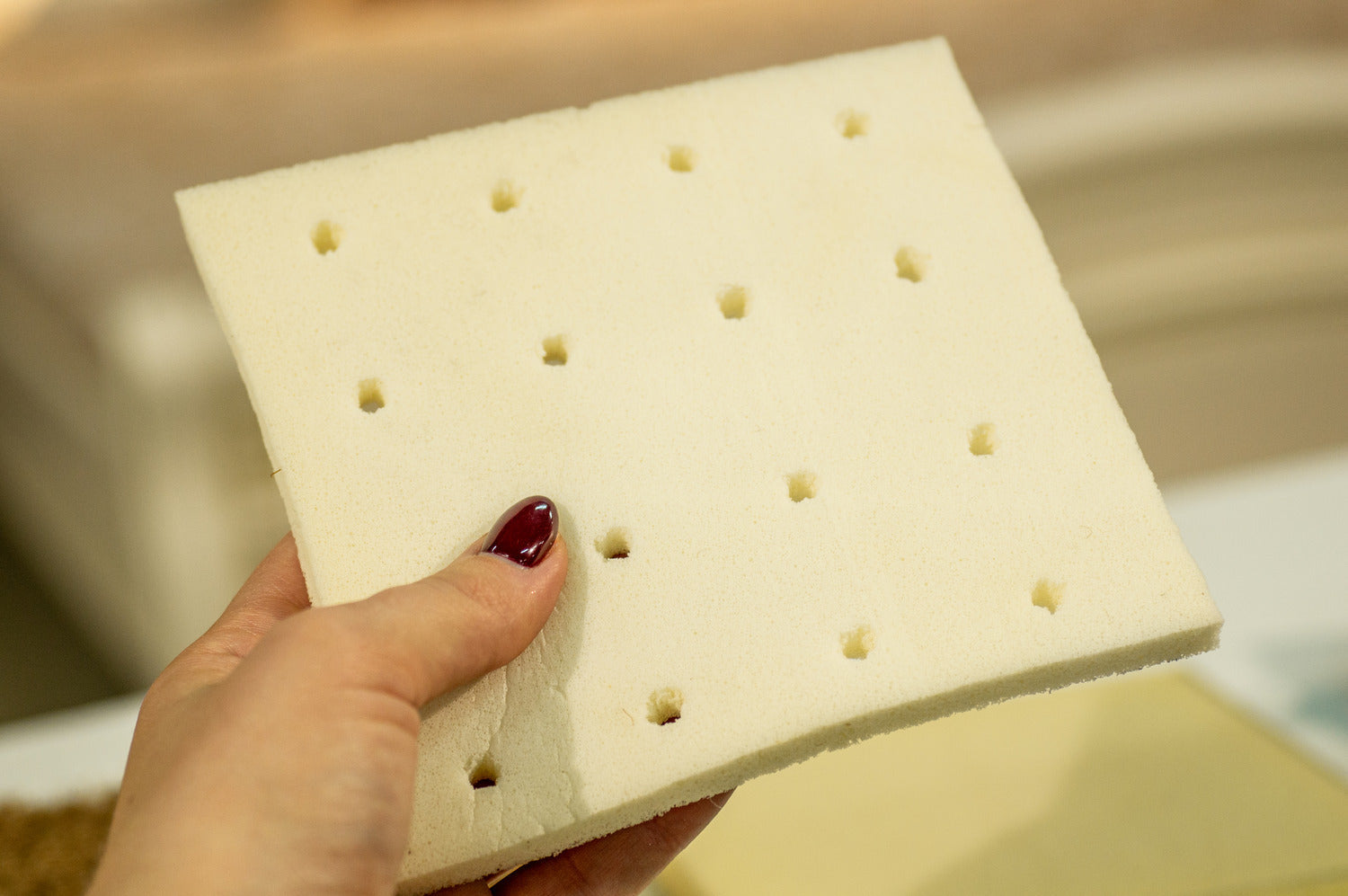
In many designs the foam also has a more open cell structure, which allows a bit more airflow and helps the mattress feel cooler and less “stuffy” than traditional memory foam, especially in the first hours of sleep.
What makes it different from regular memory foam?
Gel-infused foam is still memory foam at its core, but the added gel changes how it handles heat and (slightly) how it feels.
Key differences from regular memory foam:
-
Cooling: Traditional memory foam tends to trap body heat, while gel-infused foam uses gel beads, swirls, or layers to absorb and move heat away from your body for a cooler surface.
-
Feel and response: Gel-infused foam is often a touch more responsive, so it can bounce back a bit faster and feel slightly less “stuck in the mud” than classic slow-moving memory foam.
-
Temperature over the night: Standard memory foam mainly relies on airflow and room temperature to regulate warmth, but gel-infused foam actively conducts heat at first, so it usually feels cooler in the early part of the night.
-
Price and construction: Gel-infused foam usually costs more because of the added cooling technology and extra processing, while plain memory foam is simpler and typically cheaper.
How is the gel incorporated into the foam?
Manufacturers usually add the gel during the foam’s mixing and molding stages so it becomes part of the foam, not just a surface coating.
The three most common methods are:
-
Gel beads or particles mixed into the liquid foam: Tiny gel beads are blended into the polyurethane or memory-foam mixture before it expands, so the beads are dispersed throughout the block.
-
Liquid gel swirls within the foam layer: Stripes or swirls of liquid gel are introduced into the foam as it’s poured, creating visible gel “rivers” running through the comfort layer.
-
Separate gel sheets bonded to foam: A pre‑made gel pad or sheet is laid into the mold or laminated onto a foam layer, so you get a distinct gel layer on top of, or sandwiched inside, the foam.
In all cases, once the foam cures, the gel is locked into the structure, allowing it to absorb and redistribute heat while the foam provides contouring and support.
Does gel improve heat regulation during sleep?
Gel generally does improve heat regulation compared to standard memory foam, but only up to a point.
-
The gel absorbs and spreads out body heat more quickly than regular foam, which helps the surface feel cooler and slows down heat buildup, especially in the first 60–90 minutes of sleep.
-
Many gel foams also promote slightly better airflow, so they tend to maintain a more neutral temperature and reduce night sweats versus traditional memory foam, though they usually still warm up over the course of the night.
What are the benefits of gel-infused foam mattresses?
Gel-infused foam mattresses offer several practical benefits that combine comfort, cooling, and support.
The main benefits include:
-
A cooler sleeping surface compared to traditional memory foam, which helps reduce night sweats for hot sleepers.
-
Strong pressure relief, as the foam contours to your body, easing tension around the shoulders, hips, and lower back.
-
Good spinal support, because the material molds to your natural curves and helps keep your spine in a more neutral position.
-
Excellent motion isolation, so you feel less movement if a partner tosses and turns during the night.
-
Often better durability and shape retention than some basic foams, making them a solid long-term comfort upgrade.
Is gel foam cooler than traditional foam?
Gel foam is generally cooler than traditional memory foam, but the effect has limits. Gel-infused foams use gel beads or gel layers that absorb and conduct heat away from your body more efficiently than standard viscoelastic foam, which tends to trap warmth.
This usually creates a noticeably cooler, less “stuffy” sleep surface, especially during the first part of the night. However, once the gel and surrounding foam reach thermal equilibrium with your body, the cooling benefit can fade and the mattress may start to feel warmer, particularly for very hot sleepers or in warm climates.
Does gel infusion enhance comfort or support?
Gel infusion can enhance both comfort and support, but in slightly different ways.
-
For comfort, gel often makes the surface feel a bit cooler and more breathable, which can reduce the “stuck in the mattress” sensation some people get with classic memory foam. Gel particles also help the foam respond a bit more quickly to movement, so changes in position feel smoother and less sluggish.
-
For support, the gel-infused foam still provides the same underlying contouring and pressure relief as regular memory foam, but the added gel can help distribute weight more evenly and reduce pressure points at the shoulders, hips, and lower back. In some designs, the gel also slightly reinforces the foam’s structure, helping it maintain its shape and supportive feel for longer instead of sagging prematurely.
How does it affect motion isolation and pressure relief?
Gel-infused foam generally performs very well for both motion isolation and pressure relief, making it a strong option for couples and people with achy joints.
-
Motion isolation: Like traditional memory foam, gel-infused foam absorbs movement instead of letting it ripple across the surface, so partners feel less disturbance when one person turns, gets up, or changes position. In some designs, the added gel helps stabilize the foam structure, which can further reduce vibration transfer along the mattress.
-
Pressure relief: Gel-infused foam still contours closely to the body, distributing weight more evenly and reducing pressure points at the shoulders, hips, and lower back. The gel component can enhance this effect by compressing and shifting under load, helping to spread pressure across a wider area and maintain comfortable support over longer periods.
In short, gel-infused foam combines the best of comfort and stability—minimizing motion transfer while cushioning pressure-prone areas for a more restful, uninterrupted sleep. Its balance of responsiveness and contouring makes it a reliable choice for couples and anyone seeking consistent joint relief through the night.
What are the pros and cons of gel-infused foam?
Gel-infused foam offers a good balance of cooling, contouring, and support, but it’s not perfect for every sleeper.
Pros of gel-infused foam
-
Cooler than standard memory foam, which can help hot sleepers feel more comfortable, especially in the first hours of the night.
-
Strong pressure relief around the shoulders, hips, and lower back, thanks to its body-contouring nature.
-
Excellent motion isolation, so partner movement is less likely to wake you up.
-
Often feels slightly more responsive and less “stuck” than traditional memory foam, making it easier to change positions.
-
Widely available across many price points, from budget mattresses to premium models.
Cons of gel-infused foam
-
Cooling effect can diminish over the course of the night or as the mattress ages and materials break down.
-
Can still sleep warmer than very breathable options like latex or well-ventilated hybrid mattresses.
-
Usually more expensive than basic polyurethane or standard memory foam.
-
Lower-density gel foams may be prone to sagging or body impressions if the overall construction is not high quality.
-
Some sleepers who prefer a very firm or very bouncy feel may find gel foam too soft or conforming.
Overall, gel-infused foam strikes a strong compromise between comfort and cooling—ideal for sleepers who want memory foam’s contouring without excessive heat buildup. However, its performance depends on foam density and construction quality, so shoppers should look for reputable brands and durable materials to get the best long-term value and support.
How long does a gel-infused mattress last?
A gel-infused foam mattress typically lasts about 7 to 10 years, similar to a traditional memory foam mattress. The actual lifespan depends on factors like foam density, overall build quality, body weight, and how often the mattress is used.
Higher-density gel foams and better support cores tend to maintain their structure and comfort for longer, while cheaper, lower-density versions may start to sag or develop body impressions sooner. With good care—using a mattress protector, rotating it periodically, and keeping it on a supportive base—a quality gel-infused mattress can stay comfortable for close to a decade.
Can gel foam lose its cooling effect with age?
Yes, gel foam can gradually lose some of its cooling effect as it ages. Over time, repeated compression, body oils, sweat, and general wear can cause the foam structure and gel particles to break down slightly, which reduces airflow and the gel’s ability to absorb and disperse heat efficiently.
As a result, many people find that a gel-infused mattress feels noticeably cooler when new, but becomes more temperature-neutral—and in some cases warmer—after a few years of regular use.
Does it still retain heat over time?
Yes, gel foam can still retain some heat over time, even though it is designed to sleep cooler than traditional memory foam.
As the mattress ages and the foam structure and cooling components wear down, airflow often decreases and the gel’s ability to disperse heat can decline, which may lead to more noticeable warmth during the night.
Many sleepers report that gel-infused mattresses feel coolest when new, then gradually become closer to “temperature neutral,” and in some cases can feel warm again—especially for hot sleepers or in warmer climates.
How does gel foam compare to other mattress materials?
Gel foam sits between traditional memory foam and more breathable or bouncy materials like latex and hybrids in terms of cooling, feel, and durability.
Versus traditional memory foam
-
Sleeps somewhat cooler because the gel helps disperse heat, while standard memory foam is more prone to trapping warmth.
-
Offers similar contouring and pressure relief, so both are good for joint and back comfort.
Versus latex
-
Gel foam feels more body-hugging and slow-responding, while latex is springier and more responsive, making movement easier.
-
Latex is naturally cooler and more breathable overall, and typically lasts longer (often up to around 20 years for quality natural latex).
Versus hybrid mattresses
-
Gel foam (in all-foam beds) usually isolates motion better, so partner movement is less noticeable.
-
Hybrids with coil cores generally run cooler and feel more buoyant, with stronger edge support and easier repositioning.
Overall, gel foam offers a balanced middle ground for sleepers who want the contouring comfort of memory foam with some added cooling and responsiveness. While it doesn’t match latex or hybrid beds for temperature regulation and bounce, it’s a solid choice for those prioritizing pressure relief and motion isolation without the full heat retention of traditional memory foam.