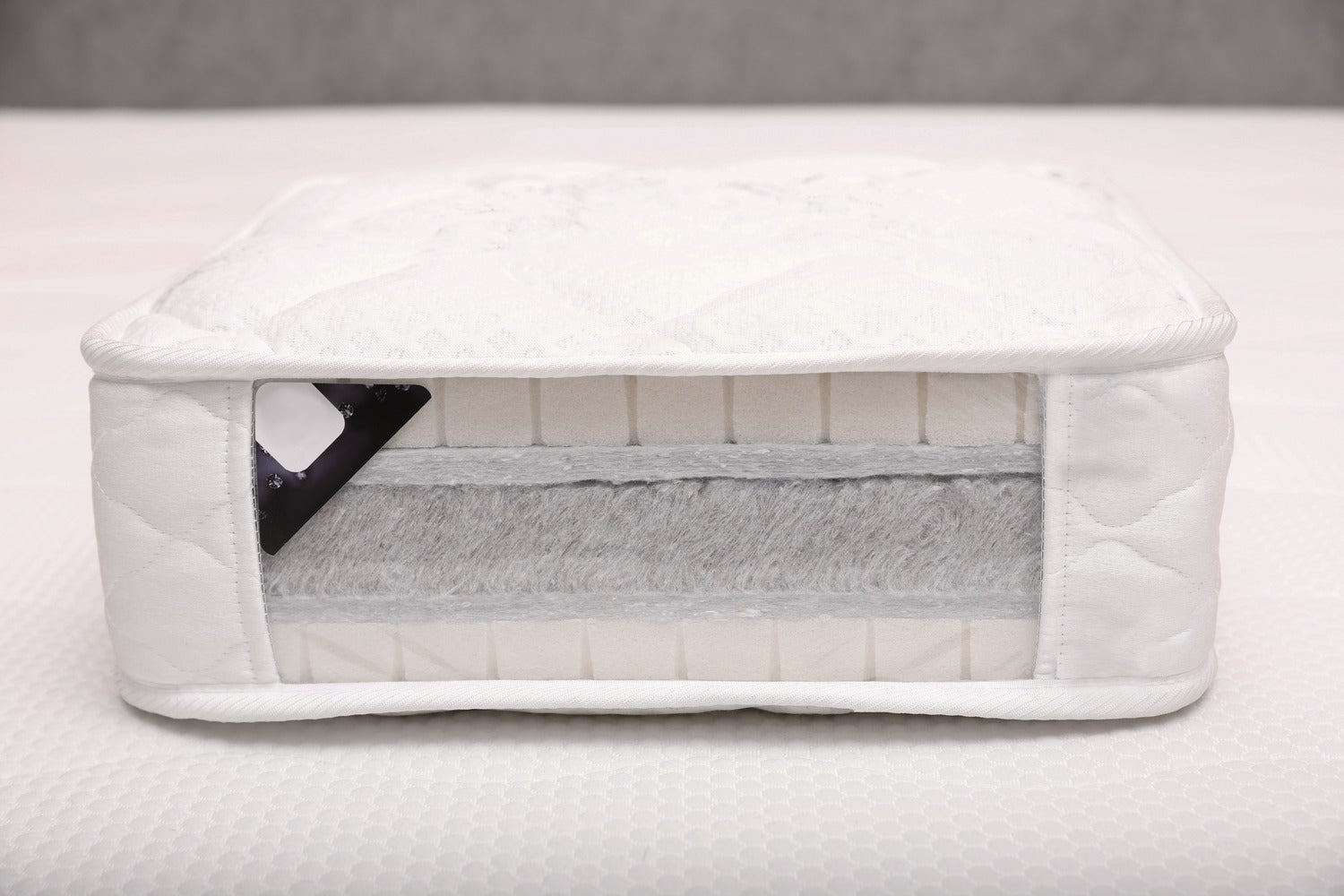
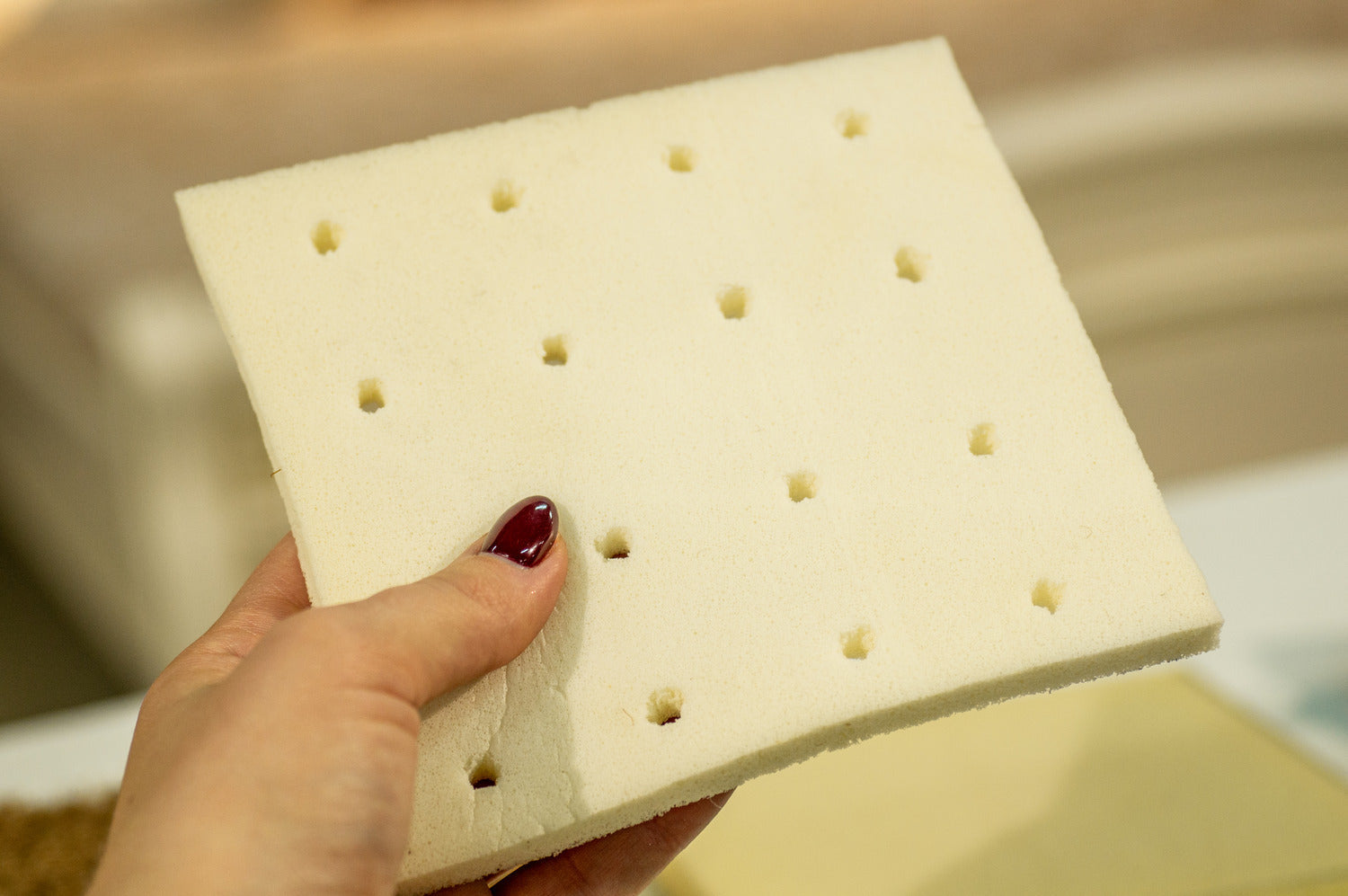
Latex mattresses are celebrated for their durability, responsiveness, and breathability—but not all latex is the same. While natural latex comes from the sap of rubber trees, synthetic latex is a man-made alternative engineered to deliver similar comfort and support at a more accessible price point.
Knowing how synthetic latex differs from its natural counterpart—and what unique benefits it offers—can help you choose the mattress that perfectly aligns with your comfort preferences, budget, and values.
What Is Synthetic Latex in Mattresses?
Synthetic latex is a man-made foam engineered to closely mimic the cushioning, bounce, and support of natural latex. Instead of being tapped from rubber trees, it is typically produced from styrene-butadiene rubber (SBR), a versatile synthetic polymer also used in products like tires and industrial foams.
In mattresses, synthetic latex can be used on its own or blended with natural latex to strike a balance between softness, elasticity, and cost. You’ll find it in different roles within the mattress—ranging from dense, supportive cores to plusher comfort layers—depending on the brand’s design and overall construction.
Is Synthetic Latex Real Latex?
Synthetic latex is considered “real” latex in the sense that it behaves like latex foam—it’s elastic, cushioning, and responsive—but it is not the same as natural latex. It is created in a lab from petroleum-based chemicals rather than harvested from rubber tree sap, so its composition and origin are fundamentally different.
In practice, this means synthetic latex can closely imitate the feel of natural latex, yet it lacks the organic, plant-derived structure and typically does not match natural latex in breathability, durability, or environmental performance.
What distinguishes synthetic latex from natural latex?
Natural and synthetic latex are often used in similar mattress designs, but they differ in origin, performance, and environmental profile. Natural latex is tapped from rubber tree sap, then processed into foam, so it is plant-derived, renewable, and typically contains fewer synthetic additives.
It tends to feel more elastic and “lively,” offers excellent breathability, and usually has a longer lifespan, maintaining its support and shape for many years. Synthetic latex, by contrast, is made from petrochemical compounds (commonly styrene-butadiene rubber), giving it a more uniform, consistent structure but generally less springiness, lower durability, and higher potential for heat retention and off-gassing.
From a practical standpoint, natural latex mattresses are usually more expensive but win on longevity, comfort nuance, and sustainability, while synthetic latex is more affordable and consistent but comes with trade-offs in environmental impact, resilience, and overall feel.
Can synthetic latex replicate the feel of natural latex?
Synthetic latex can come close to replicating the feel of natural latex, especially when it is high quality or used in a blend, but it rarely matches it perfectly. When new, many sleepers describe synthetic latex as similarly springy, supportive, and responsive; however, it typically feels a bit denser or flatter, with less of the “buoyant” or “alive” sensation you get from natural latex foam.
Over time, the differences become more noticeable. Natural latex tends to retain its elasticity, bounce, and contouring for longer, while synthetic latex usually softens and loses some of its responsiveness sooner, which can make the surface feel more uniform but less dynamic. For shoppers, this means synthetic latex can offer a comfortable approximation of natural latex at a lower price, but if you’re very sensitive to nuances in feel or want maximum longevity and liveliness, natural latex still has the edge.
What Are the Benefits of Synthetic Latex in Mattresses?
Synthetic latex comes with several clear benefits that make it attractive for both sleepers and mattress brands:
-
More affordable: It typically costs less to manufacture than natural latex, so mattresses made with synthetic latex are often more budget-friendly.
-
Reliable consistency: Because it’s produced in controlled conditions, synthetic latex has a uniform feel and fewer natural variations from one batch to another.
-
Lower allergy risk: It doesn’t contain the natural latex proteins that can trigger allergic reactions, making it a suitable option for people sensitive to natural latex.
-
Tunable firmness: Manufacturers can precisely adjust density and firmness to create different comfort levels and support profiles.
Overall, synthetic latex delivers a practical way to enjoy latex-like comfort, support, and responsiveness—without paying the premium associated with an all-natural latex mattress.
Does synthetic latex offer good pressure relief and comfort?
Yes, synthetic latex generally offers good pressure relief and comfort, especially compared with basic polyurethane foams of the same price bracket. It contours to the body enough to spread weight across the surface, helping to reduce pressure build-up around common problem areas like the shoulders, hips, and lower back.
Compared with natural latex, synthetic versions usually feel a bit denser and slightly less “buoyant,” but still provide a balanced mix of cushioning and support that works well for most sleeping positions.
Many sleepers appreciate that latex (natural or synthetic) is more responsive and “lifting” than memory foam, so you get pressure relief without the deep sink-in or “stuck” sensation, which can make it easier to change positions during the night.
How durable are mattresses made with synthetic latex?
Mattresses made with synthetic latex are generally moderately durable, but they do not last as long as those made from high-quality natural latex. In most cases, you can expect a synthetic latex mattress to deliver consistent comfort and support for roughly 7–10 years before noticeable softening, sagging, or loss of responsiveness becomes apparent.
Several factors influence this lifespan, including foam density, overall mattress construction (for example, whether it is an all-foam or hybrid design), body weight, and how well the mattress is cared for (use of a proper base, rotation, and protection from moisture).
Compared with natural latex, synthetic latex tends to break down faster and is more vulnerable to heat and humidity over time, but it still usually outperforms many basic polyfoam beds in terms of longevity at a similar price point.
Is synthetic latex more affordable than natural latex?
Yes. Synthetic latex is generally more affordable than natural latex because it is cheaper to produce at scale and is not limited by agricultural supply or certification costs.
Mattresses made with synthetic or blended latex usually sit at a lower price point than those made from 100% natural or organic latex, making them attractive for budget-conscious shoppers who still want a latex-like feel. In most ranges, you’re effectively trading some durability, breathability, and sustainability for a noticeably lower upfront cost.
Are There Any Drawbacks to Synthetic Latex?
Yes, synthetic latex comes with a few important trade-offs to be aware of.
-
Less durable: It generally breaks down faster than high-quality natural latex, so you may notice softening or reduced support sooner.
-
Lower breathability: Synthetic latex typically does not ventilate as well, which can lead to slightly warmer sleep compared with natural latex.
-
Different feel: While it can be comfortable, it often feels denser and less “buoyant” or lively than natural latex, which some sleepers notice over time.
-
Environmental impact: Because it is derived from petrochemicals rather than rubber tree sap, it has a higher environmental footprint and is less appealing to eco-conscious buyers.
For many people, these drawbacks are acceptable given the lower price, but if you prioritize longevity, breathability, or sustainability, natural latex is usually the better fit.
How Does Synthetic Latex Compare to Natural Latex?
Synthetic and natural latex share a broadly similar role in mattresses—they both provide contouring, bounce, and support—but they differ in origin, feel, performance, and sustainability.
-
Source and composition: Natural latex is tapped from rubber tree sap and then processed into foam, while synthetic latex is created from petrochemical-based polymers (often styrene-butadiene rubber).
-
Feel and responsiveness: Natural latex usually feels more elastic, buoyant, and “lively,” whereas synthetic latex tends to be a bit denser and less springy, even when engineered to imitate the same firmness level.
-
Durability: High-quality natural latex generally outperforms synthetic latex in longevity, holding its shape and resilience for more years before noticeable sagging or softening.
-
Temperature and breathability: Natural latex typically breathes better and sleeps cooler; synthetic latex is still comfortable but can retain slightly more heat.
-
Price: Synthetic latex is typically more affordable, making it a cost-effective way to get a latex-like feel without paying for a fully natural build.
-
Environmental profile: Natural latex is renewable and often available with eco-certifications, while synthetic latex relies on fossil-fuel-derived ingredients and is less attractive for sustainability-focused buyers.
For shoppers, this means natural latex is the premium choice for longevity, nuance of feel, and eco-credentials, while synthetic latex offers a more budget-friendly, consistent alternative that still delivers solid comfort and support.