Choosing the right mattress can transform how well you sleep and how refreshed you feel each morning. Among the many options available today, natural latex mattresses stand out for their comfort, support, and eco-friendly qualities.
This guide covers everything you need to know — from how natural latex is made to how it performs over time.
What Is Natural Latex in Mattresses?
Natural latex in mattresses is a foam material made from the sap of the rubber tree (Hevea brasiliensis), rather than from petroleum-based chemicals. The liquid sap is whipped and processed (usually using Dunlop or Talalay methods) into an elastic, open-cell foam that becomes the comfort or support layers of the mattress.
In composition terms, “natural latex” foam is mostly rubber particles from this plant sap, combined with a small percentage of processing ingredients such as foaming and curing agents that turn the liquid into a stable, durable solid. High-quality natural latex used in mattresses is typically around 90–97% rubber from the tree, with the remainder being these necessary additives.
Because it is plant-derived and highly elastic, natural latex is known for its buoyant support, responsiveness, and durability, often outlasting many synthetic or blended foams. It is also naturally resistant to dust mites and mold and is widely regarded as one of the more eco-friendly and low-chemical mattress core materials available, especially when it carries certifications such as GOLS or similar standards.
How is Natural Latex Made?
Natural latex is made by turning the milky sap of rubber trees into a foamed, elastic sheet that can be used as a mattress core or comfort layer. The process keeps most of the sap’s natural rubber content while adding just enough ingredients and treatment to make it stable, durable, and safe for long-term use.
Step 1: Tapping and Collecting the Sap
-
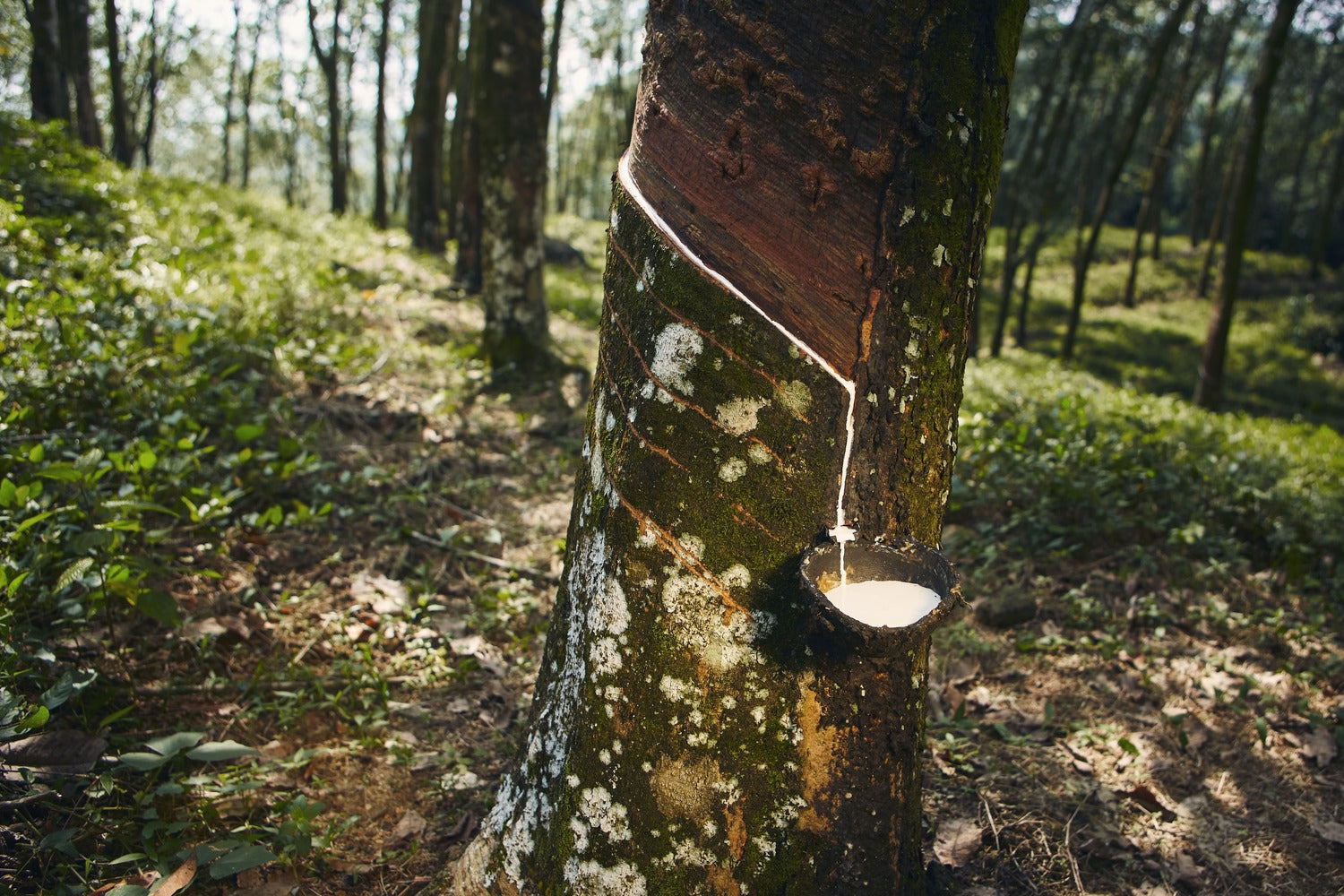
Rubber trees (Hevea brasiliensis) are grown in tropical plantations and reach tapping maturity after several years.
-
Workers make a shallow, diagonal cut in the bark so the milky sap (latex) slowly flows into small collection cups.
-
The same tree can be tapped repeatedly for many years without being cut down, which makes latex a renewable resource.
-
The fresh sap is perishable, so it is usually collected and transported to a processing facility quickly to prevent premature coagulation.
Step 2: Filtering and Preparing the Liquid Latex
-
At the processing facility, the liquid latex is filtered to remove bits of bark, dust, and other impurities.
-
Air is then whipped into the latex to create a foamy mixture; this aeration gives latex foam its open-cell structure and bouncy feel.
-
At this stage, small amounts of additives (such as vulcanizing agents and stabilizers) are blended in so the foam will cure into a solid, resilient material rather than remaining a liquid.
Step 3: Pouring into Molds – Dunlop or Talalay
There are two main methods used to turn the foamed latex into mattress-ready blocks:
-
The latex foam is poured into a mold in one continuous pour, often filling the entire mold at once.
-
The filled mold goes into a vulcanization oven, where heat causes the rubber particles to cross-link and solidify.
-
Because gravity lets heavier particles settle slightly, Dunlop latex tends to be denser and a bit firmer, particularly toward the bottom of the block.
-
The latex foam is poured into a partially filled, sealed mold.
-
A vacuum is applied to evenly distribute the foam throughout the mold.
-
The mold is then flash-frozen before being heated, which stabilizes the cell structure and creates a lighter, more consistent feel.
-
Talalay latex generally feels softer, more buoyant, and more uniform than Dunlop latex.
Step 4: Vulcanizing, Washing, and Drying
-
During vulcanization (baking), heat and curing agents lock the foam into its final structure, giving it elasticity and strength.
-
Once removed from the mold, the latex block is thoroughly washed to rinse away residual soaps, unreacted agents, and surface impurities.
-
The foam is then dried in warm-air ovens until internal moisture is removed, helping prevent mold growth and improving durability.
Step 5: Cutting, Quality Checks, and Assembly
-
Dried latex blocks are trimmed and cut into specific thicknesses and sizes (e.g., comfort layers, support cores, different zone patterns).
-
Manufacturers test density, firmness (ILD), and visual consistency to ensure the foam meets performance and safety standards.
-
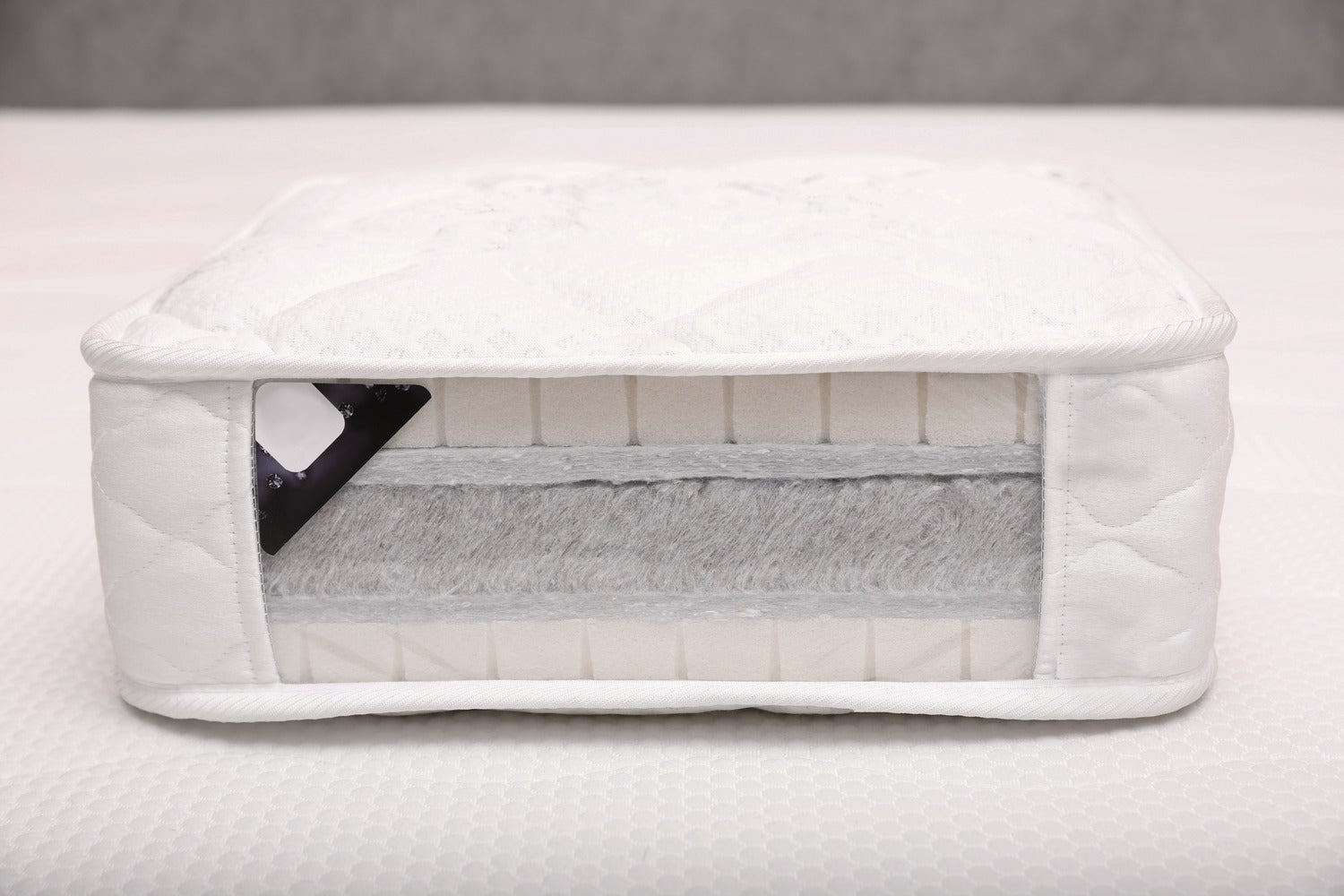
Finally, one or more latex layers are combined with covers (often cotton or wool and sometimes other support components) to build the finished mattress.
In short, natural latex is made by foaming, molding, curing, washing, and drying the sap of rubber trees, with Dunlop and Talalay being the two main processes that determine the final feel of the mattress.
What Is the Difference Between Dunlop and Talalay Latex?
Dunlop and Talalay latex use the same base material (rubber tree sap) but different foaming and molding methods, which leads to clear differences in feel, density, durability, and cost.
Core differences in how they’re made
-
Dunlop latex is poured into a mold in one go and baked, so particles settle slightly toward the bottom, creating a denser, “bottom-heavy” foam.
-
Talalay latex is partially filled into a mold, vacuum-expanded, then flash-frozen before baking, which produces a lighter, more uniform foam structure.
Feel and firmness
-
Dunlop is typically firmer and denser, giving a more solid, supportive feel that many brands use in the mattress core.
-
Talalay is usually softer, bouncier, and more “floating”, so it’s often used in comfort layers where contouring and pressure relief are prioritized.
Durability and breathability
-
Dunlop’s higher density generally makes it slightly more durable and resistant to wear and sagging over time, especially in support layers.
-
Talalay, being less dense, is still durable but can be somewhat less long-lasting in heavy-use support roles; its more open, uniform structure tends to feel a bit more breathable and airy.
Cost and typical use in mattresses
-
Dunlop is simpler and cheaper to produce, so mattresses using mostly Dunlop latex often come at a lower price point.
-
Talalay involves a more complex, energy-intensive process, making it more expensive and commonly reserved for premium comfort layers rather than full cores.
In practice, many high-quality latex mattresses combine both: Dunlop for a sturdy, long-lasting support core and Talalay on top for softer, pressure-relieving comfort.
Is Natural Latex Eco-Friendly?
Natural latex is generally considered eco-friendly, especially when it is 100% natural and certified, but its impact depends on how it is grown, processed, and transported.
Why natural latex is seen as eco-friendly
-
Renewable resource. Natural latex comes from rubber tree sap, harvested by tapping the bark without cutting the tree down; a single tree can produce sap for decades, acting as a living carbon sink while it grows.
-
Lower chemical load. Compared to many synthetic foam mattresses made from petrochemicals, natural latex mattresses typically use fewer harmful chemicals and avoid many flame retardants and high-VOC components, which benefits both indoor air quality and the wider environment.
-
Biodegradability. 100% natural latex is biodegradable and can break down over time instead of persisting in landfills for centuries like many synthetic foams.
-
Durability reduces waste. Latex mattresses last longer than many conventional options, so they need replacing less often, which lowers total material and disposal impact over the product’s life.
Nuances and caveats
-
Energy and transport footprint. Processing natural latex foam and shipping it from plantations (often in Asia) to factories and consumers does consume energy and generate emissions, so it is not impact-free.
-
Monoculture risks. Large-scale rubber plantations can contribute to biodiversity loss and land-use change if not managed responsibly, so sourcing from producers with strong environmental and social standards matters.
In summary, a well-sourced natural latex mattress (ideally certified organic and from responsible producers) is typically much more eco-friendly than synthetic foam or conventional mattresses, thanks to renewable sourcing, lower chemical use, biodegradability, and long lifespan.
Does Natural Latex Contain Chemicals or Synthetic Additives?
atural latex foam does contain some added substances, but high-quality natural latex mattresses do not contain the same petrochemical load or harsh synthetic additives found in many conventional foams.
What is in natural latex foam?
-
The bulk of the foam (typically around 90–97%) is rubber from rubber tree sap; the remaining few percent is essential processing additives such as sulfur, zinc oxide, soaps, accelerators, and antioxidants used to foam and vulcanize (cure) the latex into a stable, elastic solid.
-
These curing agents are needed to turn liquid sap into durable foam; without them, the latex would not set properly and could not function as a mattress material.
Are these chemicals the same as in synthetic foams?
-
No. Natural latex mattresses avoid the petrochemical base materials used in synthetic latex and polyurethane/memory foam, and typically do not require the same flame retardants, plasticizers, or solvent-based adhesives that can emit concerning VOCs.
-
Many certified natural or organic latex products are tested to confirm low or negligible emissions of harmful substances and are free from pesticides, heavy metals, and common toxic additives.
Role of certifications
Standards such as OEKO-TEX Standard 100 and the eco-INSTITUT label set strict limits on non-rubber content and tightly control which additives may be used, prioritizing materials that are not harmful to human health or the environment. If you want the lowest possible chemical exposure, choosing latex certified under rigorous European-based schemes with independent emissions and toxicity testing is the safest route
In practical terms, “natural latex” does include a small percentage of necessary curing and stabilizing chemicals, but it generally avoids the more problematic synthetic additives found in many conventional mattresses and is considered a low-toxicity option when properly certified.
Why Choose a Natural Latex Mattress?
A natural latex mattress is worth choosing if you care about supportive comfort, durability, and a healthier, more sustainable sleep environment.
Key benefits of natural latex
-
Excellent support and pressure relief. Natural latex gently contours to your body while pushing back enough to keep your spine aligned, which helps reduce pressure on shoulders, hips, and lower back and can ease or prevent pain.
-
Comfort for most sleepers. Its “buoyant” feel avoids the deep sink of some memory foams, making it easier to change position and suitable for back, side, and combination sleepers.
-
Cooler, more breathable sleep. Latex’s open-cell structure and ventilation channels let air circulate, so heat and moisture dissipate faster and the surface feels cooler and drier overnight.
-
Hypoallergenic and hygienic. Natural latex is inherently resistant to dust mites, mold, and mildew, so it tends to harbor fewer allergens and stays fresher over time—especially useful in warm or humid climates.
-
Long lifespan and value. High-quality natural latex is highly resilient and resistant to sagging, often lasting significantly longer than many memory foam or spring mattresses, which can make the higher upfront cost pay off over years of use.
-
More eco-friendly choice. Because it is derived from rubber tree sap and can be biodegradable, a natural latex mattress is generally more sustainable and lower in synthetic chemicals than conventional foam options, particularly when made from 100% natural or organic latex.
Is Natural Latex Comfortable for All Sleep Positions?
Natural latex can be very comfortable for all sleep positions, but only if the firmness is matched correctly to how you sleep and your body weight.
For side sleepers, natural latex works well because it compresses enough at the shoulders and hips to relieve pressure while still supporting the waist for good spinal alignment. A soft to medium feel usually suits this group best. For back sleepers, a medium to medium-firm natural latex mattress helps keep the lower back supported without letting the hips sink too deeply, which promotes a neutral spine and reduces morning stiffness.
For stomach sleepers, comfort depends more on going firm enough: a firmer latex surface prevents the midsection from dropping, which protects the neck and lumbar spine. Combination sleepers tend to do well on medium or medium-firm latex because its responsive, bouncy feel makes changing positions easy while still offering balanced pressure relief and support.
How Long Does a Natural Latex Mattress Last?
A high-quality natural latex mattress generally lasts around 12–20 years, which is significantly longer than most innerspring and many memory foam mattresses. Some premium 100% natural latex models can remain supportive for up to 20–25 years when properly cared for, especially in firmer configurations.
Longevity depends on factors like latex type (natural vs. blended or synthetic), foam density, how much weight the mattress regularly supports, and whether it is used on a solid, supportive base. Regular rotation, using a breathable mattress protector, and avoiding direct sunlight or high humidity on the bare latex can further extend its usable life.
Does Natural Latex Sag Over Time?
Natural latex is much more resistant to sagging than most foam or innerspring mattresses, but it can still develop some softening and minor impressions over many years of use. High-quality 100% natural or organic latex, especially in higher densities, tends to keep its shape and support far better than synthetic or blended latex, which are more prone to early sagging.
Most sagging issues with natural latex come from external factors rather than the latex itself: inadequate support from the bed frame or foundation, excessive weight concentrated in one area, or prolonged exposure to heat, humidity, and sunlight. Using a solid, correctly spaced slat base, rotating the mattress periodically, and keeping the bedroom well-ventilated can help a natural latex mattress stay comfortably supportive for 10–20 years with only gradual, usually minor changes in feel.
What Are the Drawbacks of Natural Latex?
Natural latex mattresses have relatively few drawbacks, but there are some important trade-offs to be aware of.
-
Higher cost. Natural latex is more expensive than polyfoam or many spring mattresses because rubber trees must be grown, tapped, and the sap carefully processed, making the raw material and manufacturing more costly.
-
Heavy and hard to move. Dense latex foam makes these mattresses quite heavy, so setting them up, rotating them, or moving them to another room usually requires two people.
-
Initial rubber smell. New natural latex can have a mild rubbery odour that some people notice for a few days or weeks, although it typically dissipates with airing.
-
Limited edge support. All-latex designs often have softer edges than hybrid or innerspring models, which can feel less secure for sitting on the side of the bed.
-
Not suitable for latex allergies. Anyone with a confirmed natural rubber/latex allergy should avoid natural latex mattresses, as exposure can trigger reactions ranging from skin irritation to more serious symptoms.
Overall, the main drawbacks are price, weight, a short-term smell, weaker edge support, and potential issues for people with latex allergies, which you’ll want to weigh against the comfort, durability, and eco benefits.
Is a Blended Latex Mattress a Good Alternative?
A blended latex mattress can be a good alternative if you want some of the feel of natural latex at a lower price, but it is a clear compromise on durability, purity, and eco-credentials.
Blended latex combines natural latex from rubber trees with synthetic latex made from petrochemicals, often in ratios like 30% natural to 70% synthetic, or similar mixes. This blend helps manufacturers keep costs down while still delivering a springy, contouring feel that resembles natural latex, so these mattresses usually feel comfortable and responsive, especially in Talalay formulations that many side sleepers enjoy.
On the downside, the higher synthetic content means blended latex is typically less durable than 100% natural latex, more prone to earlier softening, and less breathable, with a higher chance of off-gassing and a bigger environmental footprint.
If the budget is tight, a well-made blended latex mattress can be a solid mid-range choice, but if you prioritise longevity, low emissions, and sustainability, a high-quality natural or organic latex mattress is the better long-term investment.
How does a natural latex mattress compare to a memory foam mattress?
A natural latex mattress and a memory foam mattress differ mainly in feel, temperature, durability, and materials.
Feel and support
-
Natural latex feels buoyant and springy, keeping you “on top” of the bed with quick response when you move, which is great for combination, back, and stomach sleepers.
-
Memory foam feels slow and body-hugging, molding closely around you for a cocoon-like “in the bed” sensation that many side sleepers like for deep pressure relief.
Temperature and breathability
-
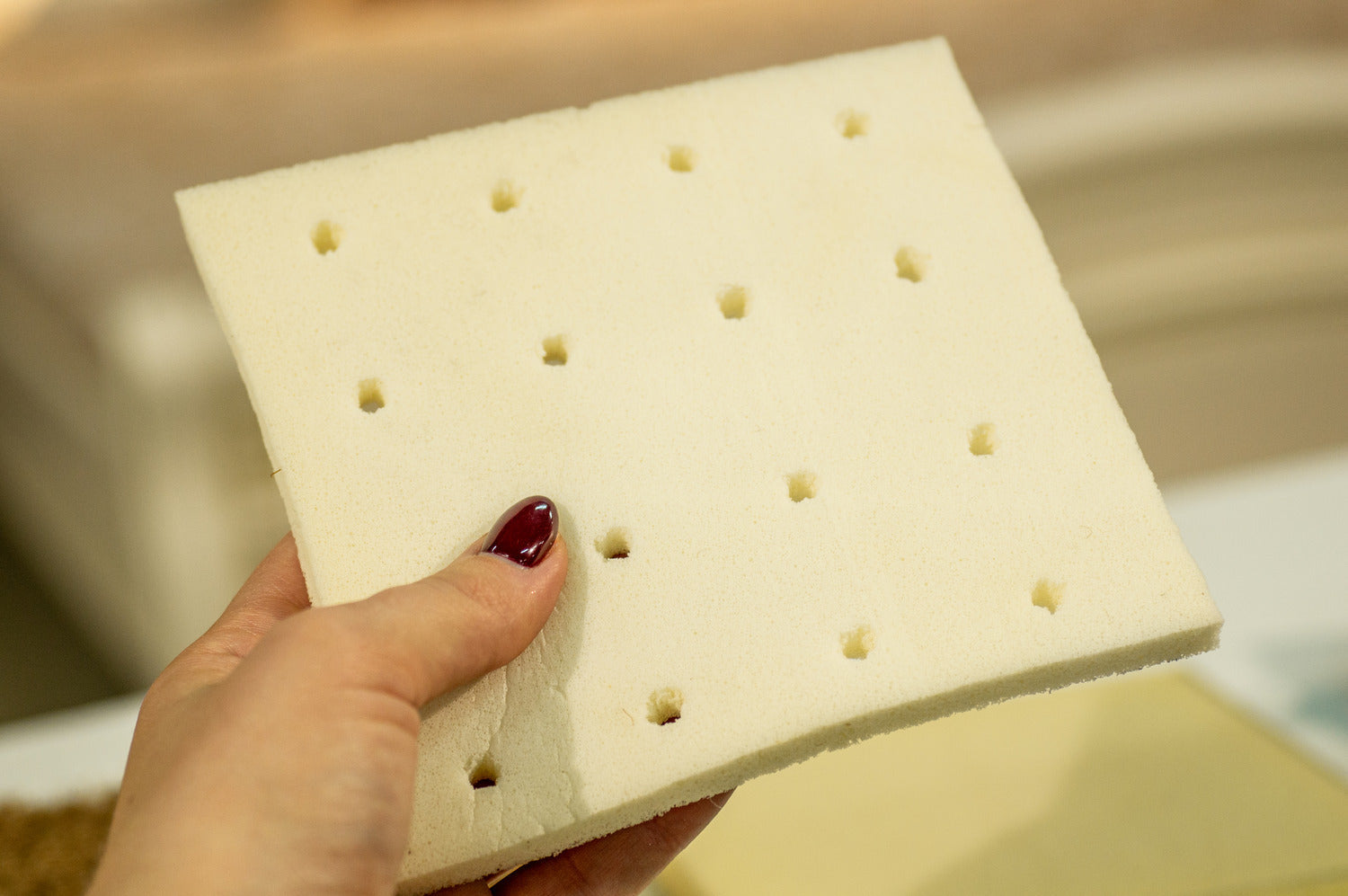
Natural latex has an open-cell structure and pinholes that allow air to move through the mattress, so it generally sleeps cooler and handles humidity better.
-
Memory foam tends to trap heat and can feel warmer, even when infused with gels or cooling additives, which may be an issue for hot sleepers or warm climates.
Durability and sagging
-
A quality natural latex mattress often lasts 12–20 years with good resistance to sagging and body impressions.
-
Memory foam typically lasts around 7–10 years and is more prone to permanent impressions where you lie most.
Materials, health, and eco profile
-
Natural latex is made from rubber tree sap, is renewable, and is usually low in VOCs; it’s also naturally resistant to dust mites and mold, making it attractive for eco-conscious and sensitive sleepers.
-
Memory foam is a synthetic, petroleum-based material that can off-gas VOCs when new, though certified products keep emissions within strict limits.
Motion isolation and price
-
Memory foam is slightly better for motion isolation, so you feel less movement from a partner.
-
Natural latex still isolates motion reasonably well but its bounce can transmit more movement; it also tends to cost more upfront, while memory foam is usually cheaper but needs replacing sooner.
In short, choose natural latex if you prioritise responsiveness, cooling, longevity, and more natural materials, and choose memory foam if you prefer deep contouring, maximum motion isolation, and a lower initial price.