Choosing the right pillow is just as important as choosing the right mattress. The right pillow supports your head, neck, and cervical spine, helping to maintain proper spinal alignment, improve sleep quality, and reduce neck or shoulder discomfort.
In Cyprus, however, climate is an equally important consideration. With summer temperatures regularly reaching 32°C in coastal areas, pillows that trap heat can reduce comfort and disrupt sleep. Breathable materials such as natural latex, ventilated memory foam, and Technogel provide better airflow and temperature regulation, making them well suited to Cyprus's warm Mediterranean climate.
Understanding how sleeping position, filling material, firmness, loft, and cooling performance affect comfort will help you choose a pillow that provides the right support year-round.
What Is a Pillow?
A pillow is a cushioned support placed beneath the head, neck, or body during sleep to maintain spinal alignment and distribute pressure evenly across the cervical region. Its core components are a filling material foam, latex, feathers, fibre, gel, or a combination and an outer cover fabric, which may be cotton, bamboo-derived viscose, or a technical textile designed for moisture management. Modern pillows are not interchangeable objects. Design varies by sleeping position, health requirements, and environmental conditions.
A pillow suitable for a back sleeper in a cool, air-conditioned room performs differently from one used by a side sleeper in a warm Mediterranean bedroom. Size, loft height, firmness, and material breathability each affect whether the pillow maintains or disrupts spinal alignment through the night.
Why Does Choosing the Right Pillow in Cyprus Matter?
The wrong pillow in Cyprus's climate can trap heat, accelerate moisture build-up, and fail to support the cervical spine, three problems that compound each other through a long, warm sleeping season. Coastal areas record average summer daytime temperatures of approximately 32°C and night-time temperatures of around 22°C. Even with air conditioning, many bedrooms remain warmer than optimal sleep conditions for much of the year.
Pillow performance is not a secondary concern. The pillow functions as an extension of the mattress's support system; spinal alignment does not end at the neck. A pillow that collapses, retains heat, or fails to fill the gap between the mattress surface and the head disrupts cervical alignment, causing muscle tension and fragmented sleep. Choosing a pillow without considering local climate, sleeping position, and material behaviour under heat is choosing one that may perform well in cooler European climates but poorly in Cyprus.
1. Cyprus Weather
Dense, non-breathable pillow materials retain heat and moisture, which raise surface temperature, accelerate sweating, and degrade the fill faster in warm climates like Cyprus's. Standard memory foam, particularly older or lower-grade formulations, lacks the internal airflow structure to dissipate heat effectively. Sleepers in Cyprus who use these pillows often experience a progressively warmer surface throughout the night.
Breathable alternatives perform differently. Latex pillows, perforated foam designs, and gel-integrated constructions draw heat away from the head rather than accumulating it. Covers made from bamboo-derived viscose or cotton enhance this effect by wicking moisture from the skin. The choice of material is not merely aesthetic in Cyprus's climate; it directly shapes sleep comfort from June through October.
2. Sleep Quality and Recovery
A pillow that maintains neutral cervical alignment reduces overnight muscle activation, allowing deeper and less interrupted sleep. When the neck deviates from its natural curvature either from a pillow that is too high, too flat, or too yielding under heat the surrounding muscles compensate. That compensation persists through the night, producing stiffness, soreness, and reduced recovery.
Physical recovery, cognitive performance, and mood regulation all depend on sleep architecture specifically on the proportion of deep and REM sleep achieved each night. Heat discomfort and poor neck support both fragment sleep by increasing micro-arousals, which compress the restorative stages without necessarily waking the sleeper fully.
The cumulative effect becomes noticeable within days. For working adults and active people in Cyprus, a pillow that fails to support proper alignment or manage temperature is not a minor inconvenience; it directly affects daytime function.
3. Allergens, Hygiene, and Replacement
Pillows accumulate dust mites, mould spores, pet dander, and shed skin cells over time, and warm, humid conditions accelerate this process. Dust mites thrive in temperatures between 20°C and 30°C and humidity above 50% conditions commonly present in Cypriot bedrooms during summer. The best hypoallergenic pillow materials include latex, down alternative fibres, and silk, all of which resist dust mite colonisation better than standard synthetic fills.
Replacement intervals depend on material. According to sleep experts, the general recommendation is to replace your pillow at least every two years.
More specifically:
-
Synthetic fibre: 1–2 years
-
Down and feather: 1–3 years
-
Memory foam: 2–3 years
-
Latex: 3–5 years
Warm climates can compress these timelines. Pillows used in hot bedrooms without washable covers or adequate ventilation show accelerated compression, odour build-up, and microbial loading.
Removable, washable covers—cleaned every one to two weeks—and inherently resistant materials such as latex significantly reduce hygienic degradation between replacements.
What Are the Types of Pillows Available in Cyprus?
The Cyprus market includes five main pillow categories: memory foam, latex, feather, down, and cooling designs such as gel-integrated constructions. Each differs in feel, support structure, heat behaviour, and suitability for specific sleepers. Traditional fills such as feather and down remain widely available; modern foam, latex, and cooling technologies now represent a growing share of the available range.
1. Memory Foam Pillow
Memory foam pillows are made from viscoelastic polyurethane foam, a material that softens under body heat and pressure and gradually returns to its original shape once weight is removed. This contouring response distributes pressure across the head and neck, reducing localised compression at the cervical vertebrae. Side and back sleepers benefit most from this property, as the foam fills the gap between the mattress and the head precisely.
The main limitation in Cyprus's climate is heat retention. Standard memory foam has a dense, closed-cell structure that absorbs and holds thermal energy. Over a long, warm night, the sleeping surface temperature rises noticeably. Gel-infused or ventilated memory foam addresses this partially open-cell formulation and perforated designs allow more airflow. For sleepers with neck or shoulder pain who require the contouring of memory foam but cannot tolerate heat retention, ventilated or gel-hybrid options are the more practical choice.
2. Latex Pillow
Latex pillows are produced from natural rubber sap—processed into a buoyant, open-cell foam that springs back quickly under pressure rather than contouring slowly like memory foam. This responsiveness makes latex well-suited to combination sleepers who shift positions frequently, as the pillow adjusts without creating a prolonged impression that pulls the neck out of alignment.
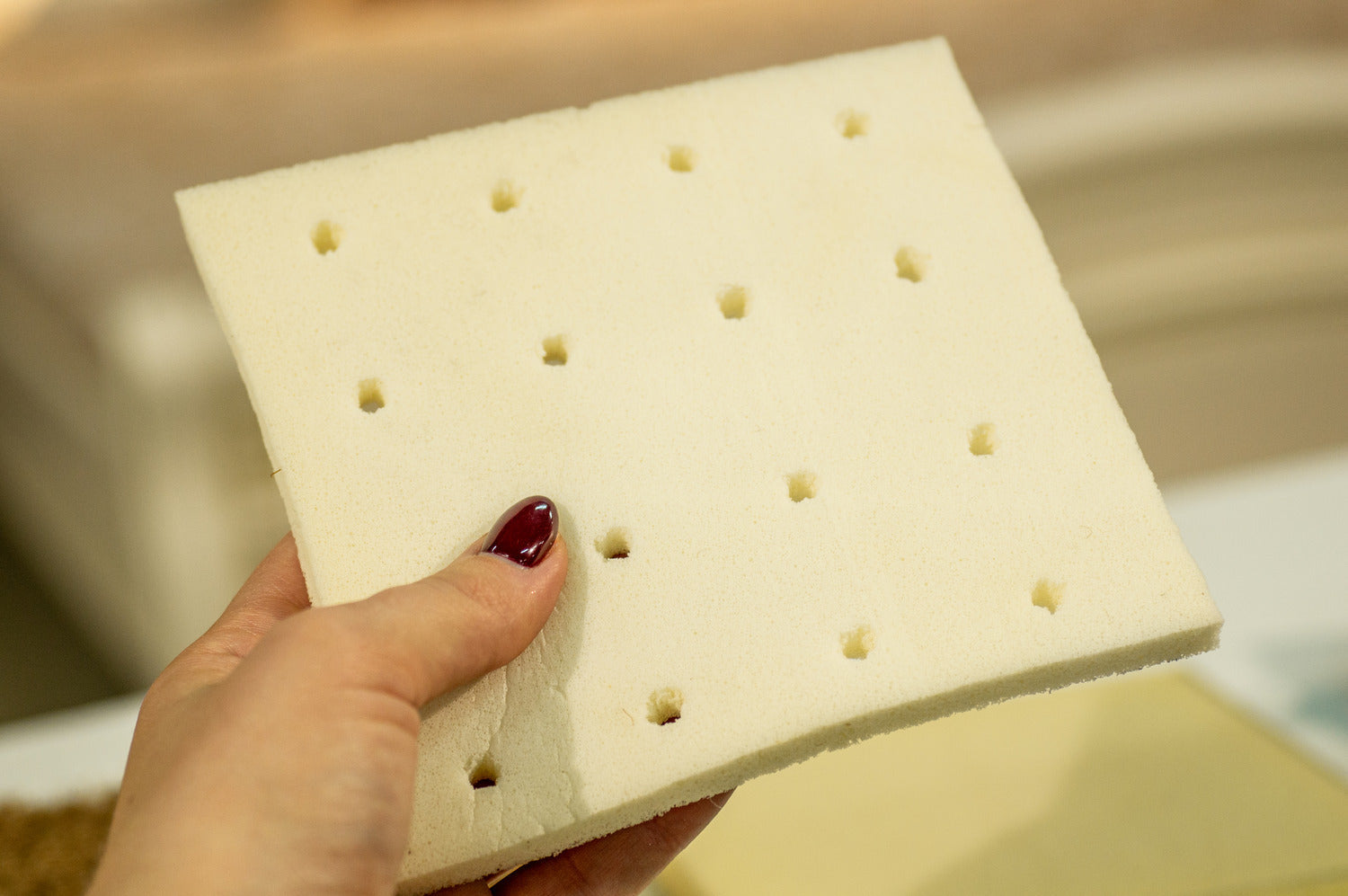
For Cyprus, latex carries three advantages. First, its open-cell and pin-hole structure promotes airflow, keeping the sleeping surface cooler than standard foam. Second, natural latex resists dust mites and mould without requiring chemical treatment, making it a valuable property in warm, humid conditions. Third, latex pillows last 3–5 years before showing significant compression, making them the most durable of the common fill types. The trade-off is cost: quality natural latex commands a higher price than synthetic alternatives.
3. Feather Pillow
Feather pillows are filled with the outer wing and body feathers of ducks or geese, stiffer, flatter quills that provide more structure than down clusters but less contouring than foam. The result is a pillow that can be shaped and compressed by hand, offering a traditional, malleable feel. Feather fills are generally more affordable than down and widely available across the Cyprus market.
The structural limitation is support consistency. Feather fills compress unevenly over time, creating lumps or flattened zones that no longer maintain neck alignment. Feather quills can protrude through lower-quality covers, which is a discomfort issue rather than a health concern. In warm, humid conditions, feather fills can retain moisture—particularly without regular airing—and may require more frequent replacement than foam or latex alternatives.
4. Down Pillow
Down pillows are filled with the soft, insulating clusters found beneath the outer feathers of geese or ducks, finer and lighter than feather fill, producing a plush, enveloping feel with minimal structural resistance. Down compresses easily under head weight, which suits sleepers who prefer a very soft, yielding surface rather than structured support.
The primary limitation for Cyprus is thermal behaviour. Down clusters are excellent insulators, a property that creates comfort in cold climates and discomfort in warm ones. Sleepers who run warm will find pillows increasingly uncomfortable through Cyprus's summer months. Down is also a potential allergen source.
For individuals with sensitivities to animal-derived materials, down alternative fibre fills synthetic clusters engineered to approximate the feel of down without the biological content—offer a more hygienic option.
5. Cooling Pillow
Cooling pillows describe a performance category rather than a single material; any pillow incorporating gel layers, ventilated foam, phase-change fabrics, or thermal-regulation technologies qualifies as a cooling design. The defining feature is the ability to draw heat away from the head rather than allowing it to accumulate at the sleeping surface.
Gel-integrated constructions such as Technogel combine a layer of patented gel with memory foam to distribute pressure and dissipate heat simultaneously. Ventilated foams achieve cooling through an open-cell structure and perforated channels that promote airflow.
Phase-change materials infused into covers or foam absorb heat when the surface temperature rises above a set threshold and release it as the surface cools. For Cyprus, where night-time temperatures remain elevated through summer and autumn, cooling pillow designs address the climate's central sleep challenge directly.
What Are the Best Pillow Materials for Cyprus's Climate?
Breathable, moisture-managing, and thermally stable materials outperform dense or insulating fills in Cyprus's warm climate. The three categories that perform best are natural and ventilated foams, cooling gel technologies, and moisture-wicking cover fabrics.
1. Breathable Materials
Natural latex ranks as one of the most climate-appropriate core materials for Cyprus: its open-cell foam structure and needle-punched pin holes promote continuous airflow, keeping the sleeping surface cooler than memory foam under the same ambient temperature. Latex also maintains its support profile under heat, whereas some synthetic foams soften disproportionately as temperature rises.
Cover fabrics significantly affect perceived temperature. Bamboo-derived viscose fibres draw moisture away from the skin and release it as vapour more quickly than standard polyester. Cotton covers are breathable, widely available, and suitable for most sleepers who do not run particularly hot.
The practical recommendation for Cyprus: a natural latex core with a bamboo or cotton cover combines structural support, heat management, and moisture control in one configuration. Synthetic polyester covers even on quality foam cores can negate breathability by trapping heat and moisture at the skin contact surface.
2. Cooling Technology
Technogel pillows use a patented layer of thermally conductive gel fused with premium memory foam to distribute both pressure and body heat across the pillow's surface simultaneously. The gel's high thermal conductivity draws excess heat away from the head rather than reflecting it back, a mechanism verified by clinical tests conducted in partnership with research universities, according to Technogel Comfort.
The design includes patented vertical ventilation channels, which enhance airflow through the pillow's body and reinforce thermoregulation. For very warm sleepers or those highly sensitive to temperature fluctuation, Technogel represents the most engineered solution available in the Cyprus market.
All Technogel pillows carry an inner 100% cotton cover with antibacterial and dust mite–resistant properties, and a washable outer cover rated for 40°C washing practical maintenance features in a warm climate. The Technogel material and textiles are certified to Öko-Tex Standard 100 Class 1, and the Original Collection is eligible for CE medical device registration for ergonomics in the European Union.
3. Moisture-Wicking Fabrics
Moisture-wicking describes a fabric's capacity to pull sweat away from the skin, transport it to the fabric's outer surface, and allow it to evaporate reducing the dampness and odour that accumulate on a static, non-breathable surface. Bamboo-derived viscose achieves this more efficiently than standard cotton and carries a smoother, cooler hand-feel that many sleepers find preferable on direct skin contact.
Cotton covers are the baseline: breathable, widely available, and effective at managing moderate moisture. For sleepers who perspire heavily during Cyprus's summer months, bamboo covers on top of foam or latex cores reduce sweat accumulation at the cover layer, the point of greatest hygiene exposure and dry more quickly between uses. Both materials are washable at standard temperatures, which makes regular cleaning practical rather than burdensome.
Which Brand of Pillow Is Best?
No single pillow brand performs best across all criteria; the right brand depends on material quality, climate suitability, range of options, and local availability. Evaluating a pillow brand for Cyprus requires checking four criteria: the quality and specification of the filling materials; the range of options for different sleeping positions and heat sensitivities; clarity of product information; and whether the retailer can offer guidance for the local climate.
Technogel, as a European brand with clinical testing by the Ergonomic Institute of Munich and Öko-Tex Standard 100 Class 1 certification, represents a well-documented premium option for sleepers who prioritise cooling performance and ergonomic support.
At Panstromasew, we offer Technogel, memory foam, latex, feather, and down pillows, allowing you to compare a full range of options in one location rather than researching multiple retailers.
How to Choose a Pillow Based on Sleeping Position?
Sleeping position determines the required loft (pillow height) and firmness to maintain neutral cervical spine alignment, the configuration in which the head sits level with the rest of the spine without forward flexion or lateral tilt. A pillow that is too high forces the neck into flexion; one that is too low allows it to drop laterally or posteriorly. Both outcomes activate compensatory muscle tension through the night.
1. Side Sleepers
Side sleepers require a higher-loft, medium-to-firm pillow that fills the gap between the mattress surface and the head without compressing significantly under the weight of the head. The shoulder creates a large lateral space that a low or soft pillow cannot adequately bridge, pulling the neck toward the mattress.
Memory foam and latex both perform well for side sleepers memory foam conforms to the shoulder and head curve; latex provides immediate, consistent resistance without slow compression. Ergonomic contoured designs with a raised outer zone and recessed centre are specifically engineered for this position. Cooling materials are particularly relevant for side sleepers because the face comes into direct contact with the pillow surface, with no airflow gap.
2. Back Sleepers
Back sleepers need a medium-loft, medium-firmness pillow that supports the natural inward curvature of the cervical spine without pushing the head forward. A pillow that is too thick places the neck in sustained flexion, compressing the anterior cervical structures. A pillow that is too thin allows the head to fall posteriorly, creating extension strain.
Gently contoured anatomic designs with a slightly raised neck zone and a recessed central area for the head maintain the cervical curve without forcing the head into an unnatural position. Both memory foam and latex maintain their profile through the night, avoiding the gradual compression that causes feather or fibre pillows to flatten and lose the height that initially felt appropriate.
3. Stomach Sleepers
Stomach sleepers should use a low-loft, soft pillow or in some cases, no pillow under the head at all to avoid sustained hyperextension of the cervical spine. Any height that lifts the head significantly above the mattress surface places the neck in a rotated, hyperextended position for several hours, loading the posterior cervical joints and deep neck flexors.
Thin, breathable fills soft fibre, low-profile foam, or a very compressed down alternative suit this position. Breathability matters disproportionately for stomach sleepers because the face presses directly into the pillow throughout the night, restricting airflow at the skin contact surface. In Cyprus, a thin bamboo or cotton-covered pillow with a soft, compressible fill provides both the low profile and the airflow this position requires.
4. Combination Sleepers
Combination sleepers who regularly shift between two or more positions during the night perform best with a medium-loft, responsive pillow that adapts quickly to position changes without creating a persistent impression. Latex is the most suitable core material for this pattern: it returns to shape almost immediately after weight shifts, maintaining consistent support regardless of position.
Adjustable shredded-foam pillows, which allow fill removal or addition to fine-tune height, offer an alternative for combination sleepers who are uncertain about their optimal loft. Temperature regulation is also a consideration, moving frequently through the night exposes different pillow surfaces, making consistent airflow throughout the pillow body more important than for sleepers who remain in one position.
What Are the Pillow Firmness Levels?
Pillow firmness describes the resistance a pillow offers to head weight, categorised across three levels: soft, medium, and firm. Each level suits a different combination of sleeping position, body size, and personal preference.
-
Soft: Compresses easily under head weight with minimal pushback. Suits stomach sleepers and some back sleepers who prefer a yielding surface. Down, soft fibre, and low-density foams typically produce this feel.
-
Medium: Balances support and cushioning. Works for most back sleepers and many side sleepers with narrower shoulder widths. The most widely applicable firmness level across fill types.
-
Firm: Provides substantial resistance and minimal compression. Suited to side sleepers with broader shoulders, heavier individuals requiring more lateral support, or those with specific neck support needs. High-density memory foam, natural latex, and firmer anatomic foam designs deliver firm support.
The same firmness label can produce different physical sensations across materials. A firm latex pillow feels buoyant and responsive; a firm memory foam pillow feels dense and contouring. Both may measure similarly on a compression test but differ significantly in sleep feel. Trying pillows in person, where possible, clarifies this distinction better than specification sheets alone.
Which Pillow Sizes Are Available in Cyprus?
Pillow sizes in Cyprus follow European bedding standards, with the most common dimensions being 50 × 70 cm (standard) and 60 × 80 cm (large), though specialty and orthopaedic formats deviate from these measurements. Standard pillowcases are manufactured to fit these two sizes, making them the most practical choices for existing bedding sets.
Larger sizes suit broader beds, taller individuals, or sleepers who reposition frequently and benefit from a larger surface area. Smaller junior or travel sizes serve children or travel use rather than regular adult sleep. Orthopaedic and anatomic pillow designs such as contoured cervical pillows with raised outer zones or butterfly-shaped LAB designs often use non-standard dimensions (66 × 40 cm in the Technogel range, for example) but typically come with dedicated covers or are compatible with standard large pillowcases depending on the specific dimensions.
How Do You Maintain and Clean Your Pillow?
Pillow maintenance centres on three practices: regular cover washing, correct core cleaning, and thorough drying, each critical in a warm climate where sweat and humidity accelerate microbial build-up. Removable, washable covers should be washed every one to two weeks to control sweat residue, skin cells, and dust mite populations at the contact surface.
Pillow cores require different treatment depending on material. Most memory foam and latex cores are spot-clean only submerging them damages the foam structure and compromises support. Synthetic fibre and down pillows are generally machine washable, though following manufacturer specifications prevents clumping or fill displacement.
Drying is the critical step: a pillow core that remains damp after washing will develop mould and mildew, particularly in Cyprus's warm conditions. Ensure complete dryness before returning the pillow to use this typically requires tumble drying on low heat or extended air drying in direct sunlight.
Regular airing laying the pillow flat in a well-ventilated area for several hours slows moisture accumulation between washes. Fluffing fibre and down pillows daily restores loft and redistributes fill that has compressed unevenly during sleep. Foam and latex cores do not require fluffing but benefit from occasional repositioning to distribute wear across the surface.
How Do You Know When to Replace Your Pillow?
A pillow needs replacing when it no longer maintains the loft and structure required for cervical support which the fold test, visual inspection, and physical symptoms can confirm. Folding a pillow in half and then releasing it can reveal its condition. A pillow that quickly springs back retains adequate support, while one that remains folded has lost the resilience needed to support your head throughout the night.
Additional indicators by category:
-
Visible sagging or permanent flattening: The fill has compressed beyond recovery, reducing effective loft.
-
Lumps or uneven fill distribution: Particularly common in fibre, feather, and down pillows after extended use.
-
Persistent odour after cleaning: Indicates accumulated biological material that surface washing cannot eliminate.
-
Discolouration or yellowing: Caused by sweat and oil absorption through the cover over time.
-
Waking with neck or shoulder stiffness: When symptoms correlate with pillow age and resolve after repositioning, the pillow's support has likely degraded.
In Cyprus's warm climate, the combination of higher sweat output and elevated ambient temperatures can accelerate degradation of lower-quality fills by six to twelve months relative to standard replacement intervals. Synthetic fibre pillows used over multiple Cyprus summers may show signs of compression by 12–18 months, rather than the typical two-year mark.
What Are the Pillow Prices in Cyprus?
Pillow prices in Cyprus vary by material, technology, and brand, falling into three broad bands: budget, mid-range, and premium. Understanding what each band reflects helps calibrate the purchase against expected durability and performance.
|
Price Band |
Typical Materials |
Expected Lifespan |
Key Trade-Offs |
|
Budget |
Basic synthetic fibre, entry feather |
1–2 years |
Lower durability, limited support, faster hygiene degradation |
|
Mid-range |
Better synthetic fibre, entry memory foam, basic latex |
2–3 years |
Improved support and longevity; limited cooling technology |
|
Premium |
High-density memory foam, natural latex, Technogel, quality down |
3–5 years |
Superior ergonomics, cooling performance, longer lifespan; higher upfront cost |
Budget pillows cost less upfront but replace more frequently—often negating the initial saving over a three-to-five-year period. Premium materials such as natural latex and Technogel carry a higher purchase price but deliver durability, ergonomic performance, and climate suitability that budget fills cannot match. For Cyprus specifically, investing in a breathable, cooling design from the mid-range or premium band is justified by the extended warm season.
Where to Buy Pillows in Cyprus?
At Panstromasew, we stock pillows across all major material categories, including memory foam, latex, Technogel, feather, and down. Our products are available in our physical stores in Nicosia and Limassol, as well as through our online store with delivery across Cyprus. Choosing a retailer that provides clear material specifications, climate-relevant options, and accessible customer guidance reduces the likelihood of purchasing a pillow that performs poorly under local conditions.
1. Online Store
Panstromasew's online store provides the full product range with detailed specifications for each pillow, including material composition, loft height options, sleeping position compatibility, and cover materials. Filtering by material type, firmness, or special features such as cooling technology or orthopaedic design allows comparison across options before purchase.
For buyers who already understand their sleeping position and material preferences, the online store is the most efficient purchasing route. Transparent pricing, product descriptions, and the ability to compare multiple specifications side-by-side make it well-suited to informed decisions. Delivery across Cyprus brings the full range to locations outside the major cities.
2. Physical Stores in Nicosia and Limassol
Visiting Panstromasew's showrooms in Nicosia and Limassol allows you to compare firmness levels, loft heights, and surface materials firsthand differences that product specifications alone cannot fully convey. The difference between a medium-firm latex pillow and a medium-firm memory foam pillow, for example, becomes immediately clear when handled in person. Staff guidance on matching pillow type to sleeping position, mattress type, and any existing neck or back concerns is available in both locations.
Buyers who are deciding between material categories particularly latex versus memory foam, or cooling foam versus Technogel benefit most from in-person comparison. The Cypriot climate context, heat management, breathability, hygiene considerations can be discussed directly, ensuring the recommendation accounts for local conditions rather than generic sleep advice.