
Latex has become a cornerstone material in high-quality mattresses, prized for its durability, natural comfort, and eco-friendliness. Among the two primary latex types used in bedding — Dunlop and Talalay — Dunlop latex stands out for its dense, supportive feel and sustainable production.
Below, we’ll explore everything you need to know about Dunlop latex — from how it’s made to the way it performs in mattresses.
What Is Dunlop Latex?
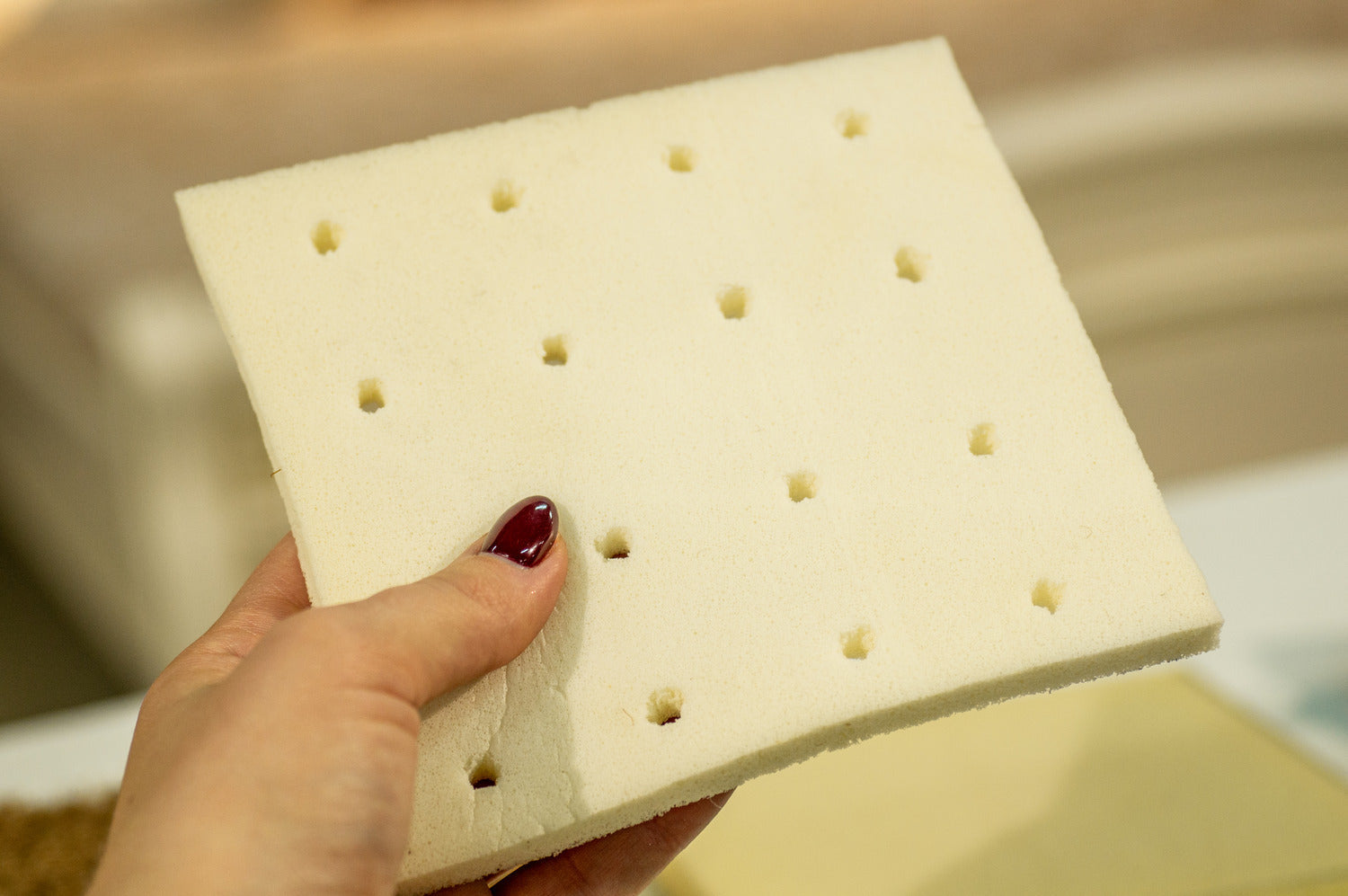
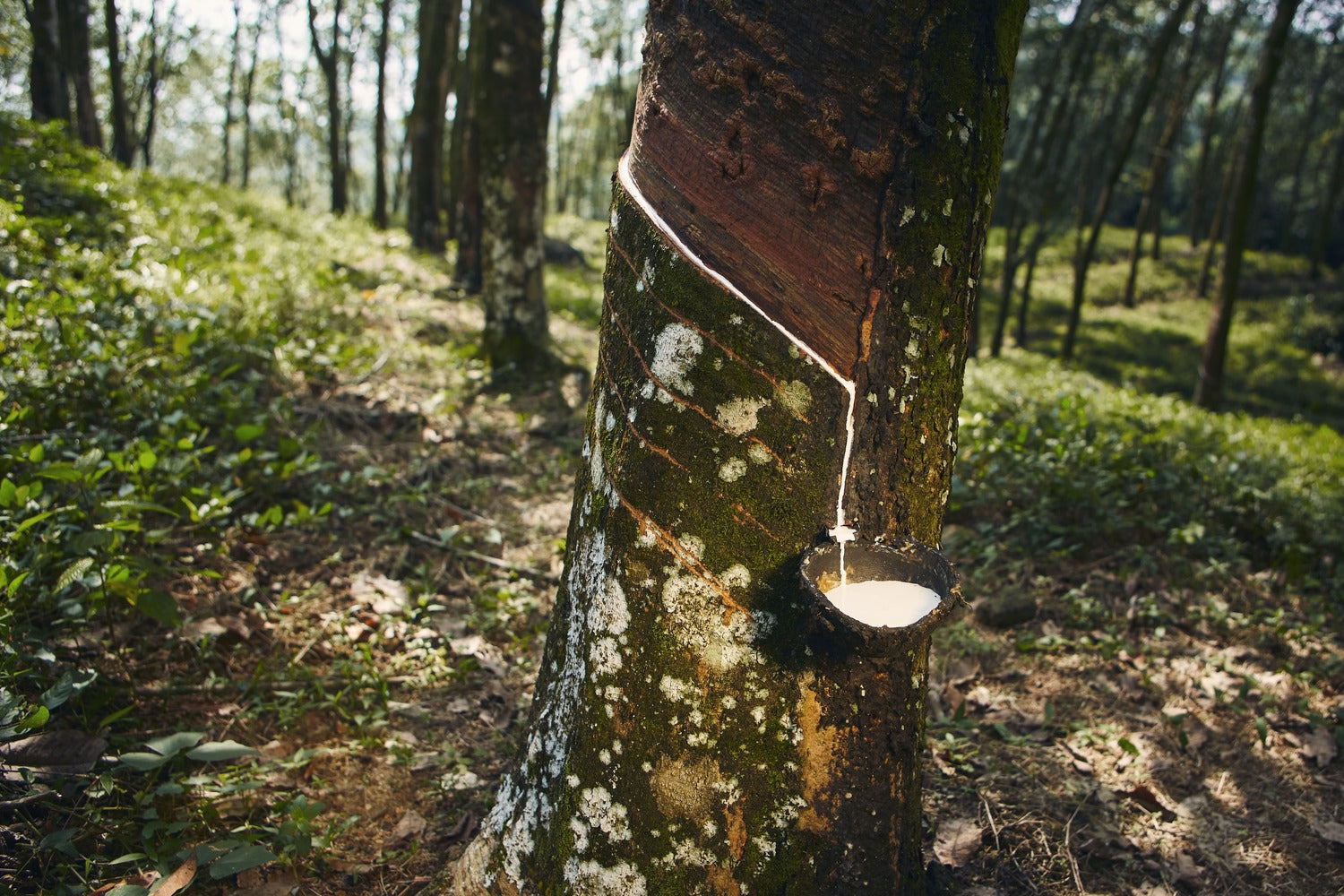
Dunlop latex is a type of latex foam made primarily from the sap of rubber trees using the traditional Dunlop manufacturing process, which has been in use since around 1929. In this process, liquid latex is whipped into a foam, poured into a mold in one continuous pour, baked (vulcanized), then washed and dried, creating a relatively dense, supportive foam that is typically firmer at the bottom and softer at the top due to natural settling.
It is most often produced from natural rubber, sometimes with a small percentage of non-toxic additives like soaps, sulfur, and curing agents that help convert the liquid into a stable, long-lasting solid foam. Because of its higher density and inherent resilience, Dunlop latex is widely used as a mattress core material, valued for its durability, firm support, and suitability in natural and organic mattress designs.
What is Dunlop latex made from?
Dunlop latex is primarily made from natural rubber tree sap, which is harvested sustainably in tropical regions. The raw sap is a milky white fluid that, once processed, turns into a resilient foam. Depending on the manufacturer, small amounts of curing agents, stabilizers, and soaps may be added to solidify the mixture and increase durability.
Generally, high-quality Dunlop latex is composed of:
-
Natural rubber latex (the main ingredient)
-
Vulcanization agents (sulfur and accelerators)
-
Soap and curing stabilizers (to preserve structure)
When labeled as 100% natural Dunlop latex, it typically contains no synthetic latex or petroleum-based additives.
How is Dunlop latex produced?
Dunlop latex is produced through a batch foaming and vulcanization process that transforms liquid rubber sap into a dense, resilient foam used in mattresses and pillows.
It typically involves the following steps:
-
Compounding: Liquid latex (natural or sometimes blended) is mixed with small amounts of soaps, sulfur, gelling agents, and vulcanization agents to create a stable compound suitable for foaming and curing.
-
Foaming: The mixture is aerated mechanically or with compressed air, introducing tiny air bubbles that form a uniform foam and determine the final density and firmness.
-
Molding and vulcanization: The foam is poured into a metal mold, the mold is closed, and the latex is heated so the sulfur cross-links the rubber molecules, turning the liquid foam into an elastic solid core.
-
Washing: The cured latex core is removed from the mold and thoroughly washed to rinse away residual soaps, gelling agents, and curing chemicals.
-
Drying and stabilization: The washed core is dried at controlled temperatures to remove moisture and stabilize its internal structure.
-
Finishing and quality control: The finished block is inspected for hardness, weight, and visual defects, then trimmed and prepared for use in mattresses and pillows.
Together, these steps create a dense, stable, and long-lasting latex foam with the characteristic firm, supportive feel that makes Dunlop latex especially well suited for high-quality mattress and pillow cores.
What Are the Key Benefits of Dunlop Latex?
Dunlop latex offers a combination of support, durability, and sustainability that makes it especially attractive in mattresses and pillows. Its main benefits include comfort performance, longevity, and health and environmental advantages.
1. Naturally supportive comfort
-
Outstanding support: Dunlop latex is denser than many other foams, providing strong, consistent support that helps keep the spine in neutral alignment, especially for back and stomach sleepers.
-
Pressure relief without “sink”: It gently cushions shoulders and hips while preventing the deep, slow sink often associated with memory foam.
-
Stable, grounded feel: The foam feels buoyant and supportive rather than bouncy or "trampolining," which many sleepers find more controlled and stable.
2. High durability and shape retention
-
Long lifespan: Quality Dunlop latex can maintain its feel and structure for many years, often outlasting conventional polyurethane or memory foam.
-
Resistant to sagging: Its dense structure makes it less prone to permanent body impressions and soft spots over time.
-
Consistent performance: The material recovers quickly after compression and keeps its firmness level more reliably than many synthetic foams.
3. Good temperature regulation
-
Naturally more temperature neutral than many foams: It does not rely on heat to soften, so it avoids the “stuck in the mattress” warmth some experience with memory foam.
-
Breathable structure: The open-cell latex foam and pinhole ventilation (common in latex cores) help air circulate, supporting a cooler, drier sleep surface.
4. Eco-friendly material profile
-
Renewable source: Dunlop latex is typically made from rubber tree sap, a renewable resource harvested without cutting down the trees.
-
Lower processing intensity: The Dunlop process is relatively simple compared with some alternative foams and often used in natural or organic-certified products.
-
Reduced reliance on petrochemicals (when natural or organic): In its natural or organic forms, it contains far fewer petroleum-based components than conventional foams.
5. Hypoallergenic and resistant to common irritants
-
Naturally resistant to dust mites and mold: The structure and chemistry of latex make it less hospitable to these allergens than many traditional materials.
-
Antimicrobial properties: It resists the growth of bacteria and fungi, helping maintain a cleaner sleep surface over time.
-
Suitable for many sensitive sleepers: While true latex allergies exist (and should be taken seriously), high-quality, well-washed Dunlop latex is typically encased in fabric and does not shed fibers, so it’s often well tolerated in bedding.
6. Low motion transfer and quiet performance
-
Motion-dampening: The dense latex absorbs movement better than springs, helping reduce partner disturbance when someone turns or gets in and out of bed.
-
Silent operation: There are no metal coils or mechanical components, so the mattress remains quiet throughout its life.
In practice, these benefits make Dunlop latex a strong choice for sleepers who want a firm, supportive, durable, and more sustainable mattress core with a stable, grounded feel rather than a plush, ultra-bouncy surface.
Is Dunlop latex natural or synthetic?
Dunlop latex can be natural, synthetic, or a blend, depending on its formulation.
-
Natural Dunlop latex is made from rubber tree sap and may be labelled as “100% natural” or “organic” when it meets standards such as GOLS, meaning it contains no petrochemical latex and very minimal additives.
-
Synthetic Dunlop latex is produced from petrochemical-based polymers (typically styrene-butadiene rubber), which lowers cost but also tends to reduce elasticity and longevity compared with natural latex.
-
Blended Dunlop latex combines natural and synthetic latex to balance price, consistency, and performance, but it is less “green” and usually less durable than high-quality natural Dunlop.
When a product simply says “Dunlop latex” without clarification, it’s important to check whether it is specifically listed as natural, organic, synthetic, or blended.
How Does Dunlop Latex Perform in Mattresses?
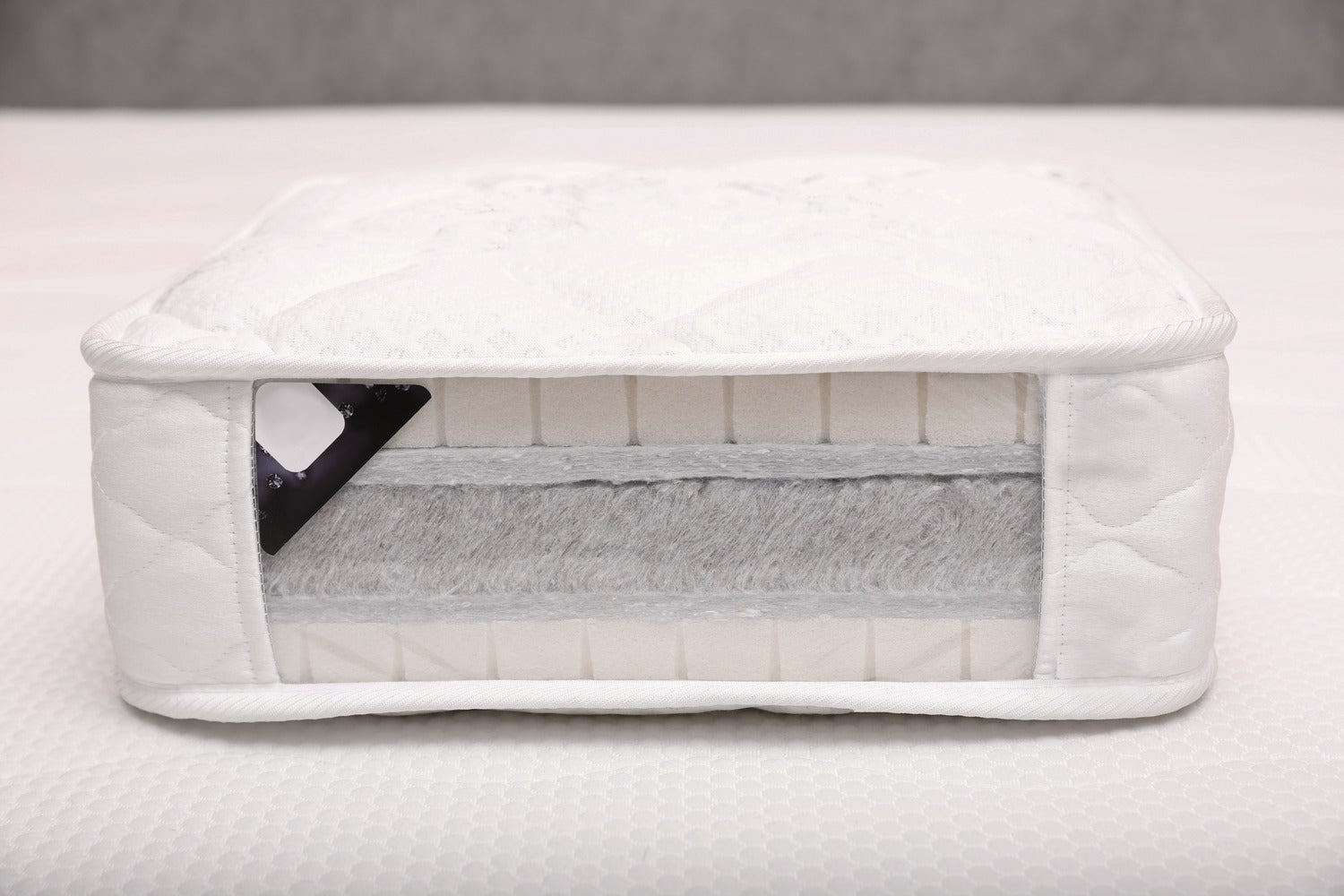
Dunlop latex performs very well in mattresses, especially for sleepers who want stable, long-lasting support rather than a plush, “hugging” feel. It tends to be used either as the main core of the mattress or as a supportive middle/base layer under softer comfort materials.
In practical terms, Dunlop latex in mattresses typically offers:
-
A firm, stable feel that keeps the spine well aligned and prevents the deep sink common with softer foams.
-
Good pressure relief with a more “lifted” sensation, so you feel supported on top of the mattress rather than enveloped by it.
-
High durability, resisting sagging and body impressions for many years, making it a strong choice for long-term use.
-
Low to moderate motion transfer, so partners feel fewer disturbances compared with traditional innersprings.
-
Temperature-neutral comfort, since latex does not rely on body heat to soften and usually has an open, breathable cell structure.
Overall, Dunlop latex mattresses are best suited to back and stomach sleepers, heavier individuals, and anyone who prefers a supportive, grounded sleeping surface with a more natural, eco-conscious material profile.
Is Dunlop latex firm or soft?
Dunlop latex is generally considered medium-firm to firm, but it can be produced across a range of firmness levels from soft to extra firm. In practice, most Dunlop layers used in mattresses skew firmer and denser than Talalay latex, which is why Dunlop is often chosen for core and support layers rather than ultra-plush comfort tops.
Manufacturers can adjust firmness by changing the foam’s density and Indentation Load Deflection (ILD), so you’ll see Dunlop offered in options like soft, medium, firm, and extra firm.
Typically, this means: soft and medium Dunlop still feel more supportive and “buoyant” than equivalent memory foam, while firm and extra-firm Dunlop provide a very stable, orthopaedic-style surface suited to back and stomach sleepers or heavier individuals.
Is Dunlop latex responsive or slow in bounce?
Dunlop latex is responsive, but with a more controlled, less “springy” bounce than Talalay latex. It compresses quickly under pressure and springs back almost immediately when you move, so you don’t get the slow, sinking sensation you’d feel with memory foam.
In a mattress, this translates to a buoyant, lifted feel: you stay more “on” the surface rather than “in” it, and it’s easy to change positions without feeling stuck. At the same time, Dunlop’s higher density slightly dampens the bounce, so it feels stable and grounded rather than jiggly, which many sleepers find more supportive and less disruptive during partner movement.
Is Dunlop Latex Durable and Long-Lasting?
Dunlop latex is widely regarded as highly durable and long-lasting compared to most conventional foams. In a quality mattress, well-made natural Dunlop latex can often perform reliably for well over a decade, with many setups maintaining good support and comfort in the 10–15+ year range under normal residential use.
Several factors contribute to this durability:
-
Its dense, cross-linked rubber structure resists sagging and deep body impressions better than polyurethane or memory foam.
-
Latex naturally has strong elastic recovery, so it bounces back to its original shape after nightly compression.
-
It is resistant to common degrading factors like dust mites, mold, and mildew, which can break down other materials faster.
You’ll still see variations in lifespan depending on:
-
Whether the latex is natural vs. synthetic or blended (natural typically lasts longer).
-
The overall mattress design (support core, layering, cover) and how well it supports body weight.
-
User factors like body weight, sleeping positions, and whether the mattress is rotated periodically.
In short, when you choose high-quality, mainly natural Dunlop latex from a reputable manufacturer, you’re getting one of the most durable mattress materials available, with a much longer usable life than most standard foam or spring-only options.
What is the difference between Dunlop latex and Talalay latex?
Dunlop and Talalay are made from the same base material (latex), but the different production methods give them distinct feels, uses, and performance profiles.
Core differences at a glance
-
Production process:
-
Dunlop latex is whipped, poured fully into a mold, baked, then washed and dried in a relatively simple, single-pour process. This leads to a denser, slightly “bottom-heavy” foam (firmer at the bottom, slightly softer at the top).
-
Talalay latex is whipped, partially fills the mold, then is vacuum-expanded, flash-frozen, and baked, creating a more airy, uniform foam with a very consistent cell structure.
-
Feel and firmness:
-
Dunlop typically feels denser and firmer, with a more grounded, supportive sensation that many brands use for support cores.
-
Talalay tends to feel softer, plusher, and more conforming, so it’s often used as a top comfort layer for pressure relief and a more “buoyant” surface.
-
Density, breathability, and temperature:
-
Dunlop is higher-density, which supports great durability but slightly less airflow compared with Talalay (though still cooler than most memory foams).
-
Talalay is lower-density and more open, so it generally sleeps a bit cooler and feels airier and more breathable.
-
Durability and cost:
-
Dunlop’s higher density generally makes it more robust and resistant to wear, especially in base layers.
-
Talalay is also durable, but slightly less so in heavy-duty support roles; its more complex process usually makes it more expensive per layer.
-
Typical mattress usage:
-
Dunlop: Favoured for support cores and sometimes firmer comfort layers in latex or hybrid mattresses.
-
Talalay: Favoured for plush comfort layers, toppers, and zones where pressure relief and contouring are a priority.
In short, Dunlop is the denser, slightly firmer, more “grounded” latex that excels in support and durability, while Talalay is the softer, airier, and more uniform latex that shines in comfort layers and pressure relief.
Why is Dunlop latex considered eco-friendly?
Dunlop latex is considered eco-friendly mainly because it’s derived from renewable rubber tree sap, which can be tapped for years without damaging or felling the trees. Its production also tends to have a lighter footprint, as the Dunlop process uses fewer industrial steps and generally less energy than more complex latex manufacturing methods like Talalay.
In its natural or organic form, Dunlop latex is typically free from petroleum-based foams and harsh chemical additives, making it a cleaner choice for both indoor air quality and the broader environment.
Many producers also support sustainable forestry and pursue third-party certifications such as GOLS (Global Organic Latex Standard), which set strict criteria for organic content and responsible production. Combined with its long lifespan and resistance to premature wear, Dunlop latex helps reduce mattress waste over time, aligning well with environmentally conscious purchasing decisions.
Is Dunlop latex good for people with allergies?
Dunlop latex is generally a good option for people with allergies because it is naturally hypoallergenic and resistant to common indoor allergens. It does not easily harbor dust mites, mold, or mildew, thanks to its dense structure and low moisture absorption, which helps reduce allergen buildup in the mattress over time.
For many allergy-prone sleepers, this means:
-
Less exposure to dust mites and their droppings, a major trigger for respiratory allergies and asthma.
-
Reduced growth of bacteria, mold, and fungi on the sleep surface, which supports cleaner air and fewer irritants.
-
Fewer issues with chemical sensitivities when the Dunlop latex is natural or GOLS-certified organic, since it avoids many harsh chemicals found in conventional foams.
However, anyone with a confirmed latex allergy (especially moderate to severe) should be cautious. Even though mattress latex is thoroughly washed and usually encased so that direct contact is limited, the residual proteins in natural latex can still pose a risk, so those individuals should consult a doctor and may be better off choosing a non-latex mattress type.