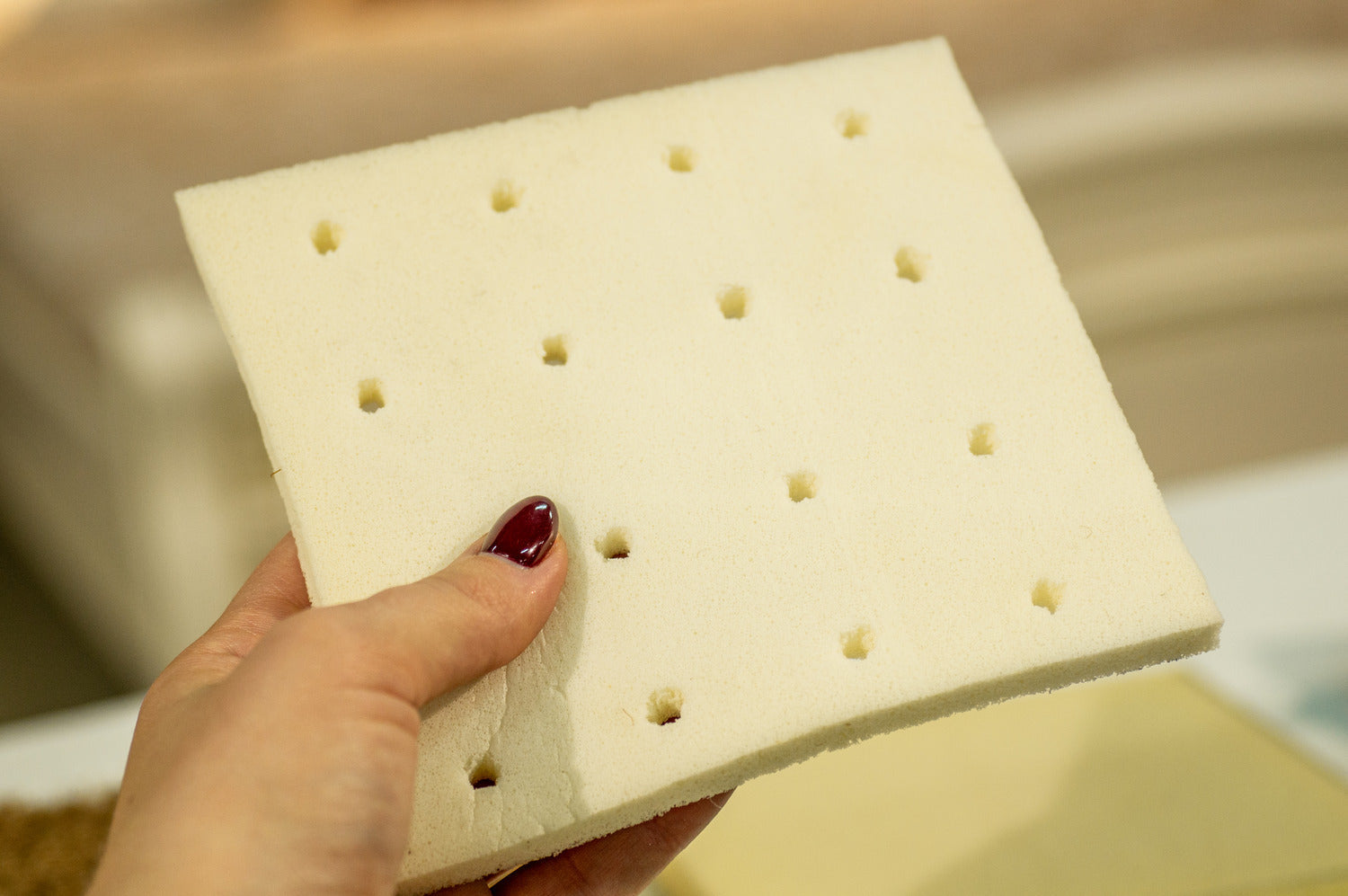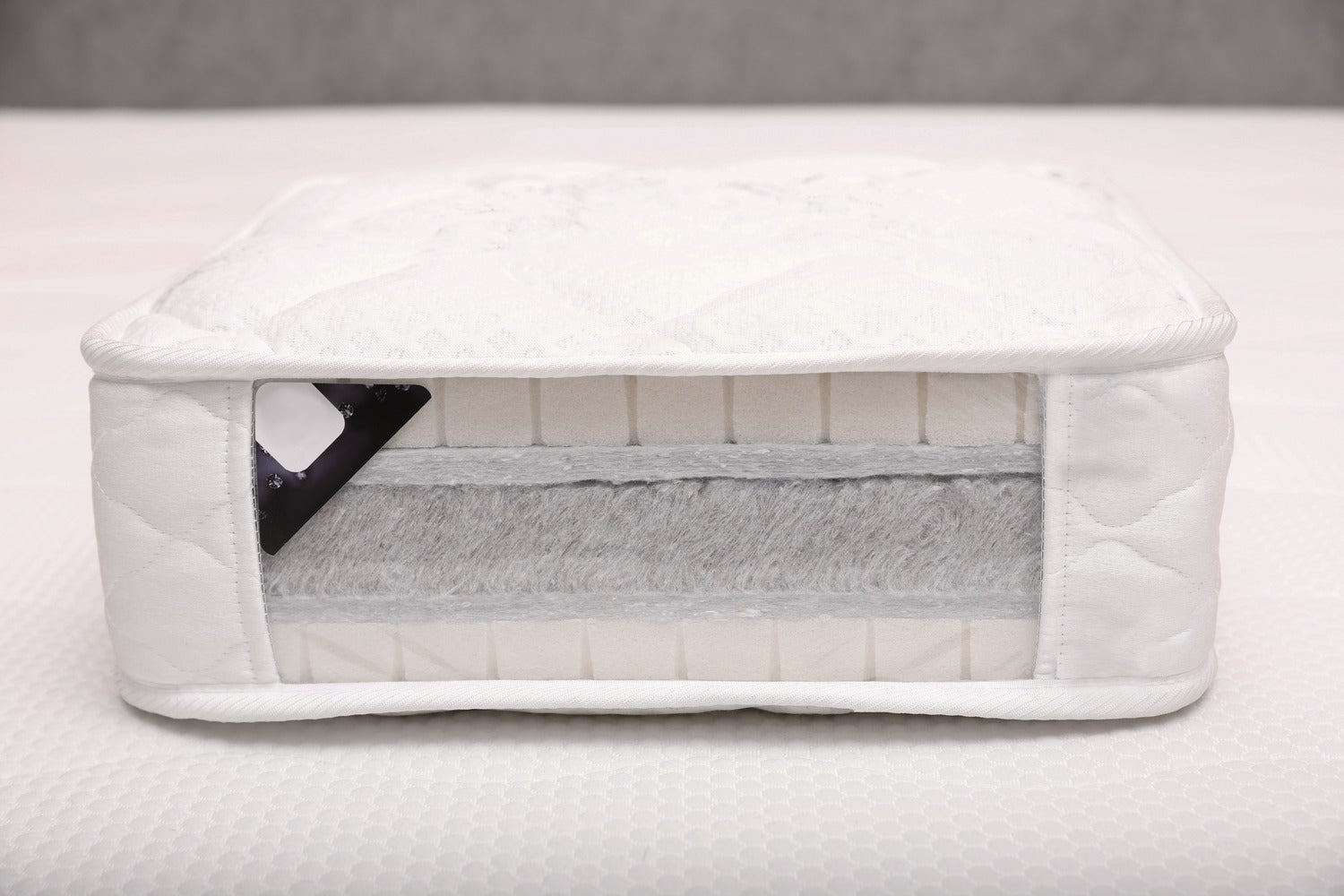

Latex mattress firmness is mainly measured using ILD (Indentation Load Deflection), which tells you how soft or firm the latex feels under pressure and helps match each sleeper in Cyprus with the right level of support and comfort.
Understanding ILD, sleep position, body weight, brand differences, and Cyprus’s warm, often humid climate makes it much easier to choose a latex mattress that stays comfortable and durable over time.
How Is Latex Mattress Firmness Measured?
Latex mattress firmness is mainly measured in two ways: a lab test called ILD/IFD and a simpler 1–10 firmness scale used for shoppers.
ILD / IFD lab measurement
-
Firmness is quantified with ILD (Indentation Load Deflection) or IFD (Indentation Force Deflection); the terms are used interchangeably in the foam industry.
-
A round plate presses into a foam sample (often 4 inches thick) to 25% of its height, and the pounds of force needed is the ILD value.
-
Lower ILD values mean softer foam, higher ILD values mean firmer foam.
-
Typical natural latex used in mattresses ranges roughly from about 20 ILD (very soft) up to around 45 ILD (very firm).
Example: A latex layer around 20–22 ILD feels soft, 29–31 ILD is often called medium‑firm, and 34–36 ILD is considered firm.
Density and firmness
-
Density is measured separately as weight per unit volume, often in pounds per cubic foot (PCF) or kg/m³.
-
Higher density latex tends to be firmer and more durable, and there is generally a direct relationship between density and ILD for latex foams.
-
However, density describes a specific foam layer, while firmness describes how the entire mattress feels, so two beds with similar ILD values can still feel different depending on construction and layering.
Retail 1–10 firmness scales
-
Because ILD is technical, brands usually translate it into a simple 1–10 firmness scale for consumers.
-
On these scales, 1–2 is very soft, around 3–4 soft, 5–6 medium, 7–8 firm, and 9–10 very firm, though there is no universal standard and each brand’s scale can differ slightly.
-
Many companies also group firmness qualitatively as soft, medium, medium‑firm, and firm and map ILD bands to those labels (for example soft in the mid‐teens to low‑20s ILD, medium around mid‑20s, medium‑firm around 30–37, very firm above that).
If you share your preferred feel (e.g., “medium‑firm, side sleeper, 80 kg”), I can help translate that into ILD ranges and a target 1–10 firmness number to look for.
What is ILD (Indentation Load Deflection)?
ILD (Indentation Load Deflection) measures the force required to compress a latex sample—typically to around 25% of its original height—with a standard circular plate.
Most latex cores fall roughly between ILD 20 and 50, with the lower end indicating a soft, pressure-relieving feel and the higher end indicating a denser, more supportive surface.
Is there a standard latex firmness scale?
There is no single universal “latex firmness scale” used across all brands, but most companies follow similar patterns.
No industry-wide standard
-
ILD is a standardized lab measure of foam firmness, but how brands translate a given ILD into “soft/medium/firm” can vary.
-
A 24 ILD latex layer, for example, might be labeled “soft” by one brand and “medium” by another because they consider the whole mattress design, not just the foam spec.
Common practice in the market
-
Many manufacturers use a 1–10 firmness scale, where 1–2 is ultra‑soft, 3–4 soft, 5–6 medium, 7–8 firm, and 9–10 extra‑firm, but the exact feel at each number is not standardized by any governing body.
-
Brands often publish their own mapping of ILD bands to labels like soft, medium, medium‑firm, and firm to help customers, but those mappings are proprietary conventions, not an official scale.
In practice, this means shoppers should treat firmness labels as guides rather than absolutes and focus on how a mattress is constructed, not just the name on the tag. Whenever possible, it’s wise to compare options in person or work with a retailer who can translate their own scale into how the mattress is likely to feel for your body and sleep position.
Why Do ILD Ratings Matter in Cyprus?
ILD ratings matter in Cyprus because they help match a latex mattress to local climate conditions, body types, and long‑term value expectations.
Climate and overheating
-
Cyprus has long, hot seasons with high humidity, so people are more sensitive to how “on top of” or “in” the mattress they sleep.
-
Choosing ILDs that are not too soft helps you stay more elevated on the surface, which works better with latex’s breathable, open‑cell structure to keep you cooler than very plush, body‑hugging foams.
Body support and pressure relief
-
ILD tells you how firm each latex layer is, so you can combine softer ILDs for pressure relief with firmer ILDs for spinal support—useful for heavier sleepers or those with back and joint pain.
-
In Cyprus, where latex is already popular for its resilience and contouring, ILD ratings are a practical way to fine‑tune feel for different body weights and sleeping positions instead of relying on vague “soft/medium/firm” labels.
Durability and investment
-
A mattress is a long‑term purchase, and natural latex with appropriately higher ILDs in support layers generally keeps its shape and resists sagging for 10+ years, outlasting many basic spring or foam mattresses.
-
Cyprus retailers often market latex as a “long‑term investment,” so understanding ILD helps buyers choose configurations that balance comfort and durability for the climate and avoid mattresses that feel good for a year but break down quickly.
Overall, ILD ratings give people in Cyprus a concrete, numbers‑based way to choose latex mattresses that sleep cooler in the local climate, provide the right mix of support and pressure relief for their body, and deliver the long‑term durability they expect from a premium investment.
Can Latex Firmness Affect Sleep Quality and Support?
Latex firmness directly influences how well your mattress keeps your spine aligned and relieves pressure on your shoulders, hips, and lower back. A mattress that is too soft can let your body sink excessively, while one that is too firm can create pressure points, both of which may disturb sleep and reduce overall sleep quality.
In Cyprus, where heat already challenges restful sleep, the right firmness level can also affect how “heavy” or “trapped” you feel on the mattress, especially during warm, humid nights. Latex has an open‑cell structure that helps it remain responsive, so an appropriate firmness level, combined with its natural bounce, often results in more refreshing, uninterrupted sleep.
What firmness suits side, back, and stomach sleepers?
Most people do best with medium to medium-firm overall, but the ideal firmness shifts by position and body weight.
General firmness by position
-
Side sleepers: Medium-soft to medium (about 4–6/10 on the firmness scale) to cushion shoulders and hips while keeping the spine aligned.
-
Back sleepers: Medium-firm (around 6–7/10) to support the natural curve of the spine without sagging at the hips.
-
Stomach sleepers: Medium-firm to firm (roughly 6.5–8/10) to keep hips from sinking and avoid swayback.
How does body weight change this
-
Under ~60 kg: You usually feel mattresses as firmer, so side and back sleepers often prefer softer in each range (e.g., 4–5 for side, 5–6 for back).
-
Around 60–90 kg: Mid-range values work well (5–6 for side, 6–7 for back, 6.5–7.5 for stomach).
-
Over ~90 kg: You compress more, so firmer options are usually better (6–7 for side, 7–8 for back and stomach).
If you change positions (combination)
-
Mix of side and back: Aim for a versatile medium-firm around 6 that has enough pressure relief for the shoulder but good lumbar support.
-
Mix of back and stomach: Lean slightly firmer, ~6.5–7.5, so your hips don’t sink when you roll onto your stomach.
-
Very restless sleepers: Prioritize a mattress that is responsive (e.g., hybrid or latex) so you don’t feel stuck when turning.
When you lie down on your usual position:
-
If your shoulder/hip gets sore or tingly, or you feel sharp pressure → too firm for that position (go softer within the range).
-
If your lower back or neck feels arched or you see your hips sinking lower than your ribs → too soft (go firmer within the range).
In short, side sleepers usually need a slightly softer mattress, while back and stomach sleepers benefit from a medium-firm to firm surface that keeps the spine in neutral alignment.
How Do You Choose the Right Latex Mattress Firmness?
Selecting the right latex firmness in Cyprus means looking at your sleep position, body weight, local climate, and whether you share the bed. Lighter individuals often find comfort in softer to medium ILD ranges. At the same time, heavier sleepers usually need medium‑firm or firm latex to avoid bottoming out and to maintain long‑term support.
Couples may combine preferences using dual‑firmness designs or mattresses with zoned latex cores that are softer under the shoulders and firmer under the hips. In Cyprus’s warm environment, pairing an appropriate firmness with breathable natural or Talalay latex and a suitable base (such as a slatted frame) can further improve temperature regulation and comfort.
Are Latex Firmness Ratings the Same Across Brands?
Latex firmness ratings are not identical across brands, even when the ILD numbers look similar. One company’s “medium” within a given ILD range may feel slightly softer or firmer than others because of differences in latex type (such as Dunlop versus Talalay), layer thickness, and overall mattress construction.
This is why it helps to look at both the stated ILD range and, where possible, test the mattress in person or rely on detailed local guidance for your climate and sleeping preferences.
What Are the Most Common Firmness Levels in Cyprus?
In the Cyprus market, medium and medium‑firm latex mattresses are the most popular because they suit a wide range of body types and sleeping positions. Many local buyers look for a balance: enough softness for pressure relief during hot nights, but enough support to avoid back pain, given the extended daily sitting or driving.
At Panstromasew, we keep multiple firmness options in stock within the same latex range, sometimes including dual‑sided mattresses with a softer side and a firmer side to accommodate changing needs over time. This flexibility is beneficial for couples or for people whose weight or comfort preferences change.
How Does Climate in Cyprus Influence Mattress Firmness Choice?
Cyprus’s warm, often humid climate makes heat build‑up and moisture management critical factors when choosing mattress firmness. Firmer latex can sometimes feel cooler because you sleep more “on” the surface rather than deeply “in” it, while very soft foams may hug the body more and feel warmer in summer conditions.
Because natural latex is naturally breathable and resilient, many Cypriot sleepers choose a medium to medium‑firm feel paired with good airflow to avoid feeling stuck while still getting strong support. Combining the right firmness with breathable covers, a ventilated base, and possibly climate‑appropriate bedding further enhances comfort through the long, hot season.
Does humidity affect latex mattress performance?
Humidity does affect how mattresses age and perform, but latex generally copes better than many synthetic foams in Cyprus’s conditions. Its open‑cell structure and natural resistance to mould and mildew help it manage excess moisture, especially when combined with breathable fabrics and a well‑ventilated bedroom.
However, consistently high humidity without proper airflow can still encourage moisture buildup in any mattress, so it is wise to use a mattress protector, rotate the mattress as recommended, and allow the room to air regularly.
Choosing the right firmness within a quality latex construction means your mattress will not only feel comfortable but is also more likely to retain its performance and structure over many years in the Cypriot climate.